Classic Italian Minestrone Soup
The vegetable soup that every region of Italy claims — built for a week of lunches.
Classic Italian minestrone is a thick vegetable soup with cannellini beans, seasonal vegetables and a handful of small pasta, simmered with a Parmigiano rind. This version makes six big bowls at about 250 calories and 9 g of fiber each — the most filling lunch you can make for the calories.
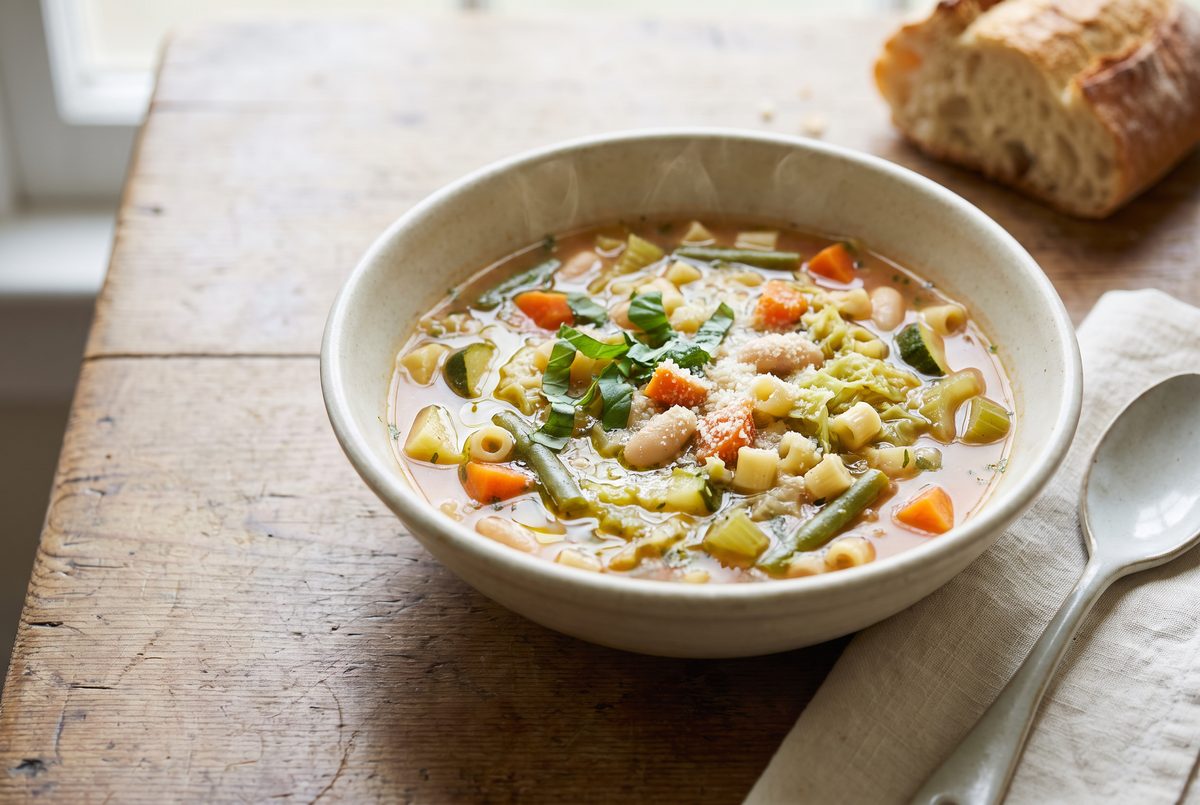
Ask ten Italians for a minestrone recipe and you'll get ten answers, and all of them will be right. The Genoese finish it with pesto, the Milanese add rice and pancetta, the Tuscans thicken it with bread and call it ribollita the next day. What they share is the idea: a slow-cooked, thick soup of whatever vegetables are in season, a legume for body, a little starch, and something savory — a cheese rind, a piece of pork skin — buried in the pot.
This is our everyday version. It leans on the pantry (canned beans and tomatoes, a box of small pasta) and the crisper drawer, takes about an hour mostly unattended, and lands at 250 calories a bowl with enough fiber and protein to be a real lunch, not a snack you'll regret at 3 p.m.
Why this recipe works for weight loss
For weight loss, minestrone is close to ideal food. Energy density is very low — most of the volume is water and vegetables — so a bowl big enough to fill you up costs a fraction of the calories of a sandwich. Fiber from beans, cabbage, carrots and zucchini slows gastric emptying and feeds the gut bacteria that regulate appetite. Protein from the cannellini and the Parmigiano brings it to 11 g per bowl, which is why it satisfies in a way a plain broth doesn't. And because soup is eaten slowly, with a spoon, your brain gets the full twenty minutes it needs to register fullness.
The pasta is deliberately modest — a little under half an ounce dry per bowl. It's there for texture and for the tradition, not for carbohydrate. If you're eating this after a run, double it.
Ingredients
About 3½ quarts (6 large bowls)
Soffritto
Vegetables
Beans, broth & pasta
Seasoning
Instructions
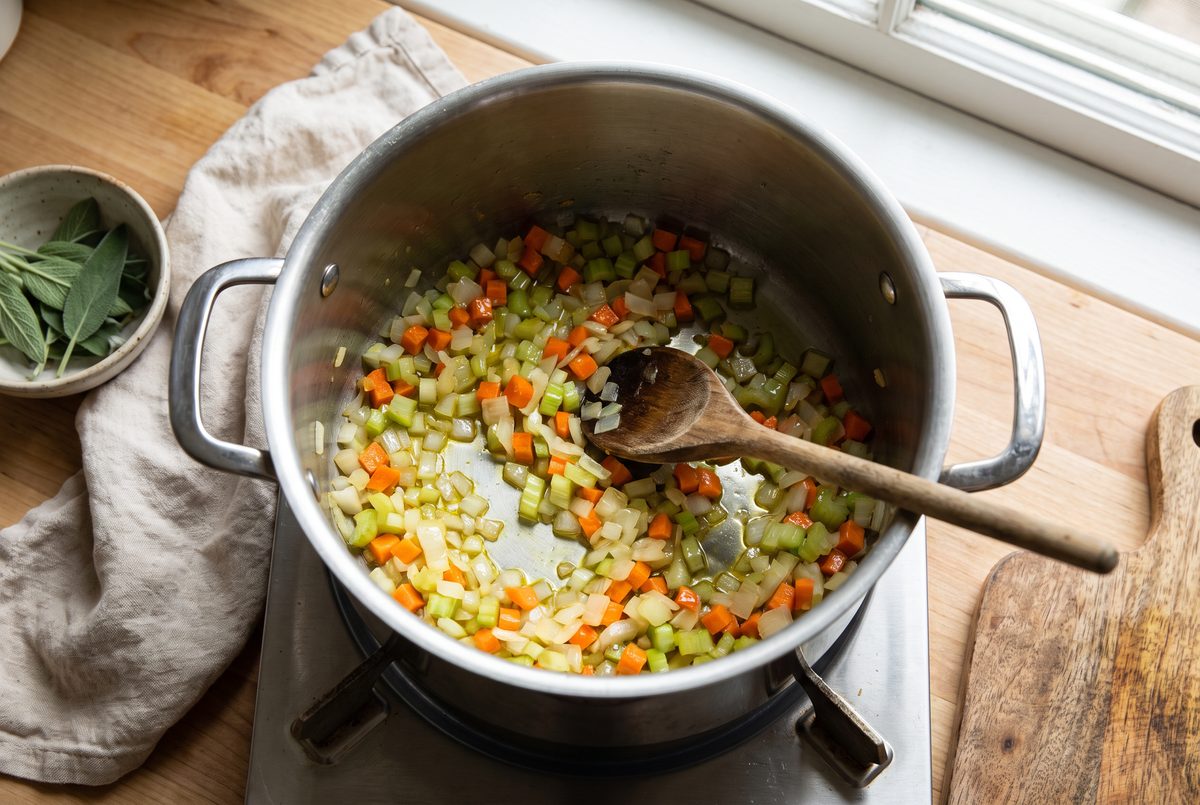
- Make the soffritto. Warm the oil in a large pot (at least 6 quarts) over medium heat. Add the onion, carrot and celery with a pinch of salt and cook, stirring now and then, until soft and sweet but not browned, 8–10 minutes. This slow start is the base flavor of the soup; rushing it is the difference between minestrone and boiled vegetables. Add the garlic and cook 1 minute.
- Add the firm vegetables. Stir in the potato, zucchini and green beans and cook 3 minutes, coating them in the soffritto.
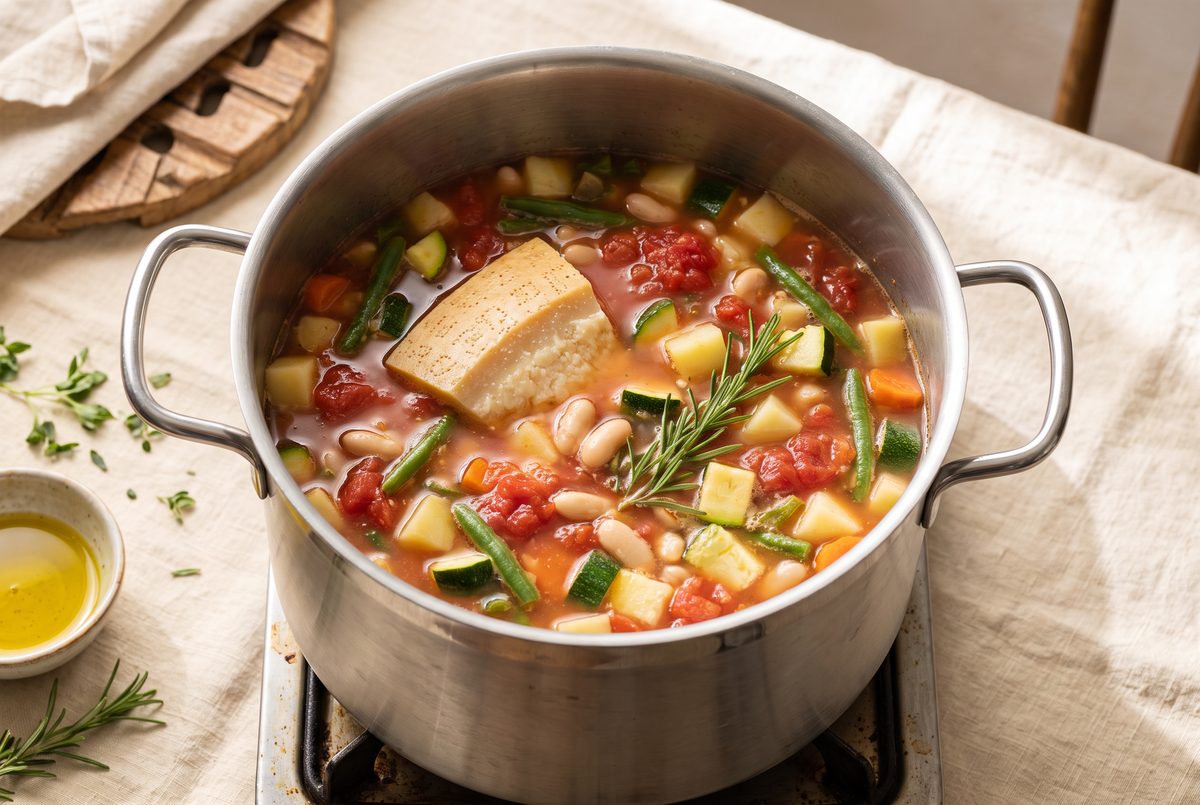
- Simmer. Add the tomatoes, broth, cannellini, cheese rind, rosemary, salt and pepper. Bring to a boil, then reduce to a gentle simmer and cook, partially covered, for 20 minutes.
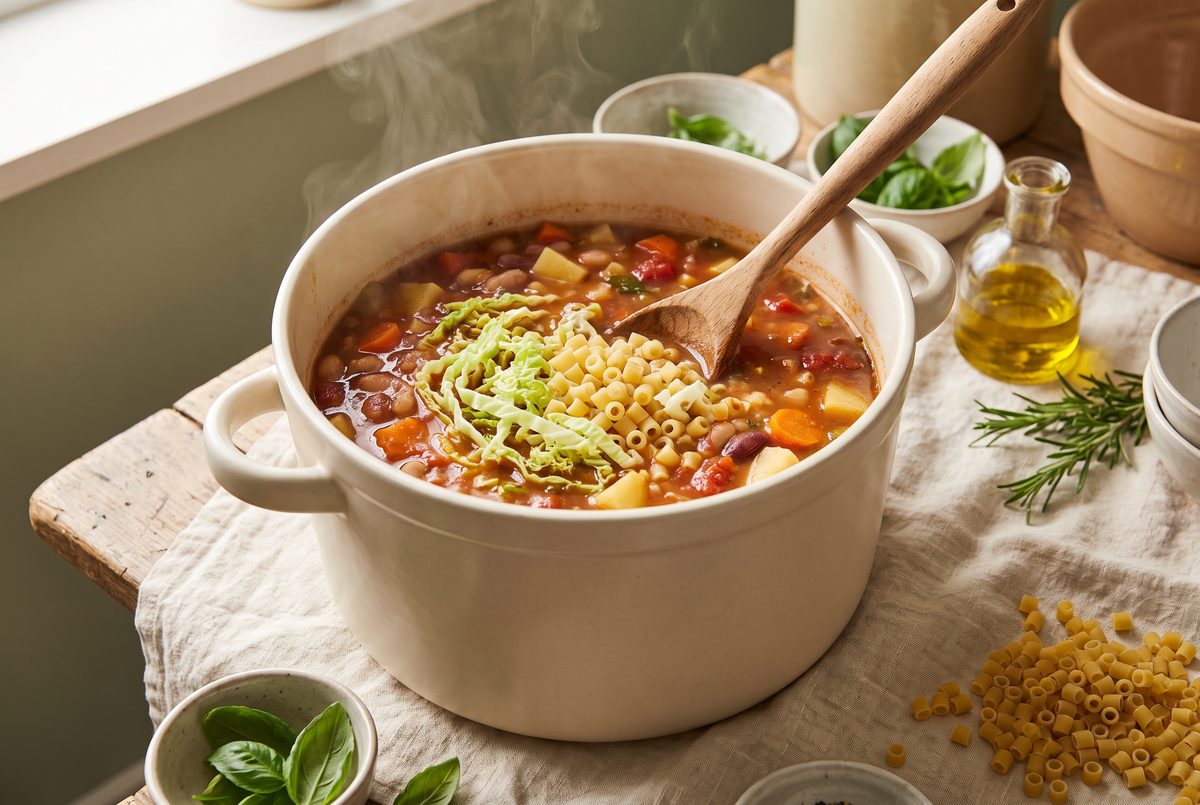
- Add cabbage and pasta. Stir in the cabbage and the ditalini and simmer 10–12 minutes more, until the pasta is tender and the cabbage has collapsed. The soup should be thick — a spoon stood in it should lean, not fall. Add a splash of water if it's too dense.
- Finish. Remove the rind and rosemary. Taste and adjust salt. Ladle into bowls and finish each with torn basil, a tablespoon of grated Parmigiano and, if you like, a few drops of olive oil.
Tips from our kitchen
- Save your Parmigiano rinds in the freezer. One rind gives a vegetable soup the savory depth that otherwise takes bacon or a bouillon cube.
- Cut everything the same size — about ½ inch (1 cm). It looks better, cooks evenly and, more practically, fits on a spoon.
- For freezing, hold the pasta. Cooked pasta goes mushy in the freezer. Freeze the soup without it and cook a small handful of ditalini directly in the pot when you reheat.
- Thicker soup, same calories: mash a ladleful of beans and potato against the side of the pot before adding the pasta.
Variations
- Minestrone alla genovese: stir a teaspoon of basil pesto into each bowl instead of the grated cheese (adds about 40 calories).
- Higher protein: add a second can of beans (chickpeas or borlotti) — about 60 extra calories and 8 g of protein per bowl.
- Winter version: replace zucchini and green beans with butternut squash and kale; add a pinch of nutmeg.
- Vegan: skip the rind and cheese; add a teaspoon of white miso to the broth for the same savory effect.
Storage & meal prep
Keeps 5 days in the fridge; it thickens as it sits, so loosen with water when reheating. Freezes for 3 months (without the pasta, see tips). Reheat on the stove over medium-low.
Nutrition per serving
| Nutrient | Amount | % DV* |
|---|---|---|
| Calories | 247 kcal | 12% |
| Total fat | 4.6 g | 6% |
| Saturated fat | 1.3 g | 7% |
| Carbohydrates | 43 g | 16% |
| Fiber | 8.8 g | 31% |
| Sugars | 10 g | — |
| Protein | 11 g | 22% |
| Sodium | 804 mg | 35% |
*Percent Daily Values are based on a 2,000-calorie diet. Values are calculated from USDA FoodData Central and manufacturer data for the ingredients as listed; they are estimates, not lab analyses. Nutrition disclaimer.
Frequently asked questions
Is minestrone good for weight loss?
It's one of the best choices there is. A large bowl of this recipe is about 250 calories with 9 g of fiber and 11 g of protein, and because it's mostly water and vegetables it fills you up for very few calories. Eating soup before or as a meal has been shown in controlled studies to reduce total calorie intake.
Can I make minestrone without pasta?
Absolutely — many Italian versions use rice, farro, or nothing at all. Without the pasta the soup is about 200 calories per bowl. If you want it heartier without pasta, add a second can of beans.
What is the difference between minestrone and vegetable soup?
Minestrone is a specific Italian style: thick rather than brothy, always with a legume, usually with a starch (pasta, rice or bread), started from a soffritto of onion, carrot and celery, and finished with cheese or pesto. A generic vegetable soup can be anything.
Can I use dried beans?
Yes. Soak ¾ cup (150 g) dried cannellini overnight, simmer separately until tender (about 1 hour), and add them with their cooking liquid in place of the canned beans and 1 cup of the broth. The soup will taste noticeably better.
Sources
- USDA FoodData Central — nutrient data for cannellini beans, savoy cabbage, zucchini and pasta
- Flood, J. E. & Rolls, B. J. (2007). Soup preloads in a variety of forms reduce meal energy intake. Appetite
- Dietary Guidelines for Americans 2020–2025 — fiber recommendations (28 g/day at 2,000 kcal)
You might also like
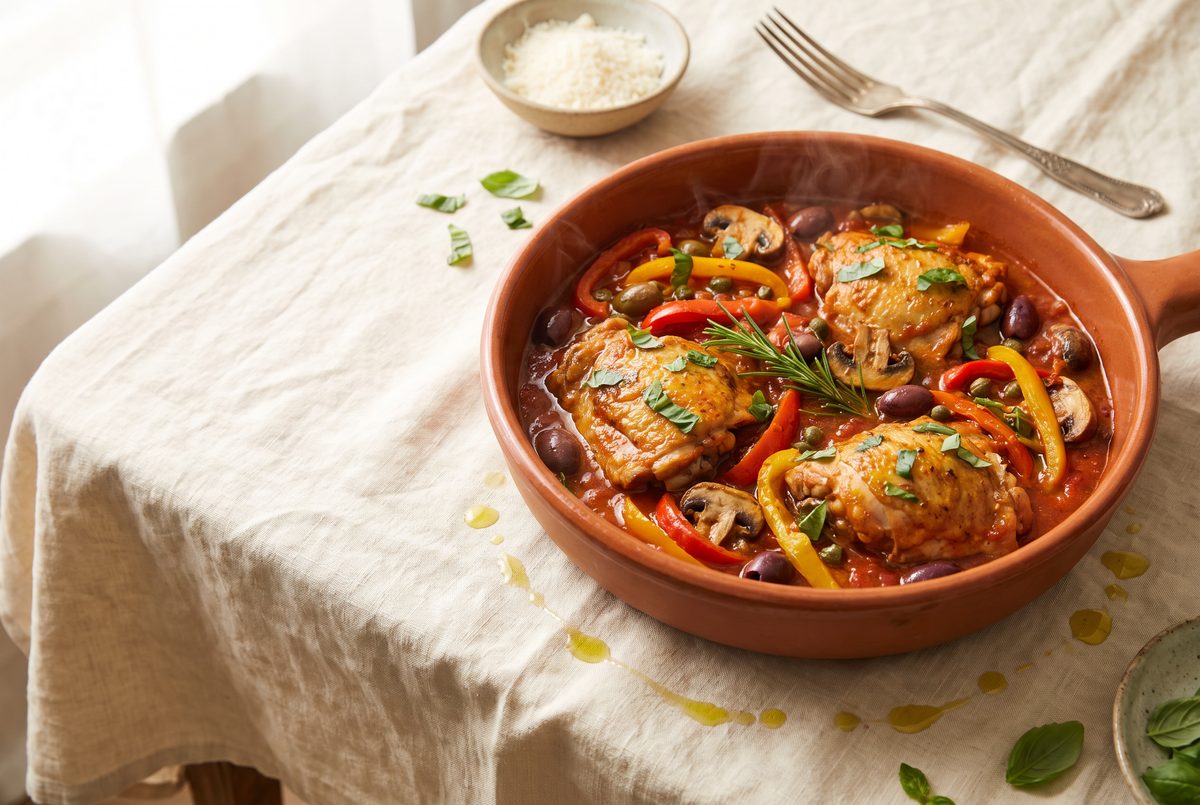
Healthy Chicken Cacciatore
Healthy chicken cacciatore is a one-pan Italian stew of skinless chicken thighs braised with bell peppers, mushrooms…
- 50 min
- 391 kcal
- 40 g protein
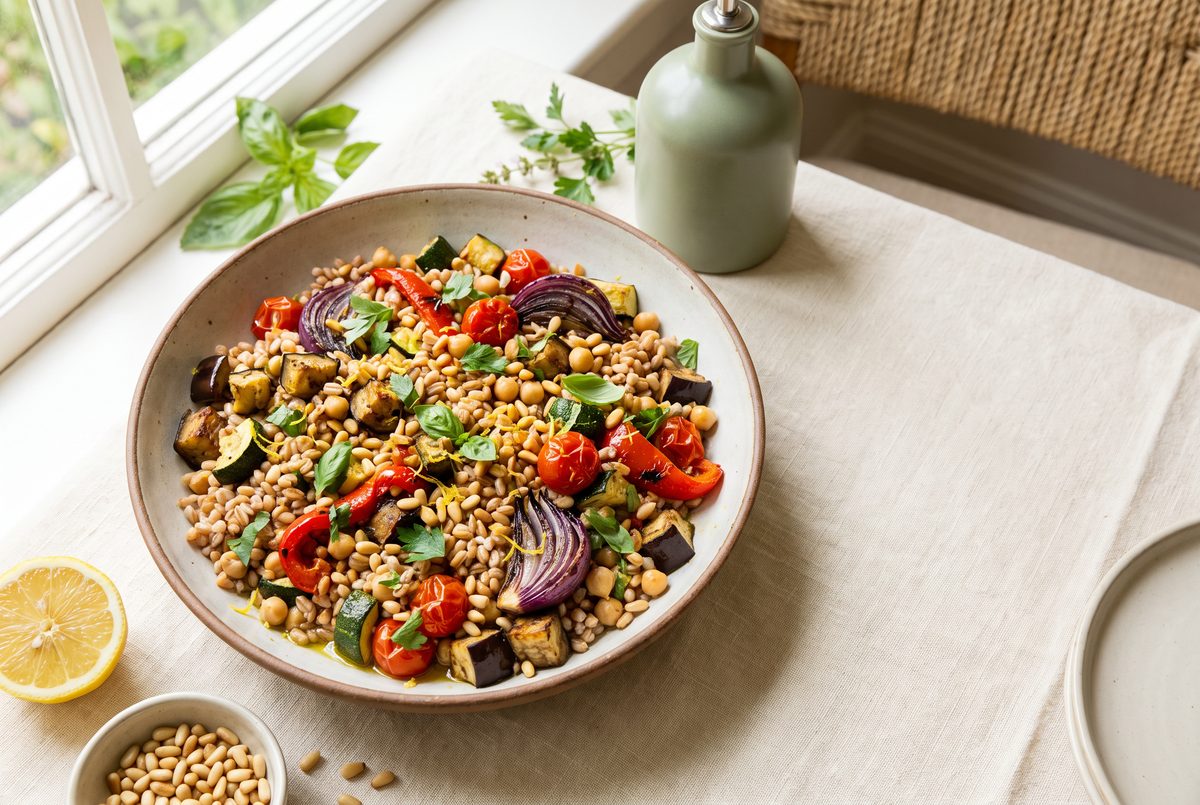
Farro Salad with Roasted Vegetables and Lemon
Farro salad with roasted vegetables tosses chewy pearled farro with oven-caramelized zucchini, eggplant, peppers, red…
- 45 min
- 481 kcal
- 14 g protein
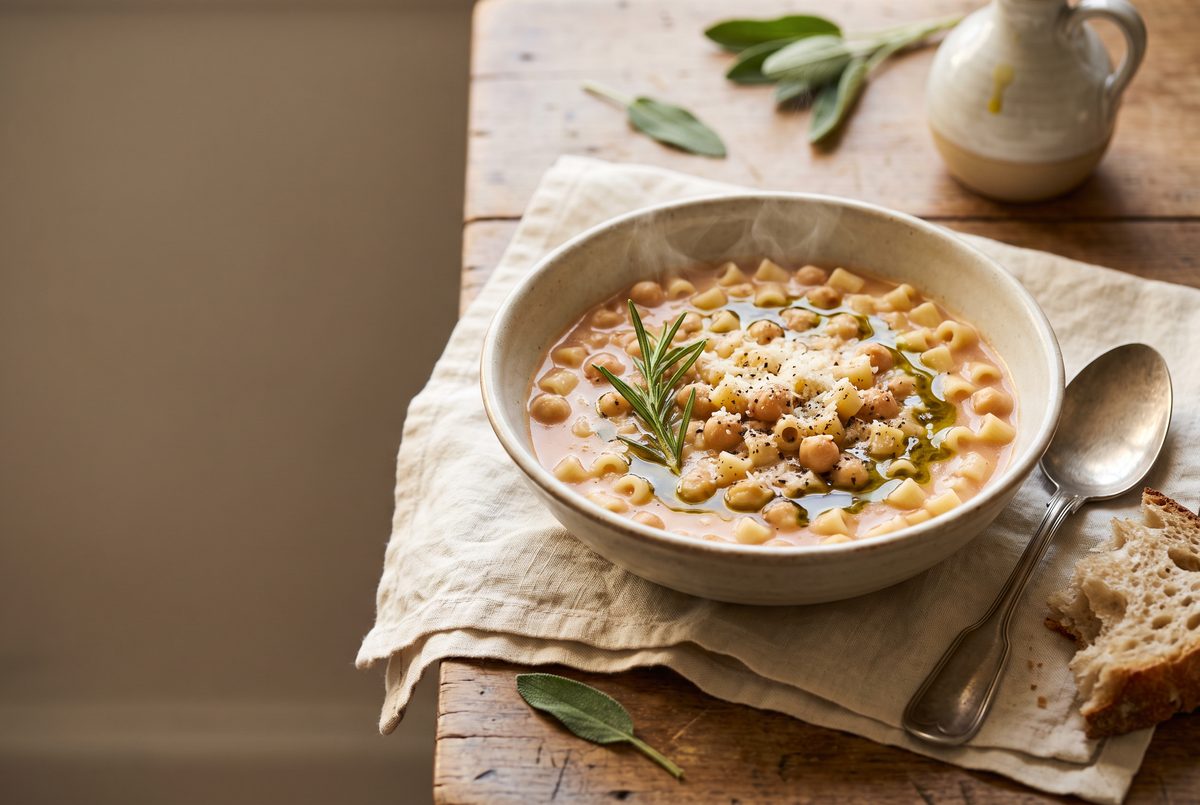
Pasta e Ceci (Roman Pasta with Chickpeas)
Pasta e ceci is a Roman one-pot dish of short pasta simmered with chickpeas, rosemary, garlic and a spoon of tomato…
- 35 min
- 611 kcal
- 23 g protein