Italian Lentil Soup with Rosemary and Tomato
The Umbrian way: no soaking, a slow soffritto, and the olive oil poured in at the table.
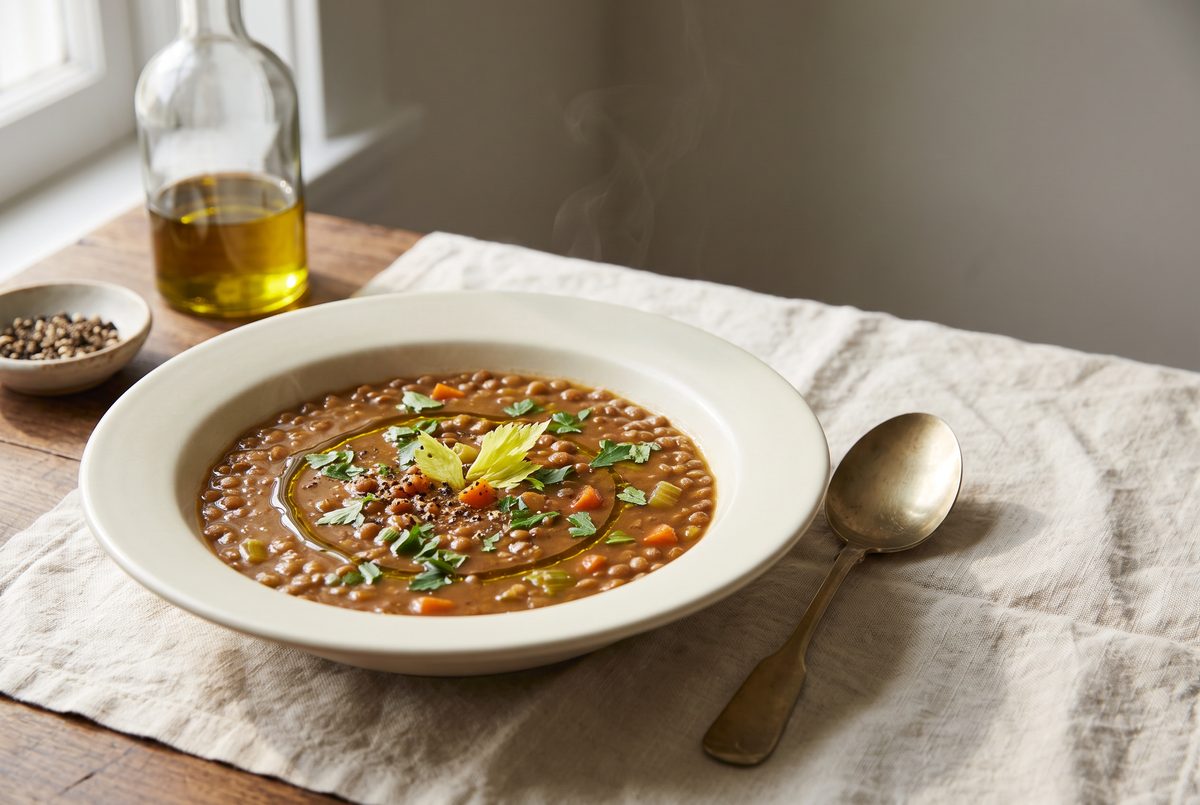
Italian lentil soup is a one-pot Umbrian supper: brown lentils simmered with a slow soffritto, tomato and rosemary, finished with raw olive oil and lemon at the table. One bowl is 447 calories with 22 g of protein and 12 g of fiber, and it takes about 70 minutes from a dry bag of lentils — no soaking, and most of that time is unattended.
Beans teach you to plan ahead, so most people put lentils in a bowl of water the night before out of habit. They don't need it. A lentil is small and thin-skinned, with none of the dense starch of a cannellini bean, and it goes from hard to tender in the pot in about thirty-five minutes. Soak one overnight and you get a soft, faintly sprouted thing that falls apart before the soffritto has given up its flavor. This is the practical reason lentil soup is a weeknight dish in Umbria and not a Sunday project.
The lentils worth hunting for come from the high plain of Castelluccio di Norcia, in the Apennines — small, dark, thin-skinned enough that you never notice the skin. Any brown or green lentil does the same job. What you must not use is red or split lentils: they dissolve into purée, which is right for a dal and wrong for a soup where the pleasure is finding whole lentils in the spoon.
The rest is the standard Italian grammar for a pot like this. A soffritto cooked slowly enough to go sweet, a spoonful of tomato paste fried until it turns brick-red, one sprig of rosemary, and then the step that gets skipped most often in translation: a thread of raw olive oil poured over each bowl at the table. The oil you cook in disappears into the soup. The oil you add at the end is the one you actually taste, which is why a teaspoon of it does more here than the two tablespoons in the pan.
Why this recipe works for weight loss
A bowl of soup is a hard thing to make filling at 447 calories. This one manages it because lentils are unusual twice over: they are a legume that is genuinely high in protein, and they are one of the highest-fiber foods in the supermarket.
Fiber — 12 g per bowl. Dry lentils carry 10.7 g of fiber per 100 g, so 1½ cups of them put more fiber in four bowls than most people eat in a day. Pooled feeding trials found that adding pulses to a meal raised fullness by about 31% compared with matched meals without them (Li et al., 2014), and in randomized trials people who added roughly one serving of pulses a day lost weight without being told to eat less overall (Kim et al., 2016). Higher fiber intake also tracks with lower body weight over years, not just hours (Howarth et al., 2001).
Protein — 22 g per bowl, from plants only. Lentils are 24.6 g of protein per 100 g dry. That is enough to clear the 20 g we ask of a weight-loss main, which matters because protein is the macronutrient that best protects lean mass and appetite in a calorie deficit (Leidy et al., 2015). It is not a complete amino acid profile on its own — lentils are low in methionine — which is the old reason Italians eat legumes with bread or pasta rather than alone. A 1½-oz (45 g) slice of whole-grain bread alongside closes that gap and adds about 113 calories.
Why the soup is thick without cream or flour. Mashing one ladleful of cooked lentils against the side of the pot and stirring it back in releases their starch into the broth. You get the body of a puréed soup while keeping most of the lentils whole, and it costs nothing.
Where the calories actually are. Almost all of the 13 g of fat in a bowl is olive oil, and 18 g of the 46 g the recipe uses goes on raw at the end. Cooking oil dissolves into the broth and reads as richness; raw oil sits on top and reads as flavor. That is the trade we make in every low-calorie recipe on the site — spend the fat where the tongue notices it.
Ingredients
4 deep bowls, about 2¼ cups each
Instructions
- Sort and rinse the lentils. Tip the lentils onto a plate or tray and look through them — a bag of lentils, especially a good one from a small producer, often carries a small stone or two. Rinse them in a sieve under cold water until the water runs clear, then leave them to drain. No soaking.
- Cook the soffritto slowly. Heat the 2 tablespoons of olive oil in a heavy 5-quart pot over medium-low. Add the onion, carrot and celery with a pinch of salt and cook for 12 minutes, stirring now and then. You want them soft, sweet and barely colored — if they are browning, the heat is too high. This is the only part of the recipe that rewards patience, and the only part most people rush.
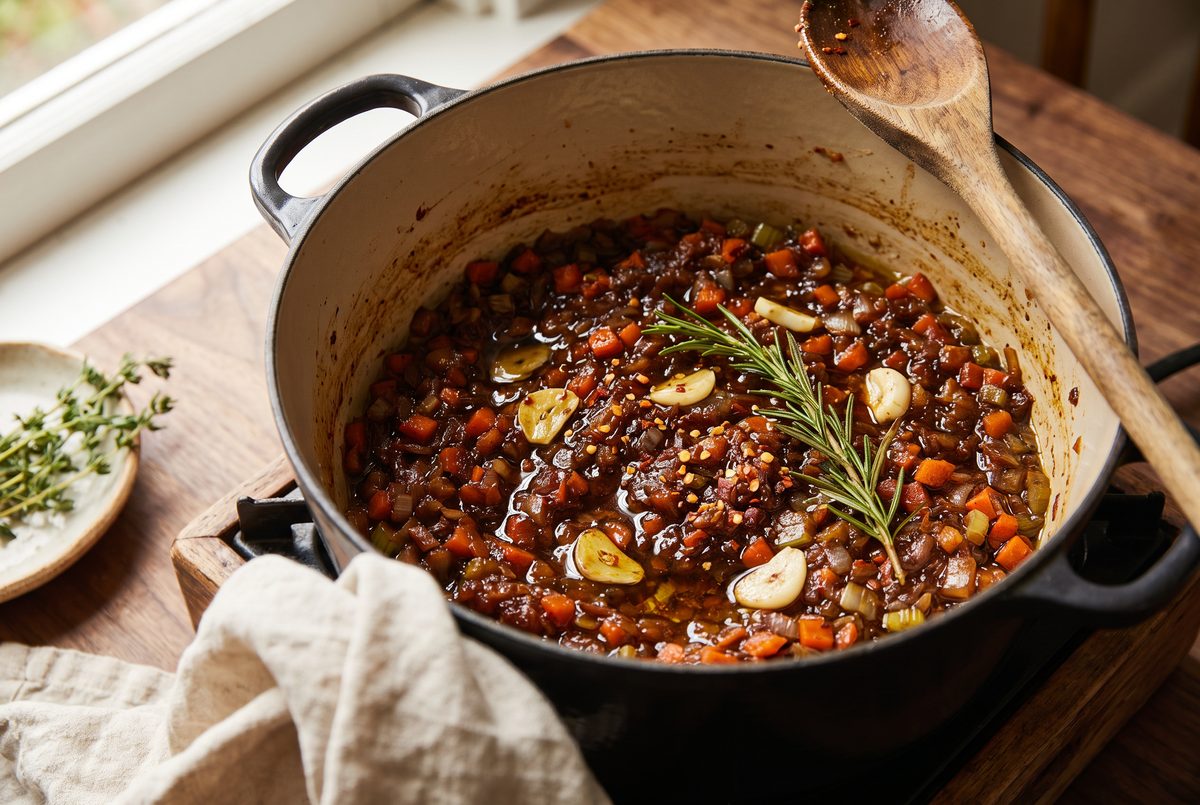
- Darken the tomato paste. Add the garlic, pepper flakes, rosemary sprig and bay leaf and cook 1 minute, until the garlic smells sweet. Stir in the tomato paste and cook it for 2 minutes, pressing it against the bottom of the pot, until it turns from bright red to a deep brick color and starts to stick. That color change is the flavor — a raw spoonful of paste tastes thin and metallic in the finished soup.
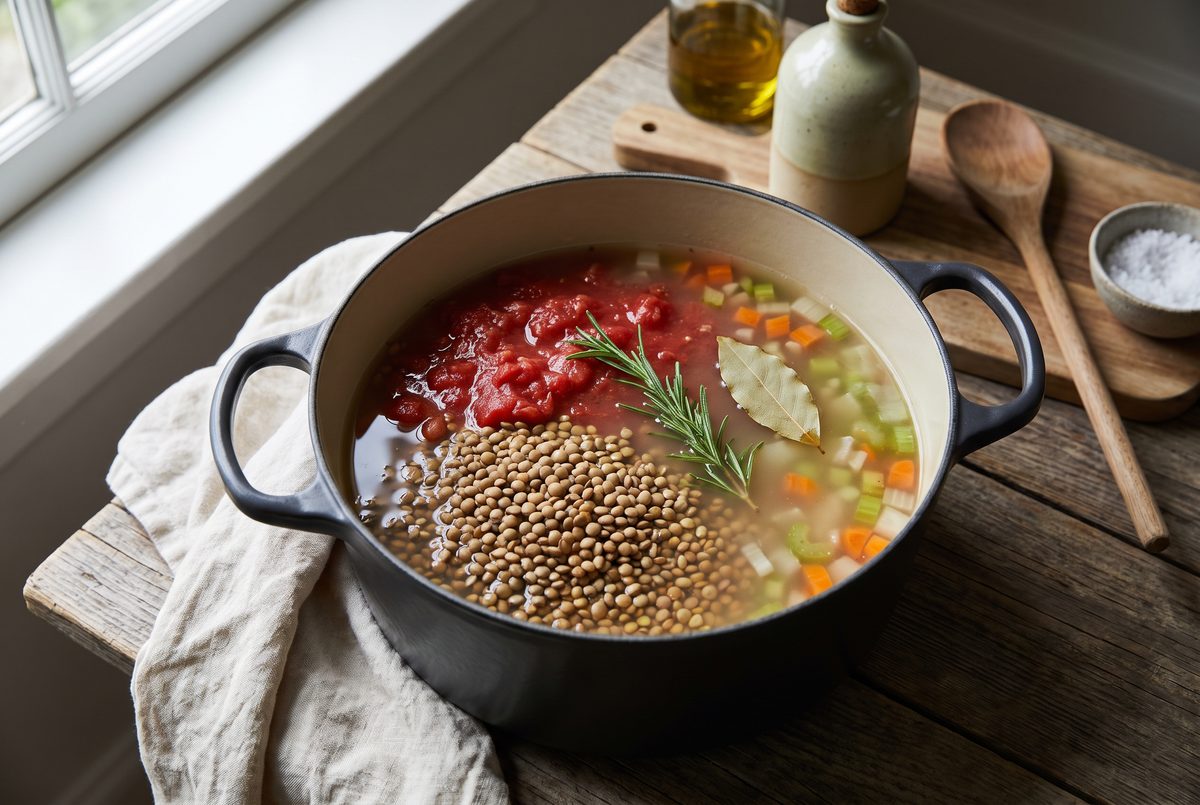
- Add the lentils, tomatoes and broth. Add the drained lentils and stir for a minute so they take on the oil. Pour in the crushed tomatoes and the broth, scrape the bottom of the pot clean, and bring it up to a boil. The liquid should sit about 2 inches above the lentils; add water if it doesn't.
- Simmer 35–40 minutes, barely. Lower the heat until the surface only shivers — a hard boil breaks the lentils open and turns the soup cloudy and gluey. Cover partly and cook 35 to 40 minutes, until the lentils are tender all the way through with no chalk in the middle. Older lentils can take 50. Check the liquid twice and top up with hot water if it drops below the level of the lentils.
- Mash a ladleful to thicken it. Fish out the bay leaf and the bare rosemary stem. Scoop up one ladleful of lentils, press them flat against the side of the pot with the back of the ladle, and stir the mash back in. Repeat once if you like it thicker. The soup should coat the spoon and still be full of whole lentils. No blender: a blended lentil soup is a different, duller dish.
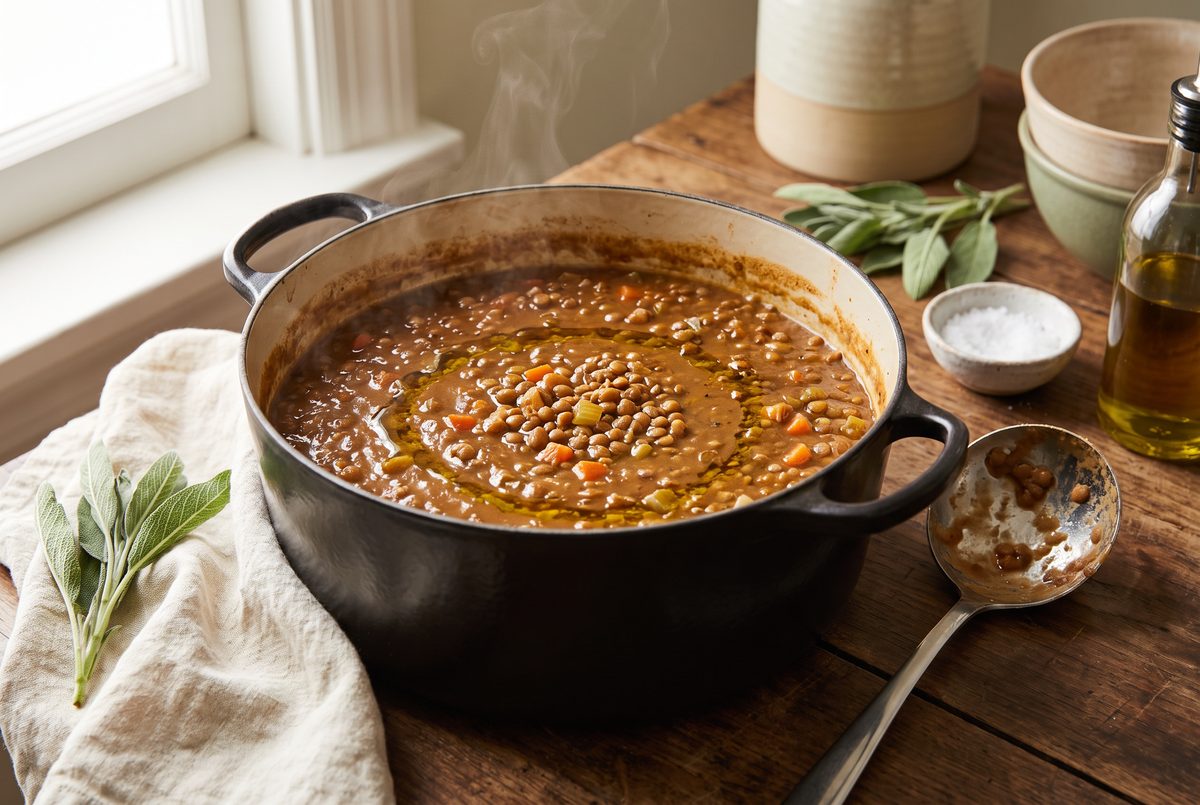
- Season now, not earlier. Add the ¾ teaspoon of salt, the black pepper and the lemon juice, then taste and adjust. Salting at the end lets you account for whatever salt your broth brought with it, and the lemon is not optional — a lentil soup without acid tastes flat and slightly dusty, and most people reach for more salt when what they need is lemon. Let it sit off the heat for 10 minutes; it thickens and settles.
- Finish each bowl with raw oil. Ladle into deep bowls, scatter the parsley and any celery leaves, and pour a teaspoon of your best olive oil over each one in a thin stream. Serve with the pepper mill on the table.
Tips from our kitchen
- Buy lentils that were harvested recently. This is the one variable you can't see. Lentils more than a year old can simmer for an hour and stay chalky in the middle, and no technique fixes it. Shops with high turnover and bags with a packing date are worth the extra dollar; bulk bins of unknown age are the usual culprit behind "my lentils never got soft".
- The tomato slows them down. Acid keeps the pectin in a legume's skin firm, so a pot with crushed tomatoes in it from the start takes longer than one without — that is why the window here is 35–40 minutes rather than 25. If your lentils are stubborn, lift them out of the equation: simmer them in broth alone until tender, then add the tomatoes and cook 10 minutes more.
- Sodium: 782 mg per bowl. Most of it is the ¾ teaspoon of salt and the broth. Water instead of broth, or a no-salt-added crushed tomato, takes it down by roughly a third without hurting the soup much — the soffritto and the rosemary are carrying the flavor, not the broth.
- It thickens overnight in the refrigerator, sometimes to the point of a purée. Loosen it with hot water, not more broth, or the seasoning climbs with every reheat.
Variations
- For more protein: stir in 4 oz (110 g) of diced pancetta at the start of the soffritto and cook it until the fat renders before the vegetables go in — about 557 calories and 26 g of protein — or keep it vegan and serve each bowl with a 1½-oz (45 g) slice of whole-grain toast rubbed with garlic, which brings it to roughly 560 calories and 28 g of protein.
- With greens: add 5 oz (140 g) of chopped lacinato kale or escarole in the last 10 minutes. It adds about 15 calories and 1.5 g of fiber per bowl, and makes the soup a closer cousin of our ribollita.
- With pasta, the Roman way: add ⅔ cup (70 g) of broken spaghetti or small tubes in the last 12 minutes and more hot water as they drink it — pasta e lenticchie, about 512 calories per bowl. Built on the same principle as our pasta e ceci.
- A parmesan rind dropped in with the broth adds a savory depth that nothing else replicates. It stops the soup being vegan; how much it adds depends on how much of the rind dissolves, which is why we have not put a number on it. Fish out what's left of it before serving.
- Smoky, Umbrian-adjacent: swap the pepper flakes for ½ teaspoon of sweet smoked paprika added with the tomato paste. Not traditional, but it works and it costs nothing.
Storage & meal prep
Keeps 5 days in an airtight container in the refrigerator and improves for the first two — the soffritto keeps dissolving into the broth. It freezes better than almost anything else on this site: 3 months in portions, with no change in texture, because there is no pasta, rice or dairy to break down. Thaw overnight in the refrigerator and reheat gently with a splash of hot water. Add the raw olive oil, lemon and parsley after reheating, never before freezing.
Nutrition per serving
| Nutrient | Amount | % DV* |
|---|---|---|
| Calories | 447 kcal | 22% |
| Total fat | 13 g | 17% |
| Saturated fat | 1.8 g | 9% |
| Carbohydrates | 66 g | 24% |
| Fiber | 12 g | 43% |
| Sugars | 10 g | — |
| Protein | 22 g | 44% |
| Sodium | 782 mg | 34% |
*Percent Daily Values are based on a 2,000-calorie diet. Values are calculated from USDA FoodData Central and manufacturer data for the ingredients as listed; they are estimates, not lab analyses. Nutrition disclaimer.
Frequently asked questions
Is lentil soup good for weight loss?
It is one of the better bowls you can build for it. A serving here is 447 calories with 22 g of protein and 12 g of fiber, which is the combination that keeps you full — pulses raised satiety by roughly 31% over matched meals without them in pooled feeding trials (Li et al., 2014), and randomized trials found modest weight loss from simply adding a daily serving of pulses, with no instruction to eat less (Kim et al., 2016). The thing to watch is not the lentils but what goes on top: a canned soup's worth of salt, or bread and cheese on the side, changes the arithmetic quickly.
Do you have to soak lentils before making soup?
No, and you shouldn't. Lentils are thin-skinned and small enough to cook from dry in 35 to 40 minutes, and a soaked lentil tends to blow apart into the broth instead of staying whole. Rinse them and pick out any stones — that is the whole preparation. Soaking is for chickpeas and dried beans, which are three to four times longer in the pot.
How much protein is in lentil soup?
In this recipe, 22 g per bowl, all of it from the lentils: dry lentils are 24.6 g of protein per 100 g, and 1½ cups go into four servings. That clears the 20 g minimum we set for a weight-loss main. Lentil protein is low in methionine, so pairing it with a grain — a slice of whole-grain bread, or the pasta variation above — gives you a fuller amino acid profile, which is the reason Italians have always eaten legumes with bread or pasta rather than on their own.
Why are my lentils still hard after an hour?
Almost always age: lentils that have sat in a warehouse for a year or more may never soften, whatever you do. The second cause is acid — the crushed tomatoes in the pot slow the softening, which is why this recipe allows 35 to 40 minutes instead of 25. If you suspect either, simmer the lentils in broth alone until they are tender and add the tomatoes at the end. Hard water can also be a factor, though it is a smaller one than most sources claim.
Can I make lentil soup ahead and freeze it?
Yes to both, and this is the dish we would pick for it. It keeps 5 days refrigerated and tastes better on day two; it freezes for 3 months with no change in texture, because nothing in the pot is pasta, rice or dairy. It thickens as it sits, so loosen it with hot water rather than more broth when you reheat, and add the raw olive oil, lemon and parsley fresh at the end. For more dishes built to be cooked once and eaten four times, see our weight-loss recipes and the guide to eating Italian for weight loss.
Sources
- USDA FoodData Central — nutrient data for raw lentils, canned crushed tomatoes, carrots, onion and olive oil
- Li, S. S. et al. (2014). Dietary pulses, satiety and food intake: a systematic review and meta-analysis of acute feeding trials. Obesity
- Kim, S. J. et al. (2016). Effects of dietary pulse consumption on body weight: a systematic review and meta-analysis of randomized controlled trials. American Journal of Clinical Nutrition
- Leidy, H. J. et al. (2015). The role of protein in weight loss and maintenance. American Journal of Clinical Nutrition
- Howarth, N. C., Saltzman, E., Roberts, S. B. (2001). Dietary fiber and weight regulation. Nutrition Reviews
You might also like
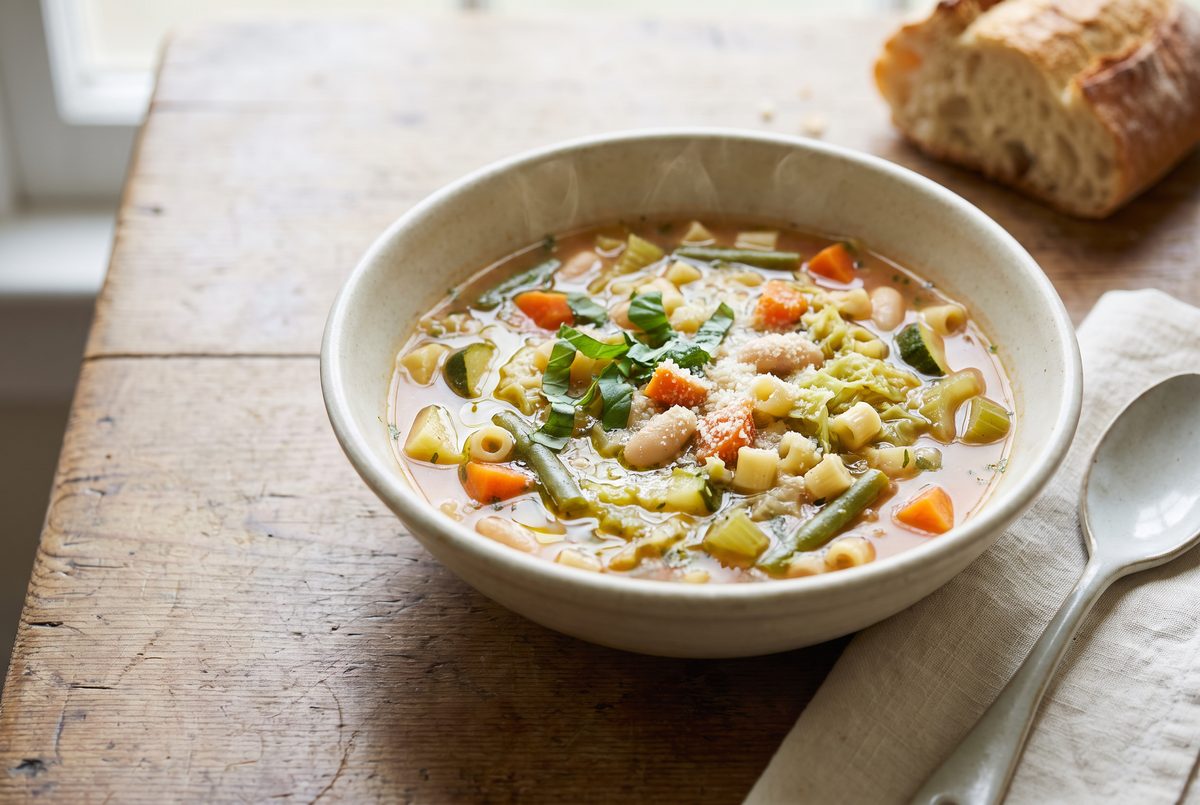
Classic Italian Minestrone Soup
Classic Italian minestrone is a thick vegetable soup with cannellini beans, seasonal vegetables and a handful of small…
- 1 hr 5 min
- 247 kcal
- 11 g protein
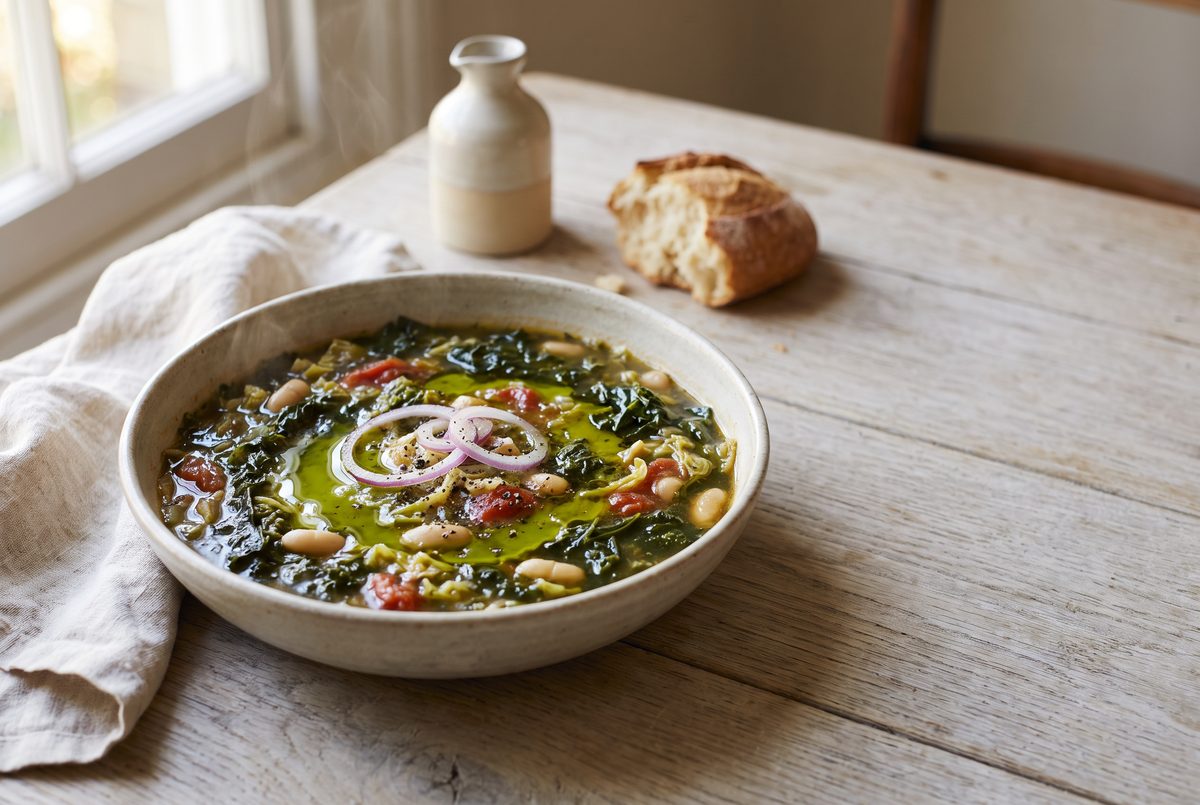
Ribollita: The Tuscan Kale, Bean and Bread Soup
Ribollita is the Tuscan soup that starts as a pot of cannellini beans and black kale and only becomes itself the next…
- 2 hr
- 418 kcal
- 15 g protein
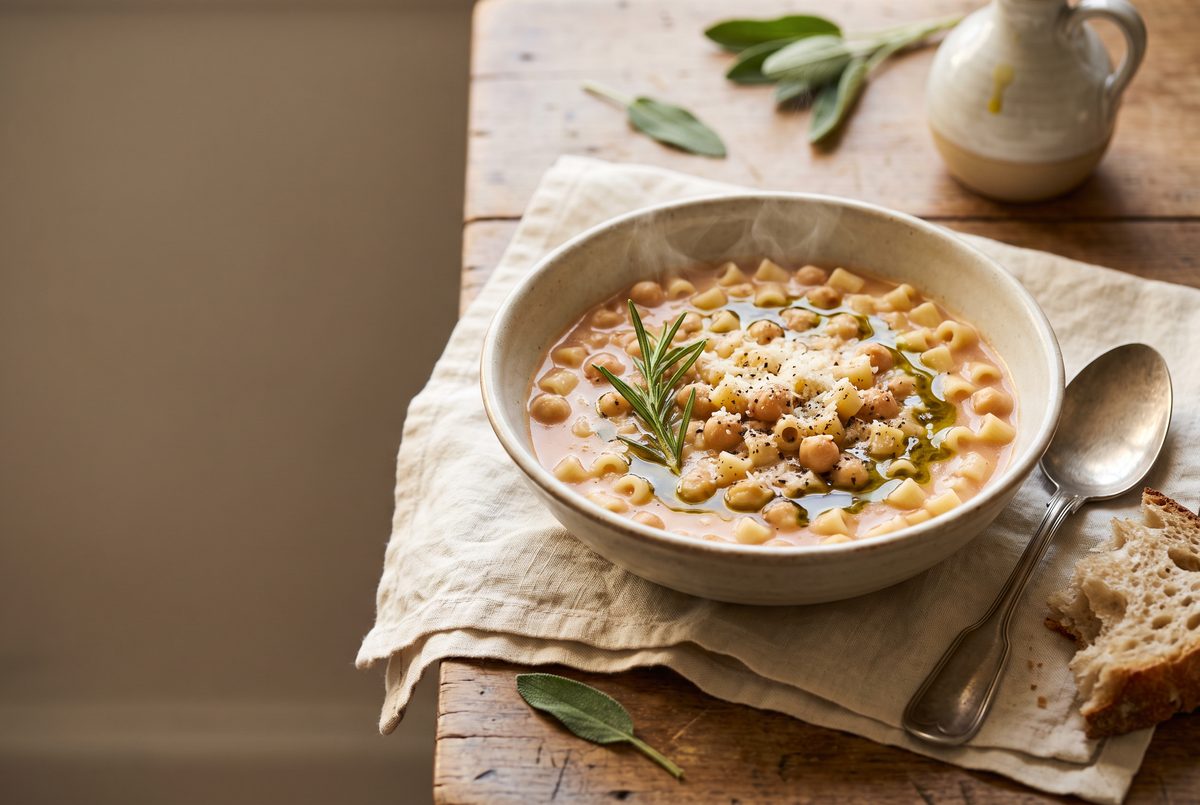
Pasta e Ceci (Roman Pasta with Chickpeas)
Pasta e ceci is a Roman one-pot dish of short pasta simmered with chickpeas, rosemary, garlic and a spoon of tomato…
- 35 min
- 611 kcal
- 23 g protein