Weight loss
How to Eat Italian and Lose Weight: A Practical Guide
Italians eat pasta, bread and cheese and have one of the lowest obesity rates in the developed world. Here's how the Mediterranean pattern works for weight loss, and how to apply it in an American kitchen — portion sizes, plate structure and the five habits that matter.
Italy has one of the lowest adult obesity rates in the developed world — around 17% in recent European surveys, against roughly 40% in the United States — and Italians eat pasta most days, bread with every meal, cheese without guilt and dessert on Sundays. That contrast is not a paradox. It's a lesson about how people eat, and it's the basis of every weight-loss recipe on this site.
This guide explains what the research says, what Italian home cooks do differently, and how to turn that into a weekday routine in a US kitchen.
What the evidence says
The "Mediterranean diet" studied in clinical trials is the traditional pattern of southern Italy and Greece around 1960: a lot of vegetables, fruit, legumes, whole grains and olive oil; moderate fish, poultry, dairy and wine; little red meat and few sweets. It is the most researched dietary pattern there is.
For weight loss specifically, the picture is consistent:
- In the PREDIMED trial (7,447 adults, Spain), a Mediterranean diet with no calorie restriction produced modest weight loss and a smaller waist than a low-fat control over five years.
- A 2020 meta-analysis of randomized trials found that the Mediterranean diet produced weight loss comparable to low-carb and low-fat diets at 12 months, with better adherence — people stayed on it.
- The DIRECT trial (Israel, 2 years) found the Mediterranean arm lost about the same as the low-carb arm and more than the low-fat arm, with the best blood-sugar control.
The recurring finding is not that Mediterranean eating is magic. It's that a calorie deficit you can maintain beats a bigger deficit you abandon in March, and this way of eating is unusually easy to maintain because the food is satisfying.
Why it's easy to stay on
Three mechanisms explain most of it.
Energy density. Vegetables, legumes and broth-based dishes carry a lot of volume per calorie. A bowl of minestrone weighs a pound and costs 250 calories; a slice of pizza weighs a quarter of that and costs more. Studies from Barbara Rolls's lab at Penn State show people eat a fairly constant weight of food per day, so lowering energy density lowers calories without lowering satisfaction.
Protein and fiber at every meal. Protein is the most satiating macronutrient and protects muscle during a deficit; fiber slows digestion and feeds the gut bacteria involved in appetite signaling. Italian meals get both from beans, fish, eggs, cheese and the sheer quantity of vegetables.
Fat where it counts. Olive oil, nuts and cheese aren't banned; they're measured and put where they're tasted — on top, at the end. A tablespoon of good oil over cooked greens does more for pleasure than three tablespoons lost in a sauté.
The plate, the Italian way
Forget the food pyramid. Picture the meal as it arrives at a family table in Bologna.
- Vegetables come first and take up half the plate. Contorni — sautéed greens, roasted peppers, a salad, beans with garlic — are not garnish. They are a course.
- Protein is modest and everywhere. A 4-oz piece of fish, two eggs, a bowl of lentils, a few slices of prosciutto: small portions, but at every meal.
- The starch is small and dressed simply. A primo of pasta is 70–85 g dry (2.5–3 oz), which cooks to about a cup and a half. It's sauced with tomato, vegetables, a spoon of oil and a dusting of cheese, not drowned.
- Bread is a tool, not a course. One slice to mop the plate, not a basket with butter.
- Dessert is fruit on weekdays. Cake and gelato exist, on Sundays and for guests.
If you do nothing else, restructure your dinner plate this way and the deficit tends to take care of itself.
Portion sizes: the real difference
Americans eating "Italian" mostly eat Italian-American, and the portions are the issue more than the ingredients.
| Dish | Typical US restaurant | Italian home portion | Difference |
|---|---|---|---|
| Pasta (dry weight) | 6–8 oz (170–225 g) | 2.5–3 oz (70–85 g) | ~450 kcal |
| Olive oil in a sauté | 3–4 tbsp | 1 tbsp | ~300 kcal |
| Grated cheese on pasta | ¼ cup | 1 tbsp | ~80 kcal |
| Bread with the meal | 3–4 slices + butter | 1 slice, no butter | ~250 kcal |
| Chicken parm serving | 10–12 oz breaded, fried | 5–6 oz, baked | ~350 kcal |
That table is roughly 1,400 calories of difference across a single meal. Nobody needs willpower to fix it; they need a kitchen scale for two weeks and an idea of what a portion looks like.
Five habits that do most of the work
1. Cook the vegetables first. Before you decide the rest of dinner, put a tray of vegetables in the oven or a pan of greens on the stove. When they're half the plate, the rest of the meal is automatically smaller.
2. Put 25–30 g of protein in every meal. Eggs or Greek yogurt at breakfast; tuna, beans, chicken or fish at lunch and dinner. This is the single biggest predictor of not being hungry at 4 p.m.
3. Measure the oil. Olive oil is good for you and 120 calories a tablespoon. Pour it from a spoon, not the bottle, and put most of it on food after cooking, where you taste it.
4. Eat sitting down, from a plate, without a screen. Italians rarely eat standing, walking or in the car. It sounds cultural; it's physiological. Satiety signals take about twenty minutes to arrive, and a meal eaten at a table lasts long enough to receive them.
5. Make dessert fruit on weekdays. A pear, an orange, a bowl of berries. Real dessert on Sunday, made properly and enjoyed.
A sample day (about 1,650 calories)
- Breakfast: Greek yogurt with berries, a spoon of honey and a small handful of walnuts (≈350 kcal, 22 g protein)
- Lunch:
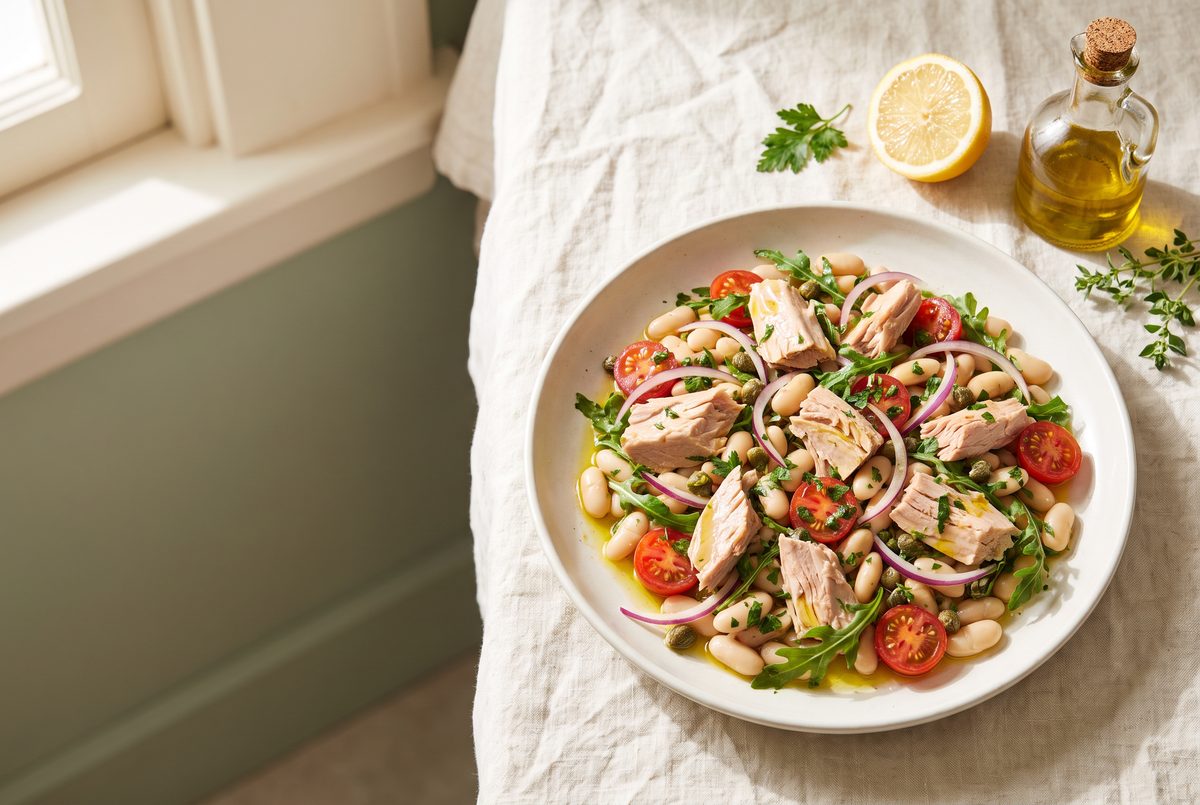
with a slice of whole-grain bread (≈520 kcal, 44 g protein)
- Snack: an apple and a 1-oz piece of Parmigiano (≈190 kcal)
- Dinner:
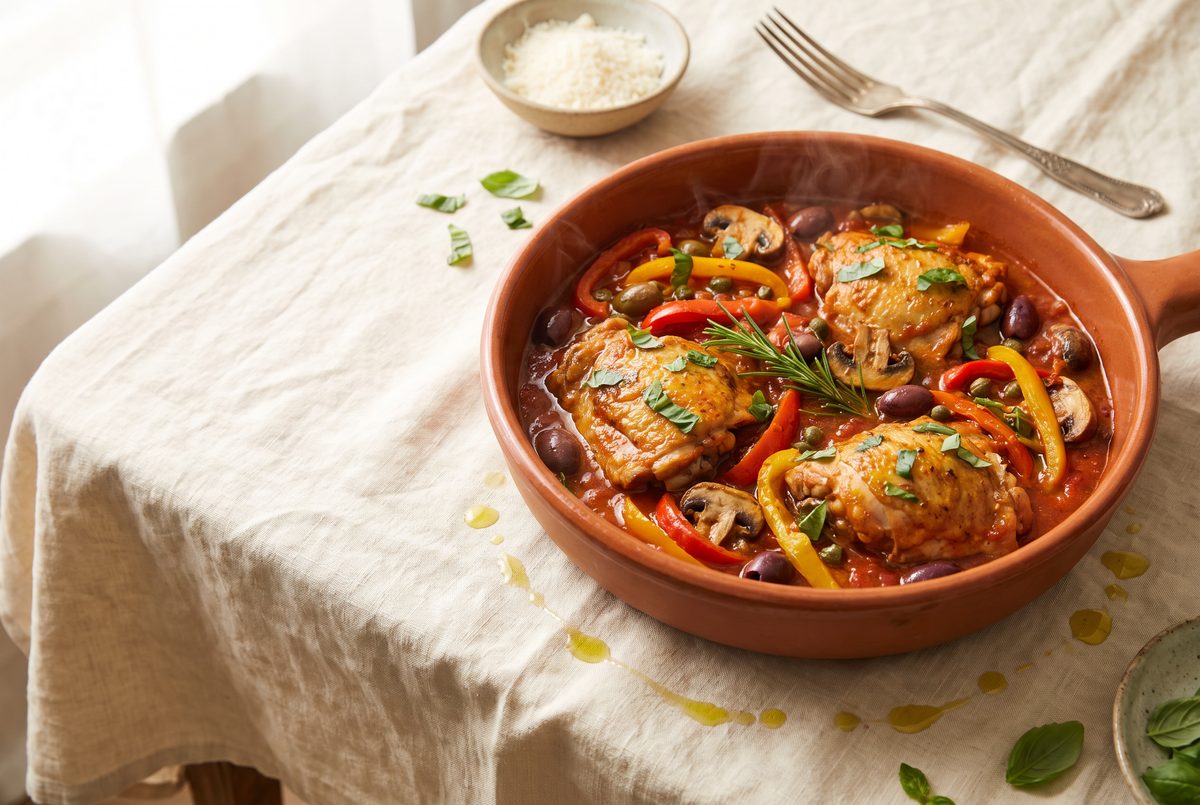
with a big green salad dressed with lemon and 1 tsp oil (≈470 kcal, 42 g protein)
- Dessert: a pear (≈100 kcal)
That day delivers about 115 g of protein and 35 g of fiber. For a moderately active 175-lb adult it's a deficit of roughly 500 calories — about a pound a week — and nobody eating it will describe it as a diet.
What to expect
A sensible deficit produces 0.5–1 lb (0.25–0.5 kg) per week. Faster than that on the scale in the first ten days is water and glycogen, not fat, and it will slow down; that's normal. Weigh yourself a few times a week and look at the weekly average, not the daily number.
Two things reliably derail people: skipping protein at breakfast (and being ravenous by lunch) and going "all or nothing" after one big meal. Italians do neither. A big Sunday lunch is followed by a light Sunday dinner — soup, a salad, some fruit — and Monday is just Monday.
Where to start
Our weight-loss recipes are all built to the numbers above: under 550 calories, at least 20 g of protein and 6 g of fiber per serving, with the vegetables doing the heavy lifting. Start with the minestrone if you want a week of lunches, or the cacciatore if you want dinner tonight.
This guide is general information, not medical advice. If you have a medical condition or take medication, talk to a physician or registered dietitian before changing your diet. See our nutrition disclaimer.
Sources: Estruch R. et al., NEJM 2018 (PREDIMED); Shai I. et al., NEJM 2008 (DIRECT); Ge L. et al., BMJ 2020 (meta-analysis of named diets); Rolls B. J., Physiology & Behavior 2009 (energy density); Leidy H. J. et al., AJCN 2015 (protein and weight management); Eurostat 2022 and CDC NHANES 2021 (obesity prevalence).
Frequently asked questions
Can you lose weight eating pasta every day?
Yes, if the portion is Italian-sized (about 2.5–3 oz dry, 300–350 calories) and it's dressed with vegetables and a modest amount of oil or cheese rather than cream. What you can't do is eat a 6-oz restaurant portion of fettuccine Alfredo daily and expect a deficit.
Is the Mediterranean diet good for weight loss?
Multiple randomized trials, including the PREDIMED and Lyon studies and a 2020 meta-analysis, show the Mediterranean pattern produces weight loss comparable to low-fat and low-carb diets, with better adherence over 12 months and stronger cardiovascular benefits. Adherence is the decisive variable in any diet.
How many calories should I eat to lose weight?
A deficit of 300–500 calories per day below maintenance produces about 0.5–1 lb (0.25–0.5 kg) of loss per week for most adults. Maintenance depends on your size and activity; a rough starting point is body weight in pounds × 14–15, minus the deficit. Adjust after two weeks based on the scale and how you feel.
Do I have to count calories?
Not necessarily. Many people lose weight on the Mediterranean pattern by changing plate structure and portions alone. Counting for two or three weeks is still worth it: it teaches you what 3 oz of pasta or a tablespoon of oil actually looks like, and that knowledge lasts.