Butternut Squash Soup with Cannellini
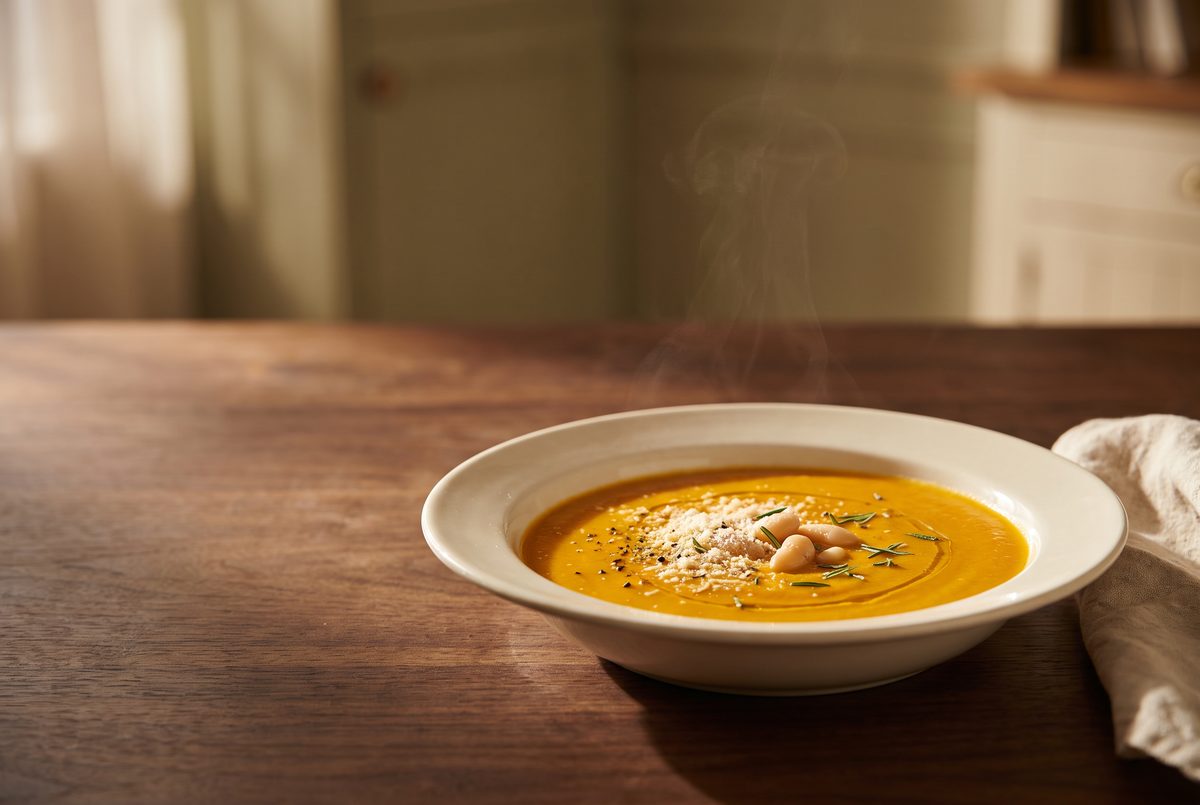
The Italian way with a winter squash is to put it in the oven, not in the water: 2½ lb of butternut roasted until the edges catch, then blended with cannellini and rosemary into a soup thick enough to stand a spoon in, with no cream anywhere near it.
An Italian butternut squash soup built on roasted squash instead of boiled: 2½ lb of butternut, a leek and four cloves of garlic go into a hot oven until the edges darken, then into the blender with low-sodium broth, cannellini beans and rosemary. A bowl is 425 calories with 16 g of protein and 14 g of fiber, and there is no cream in it — the beans do that job.
There is a reason the Mantuan cooks who make tortelli di zucca — the pumpkin tortelli of the Po valley, with the amaretti crushed into the filling — never boil the squash. Put a boiled squash in a pasta filling and it weeps through the dough overnight. So they bake it, often whole, until it collapses on itself, and the filling comes out dense and sweet and dry. The same physics applies to soup, which is the part that gets forgotten: a butternut is about 86% water, and if you simmer it in a quart of broth you have not concentrated anything, you have diluted it. Then the only fix left is cream.
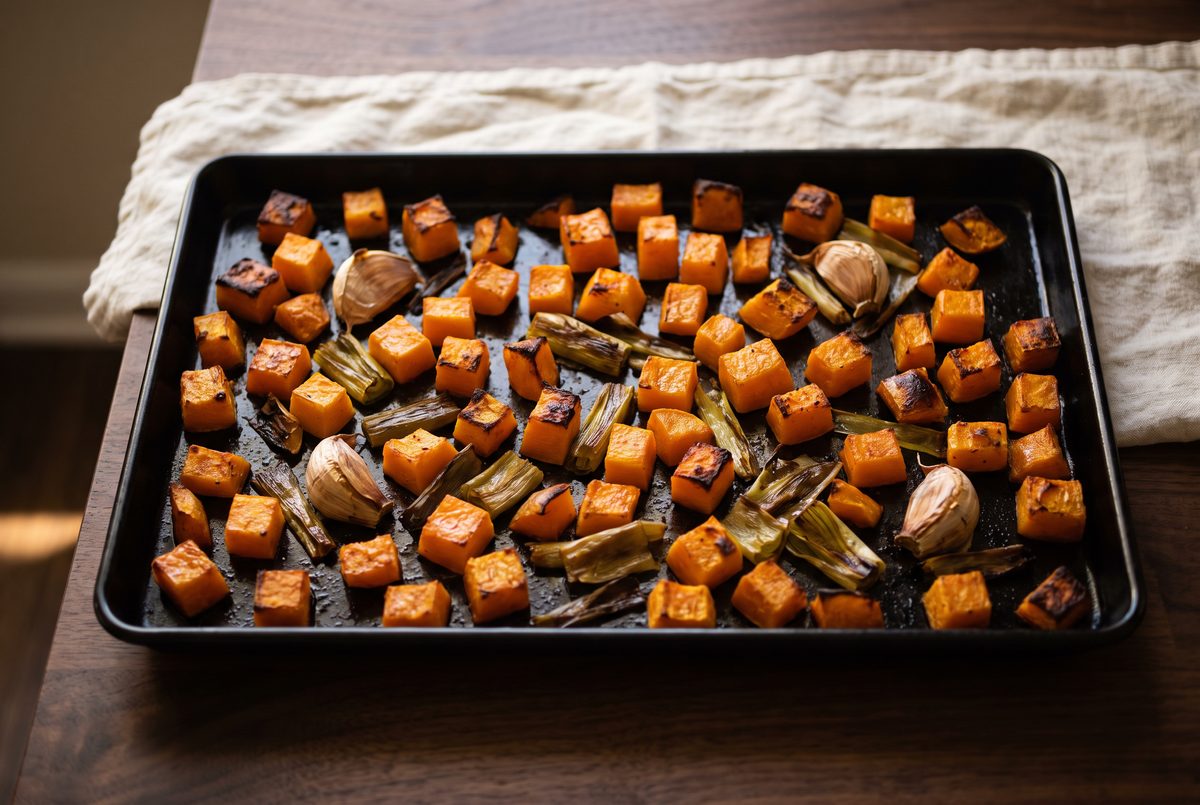
This is the version I make from late October onward, and it leans on the oven for everything. The squash goes on a sheet pan in 1-inch cubes with a leek and four unpeeled garlic cloves, 425°F, until some of the edges have gone genuinely dark — not golden, dark — because that is flavor you cannot get any other way. Then it is blended with broth and half a can of cannellini, which does the work cream would do, and the other half of the beans goes in whole so there is something to chew. Rosemary rather than sage: sage is what I use with squash in a risotto alla zucca, where it has butter and Parmigiano to sit in, but in a pureed soup it turns dusty, while rosemary cuts the sweetness.
Two honest warnings. Peeling and cubing 2½ lb of raw butternut takes fifteen minutes and a heavy knife, and if that is the reason you never make it, buy the pre-cut cubes; the recipe does not suffer much. And do not fill a countertop blender more than half full with anything this hot — steam expands, the lid lifts, and you will find squash on the ceiling.
Why this recipe works for healthy & green
425 calories for a bowl that weighs about 545 g, which is the whole argument for cooking vegetables this way. A serving runs a shade under 0.8 calories per gram, and 1,200 g of squash across four bowls is what buys that. Rolls (2009, Physiology & Behavior) is the readable summary of the work behind why it matters: people eat a fairly constant weight of food across a day, so a dish with low energy density tends to lower the calories eaten without anyone deciding to eat less. There is also a specific literature on soup as a form — Flood and Rolls (2007, Appetite) found that a bowl of soup eaten before the rest of the meal lowered total intake at that meal compared with no first course, across several different soup textures. Neither finding is a promise about anybody's week; both are reasons a 425-calorie bowl is a sensible main course rather than a starter.
14 g of fiber, and it is the two cheapest things in the pot doing it. The cannellini contribute 30 g of fiber and the squash 24 g, out of 58 g total. The systematic review Reynolds and colleagues published in The Lancet in 2019 found the clearest health associations for adults eating 25–29 g of fiber a day, against a US average closer to 16 g — so one bowl covers about half the gap. Beans are also where the soup's protein comes from: 37 g of the 64 g in the pot, with Parmigiano adding 11 g and the squash a surprising 12 g of its own.
No cream, and no need for it. Commercial squash soups reach thickness with cream, coconut milk or a roux; this one gets there mechanically, by pureeing roasted squash with half the beans until the starch and the bean solids hold the water in suspension. Fat is 13 g a serving, 2.8 g saturated, and almost all of it is the 2½ tablespoons of olive oil plus the cheese. Sugar is 9.4 g, every gram of it from the squash and the leek — there is no maple syrup or brown sugar in here, which is worth checking on the label of anything you buy in a carton.
The caveat is sodium: 766 mg a bowl. Just under half of that is the two cans of beans (1,440 mg of the 3,066 mg in the pot), a quarter is the ⅓ teaspoon of salt on the tray, and the rest is the Parmigiano and the broth. Draining and rinsing the beans under running water for fifteen seconds removes a real amount that USDA figures cannot credit, since canned legumes are measured drained but not rinsed. If sodium is the number you watch, the variation below with home-cooked dried beans lands at 414 mg. For more cooking in this register, the healthy & green collection is where this belongs.
Ingredients
About 8 cups (1.9 L) — 4 main-course bowls of roughly 2 cups
On the sheet pan
In the pot
To finish
Instructions
- Cut the squash into cubes the same size, and mean it. Heat the oven to 425°F (220°C). Cut the neck off the bulb, stand each piece flat and take the skin off in strips with a knife rather than a peeler — butternut skin is thicker than a peeler can handle. Scrape out the seeds and cut everything into 1-inch (2.5 cm) cubes. You want 2½ lb (1200 g) of trimmed cubes, which is a squash of about 4 lb to start with. Even sizing is the whole game here: inch cubes roast in 35 minutes, half-inch scraps burn in 20, and a mixed tray gives you both.
- Everything on one pan, and leave room between the pieces. Toss the squash, the leek and the 4 unpeeled garlic cloves with the 2 tbsp olive oil and the ⅓ tsp salt directly on a plain black sheet pan. Spread it out in a single layer with gaps — two pans if your one pan looks crowded. Crowding is what makes squash steam instead of roast, and steamed squash is where watery soup comes from.
- Roast 30–35 minutes, until some edges are dark, not golden. Roast 30 to 35 minutes, turning the pieces once at the halfway mark. The cubes are done when a knife goes through with no resistance and a good number of the cut corners have gone deep brown, in places nearly black. Pale, evenly orange cubes mean you took it out too early; put it back for 8 minutes. The leek will be collapsed and bronzed at the tips and the garlic skins papery. Squeeze the garlic out of its skins and discard them.
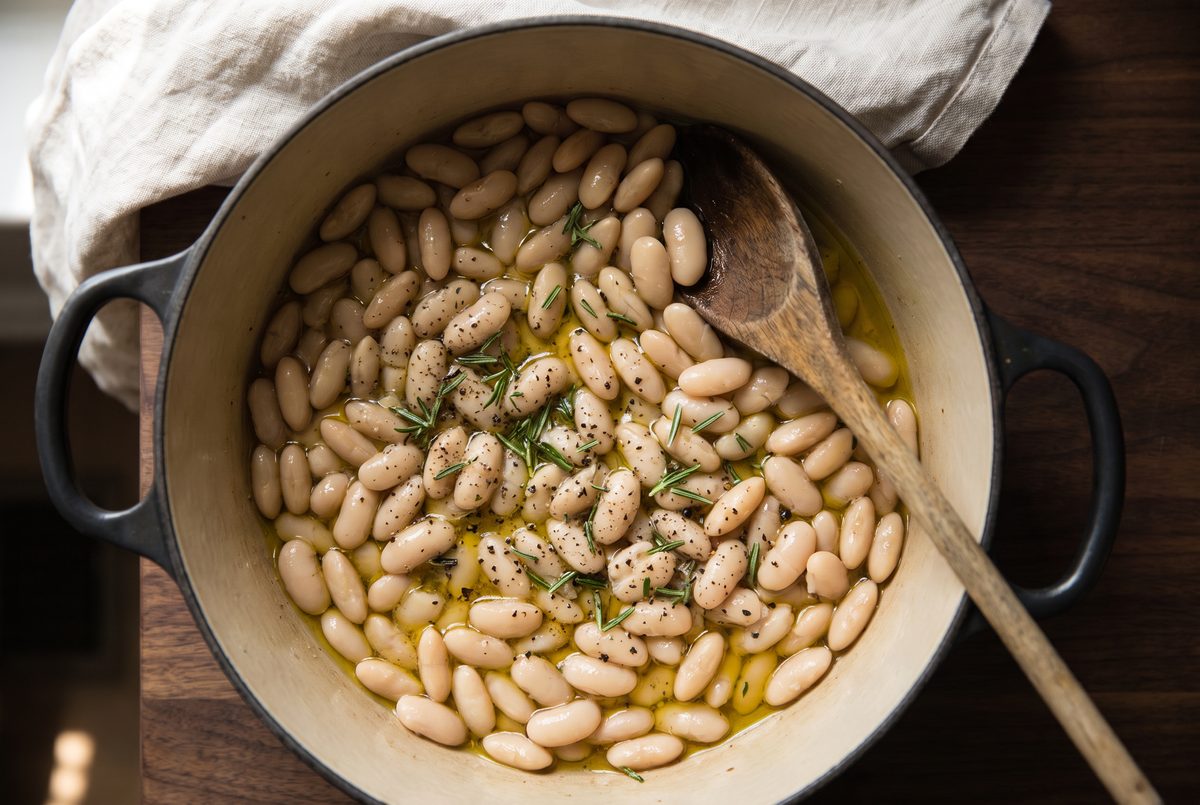
- Rosemary into warm oil, then the beans. In a heavy pot over medium-low heat, warm the 1 tbsp olive oil with the chopped rosemary for about 1 minute, until you can smell it but it has not browned. Add the drained, rinsed cannellini and a few grinds of pepper, and let them warm through for 3 minutes. Scoop out half the beans (about 1 cup) and set them aside in a bowl — those are the ones that stay whole.
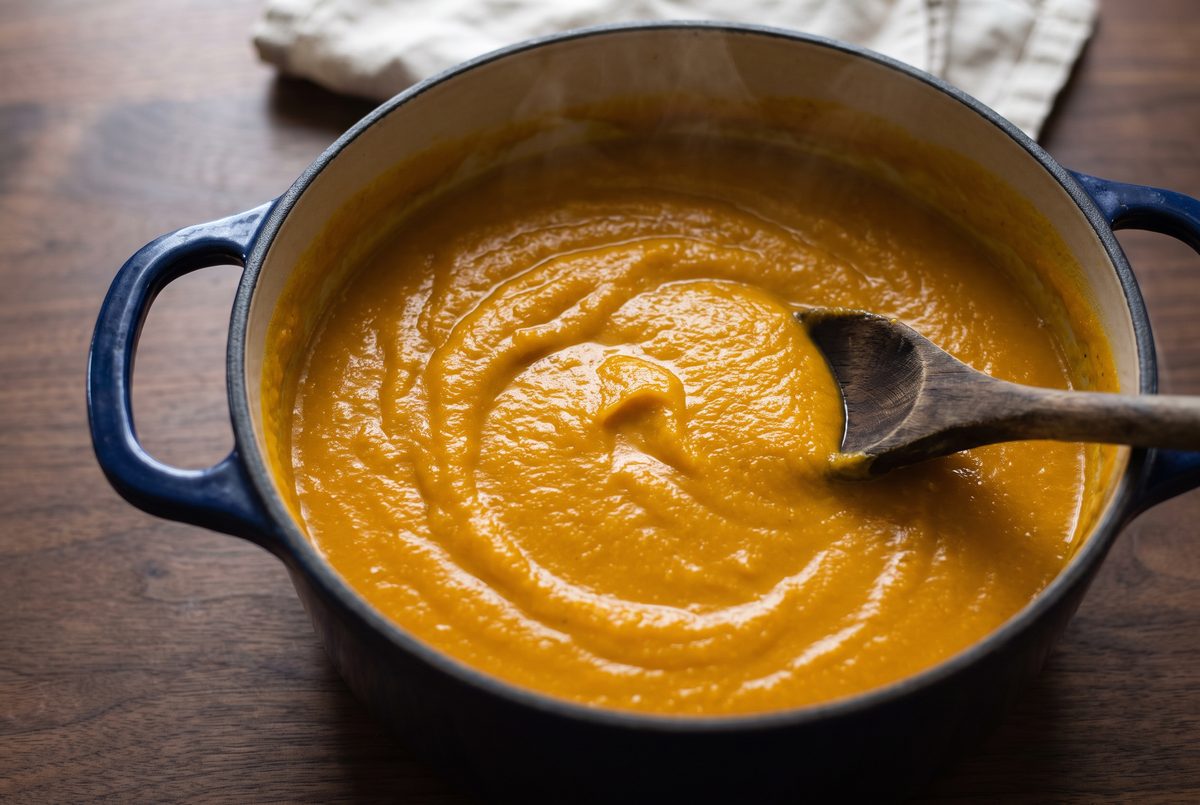
- Blend the squash with the beans in the pot and the hot broth. Add the roasted squash, leek and the squeezed garlic to the pot with the remaining beans, pour in the 2 cups of hot broth, and blend. An immersion blender in the pot is easiest; a countertop blender gives a silkier result but work in two batches, filling the jar no more than half full, with the lid vented and a towel over it. Blend longer than feels necessary — a full minute — until the surface goes glossy and there is no graininess left. Thin with hot water, a splash at a time, until a spoon stood in the middle falls over slowly rather than instantly. I use about ¾ cup; a drier squash takes more.
- Whole beans back in, five minutes, then taste. Stir the reserved whole beans back in and bring the soup to a bare simmer for 5 minutes so they heat through and the rosemary spreads. Now taste it. Roasted squash is sweet, and what it usually wants is not more salt but more pepper — go further than you think. If it does need salt, add it ⅛ teaspoon at a time and know the cost: each ¼ teaspoon over four bowls adds 145 mg of sodium a serving.
- Parmigiano at the table, not in the pot. Ladle into bowls, then grate the Parmigiano over the top — ⅓ cup (30 g) across four bowls — with a last grind of pepper. Cheese stirred into the pot while it is on the heat goes stringy and settles; on top it stays where you can taste it. A thread of olive oil on each bowl is traditional and costs about 40 calories a teaspoon, which is a decision, not a requirement.
Tips from our kitchen
- Dark edges are the recipe. If you take one thing from this page: the difference between a squash soup people remember and the usual orange bowl is 8 more minutes in the oven and a sheet pan that is not crowded. You are after the same browning you want on a roast, on a vegetable that costs $3.
- Pre-cut cubes are a fair trade. A 2-lb bag of pre-cut butternut plus a little more to make the weight saves the whole fifteen minutes of peeling. They are often cut small and unevenly, so check the tray at 25 minutes. What you lose is the seeds, which are worth roasting on their own if you have the whole squash.
- Kabocha or delica squash works and is arguably better — drier flesh, less water to drive off, deeper flavor. Honeynut needs 5 minutes less. Steer clear of a carving pumpkin: it is bred for size and the flesh is stringy and bland, which no amount of roasting fixes.
- Rinse the beans properly. Tip both cans into a colander and run cold water over them for a full fifteen seconds, shaking the colander. USDA numbers for canned legumes are measured drained but not rinsed, so the 766 mg of sodium in the table above is a ceiling rather than a measurement of your bowl.
- It thickens overnight, which is not a fault. Squash puree and bean starch both keep absorbing water in the fridge, and day-two soup comes out of the pot almost spoonable. Thin it with hot water as you reheat, not with more broth, or the sodium climbs with every reheat.
Variations
- Vegan, with toasted pine nuts instead of the cheese: leave out the Parmigiano and scatter 2 tbsp (20 g) of pine nuts toasted dry in a pan over each four bowls. That is 429 calories, 14 g of protein, 15 g of fiber, 1.8 g of saturated fat and 646 mg of sodium — fewer than the original on both sodium and saturated fat, 2 g less protein, and you get crunch, which a pureed soup needs. Our guide to vegan Italian food covers the other places Parmigiano hides.
- Dried beans instead of canned, if sodium is your number: 1 cup (180 g) of dried cannellini soaked overnight and simmered unsalted for 60–75 minutes gives roughly the 480 g the recipe needs. A bowl becomes 455 calories, 18 g of protein, 73 g of carbohydrate and 414 mg of sodium — a little over half the sodium of the canned version, and more protein, because home-cooked beans are less waterlogged than canned ones. The extra calories are the same reason.
- With farro, as a recovery bowl: stir 100 g of pearled farro, boiled separately for 15 minutes, into the finished soup. 510 calories, 19 g of protein, 85 g of carbohydrate and 16 g of fiber — enough carbohydrate to be worth eating after a long Sunday run, and no longer gluten-free. It makes the soup a stew, so expect to add another ½ cup of water.
- Calabrian, with chili: ½ teaspoon of crushed chili flakes warmed in the oil with the rosemary changes the dish more than it sounds like and does not move the numbers (3 calories across four bowls). Finish with a little more olive oil and skip the Parmigiano and you have something closer to a southern bean soup than a northern squash one.
- A note on the amaretti: if you know the Mantuan tortelli, you may be tempted to crush an amaretto biscuit over the top. It is a real pairing, but it takes the soup somewhere sweet, and the whole point of the rosemary here is to pull in the other direction. Try it on one bowl before you commit the pot.
Storage & meal prep
This is a good soup to cook on purpose for the week. Cooled and covered it keeps 4 days in the fridge and thickens noticeably by day two, which is a texture change rather than a quality one — reheat gently with hot water stirred in a splash at a time, not more broth, since the sodium is already the number to watch. It freezes 3 months and freezes well, with one caveat: the whole beans go slightly mealy on thawing while the pureed base is unaffected, so if you are cooking for the freezer, blend all the beans into the soup and skip the whole ones. Freeze it in single portions, thaw overnight in the fridge, and reheat on the stove rather than in the microwave, which heats a thick puree in patches. Do not add the Parmigiano until the bowl is in front of you.
Nutrition per serving
| Nutrient | Amount | % DV* |
|---|---|---|
| Calories | 425 kcal | 21% |
| Total fat | 13 g | 17% |
| Saturated fat | 2.8 g | 14% |
| Carbohydrates | 67 g | 24% |
| Fiber | 14 g | 50% |
| Sugars | 9.4 g | — |
| Protein | 16 g | 32% |
| Sodium | 766 mg | 33% |
*Percent Daily Values are based on a 2,000-calorie diet. Values are calculated from USDA FoodData Central and manufacturer data for the ingredients as listed; they are estimates, not lab analyses. Nutrition disclaimer.
Frequently asked questions
Is butternut squash soup healthy?
This version is a complete main course rather than a starter: 425 calories a bowl with 16 g of protein, 14 g of fiber and 13 g of fat, of which only 2.8 g is saturated. The fiber and protein both come from the cannellini and the squash rather than from anything added. The number to watch is sodium at 766 mg, just under half of it from the canned beans — rinsing them helps, and cooking dried beans instead brings a bowl to 414 mg.
How many calories are in a bowl of butternut squash soup?
In this recipe, 425 calories for a bowl of about 2 cups (roughly 545 g), which works out to around 78 calories per 100 g. Restaurant and carton versions usually run higher because of cream, coconut milk or added sugar, and lower per bowl because the serving is smaller. Butternut squash on its own is 45 calories per 100 g; here the oil accounts for 354 of the 1,698 calories in the pot and the beans for 547.
Can you make butternut squash soup without cream?
Yes, and the texture does not suffer. Thickness in a pureed soup comes from solids held in suspension, not from fat: roasted squash blended with half the cannellini gives a soup you can stand a spoon in at 13 g of fat a serving. Blend for a full minute rather than twenty seconds — most thin, grainy squash soup is under-blended rather than under-creamed.
Do you have to roast the squash first?
You do not have to, but it is the difference between this soup and the ordinary kind. A butternut is about 86% water; simmering it in broth adds more water to something that already has too much, while 35 minutes at 425°F drives water off and browns the sugars at the cut edges. If you are short on time, cube the squash small and roast it at 450°F for 22 minutes instead — still better than the pot.
How much protein is in butternut squash soup?
Usually very little, which is why a squash soup tends not to hold you. Here it is 16 g a bowl, from three places: the two cans of cannellini contribute 37 g to the pot, Parmigiano 11 g and the squash itself 12 g, out of 64 g total. Home-cooked dried beans take a serving to 18 g, and stirring in cooked farro takes it to 19 g with a good deal more carbohydrate.
Can I freeze butternut squash soup?
Yes, 3 months. The pureed base freezes and reheats without any change at all; the whole beans stirred in at the end come back slightly mealy, so if the pot is destined for the freezer, blend all the beans in and leave none whole. Thaw overnight in the fridge and reheat on the stove, stirring, because a thick puree heats unevenly in a microwave.
Sources
- USDA FoodData Central — butternut squash (raw), cannellini/white beans (canned drained, and mature seeds boiled without salt), leek, garlic, Parmigiano Reggiano, olive oil, vegetable broth (low sodium)
- Reynolds, A. et al. (2019). Carbohydrate quality and human health: a series of systematic reviews and meta-analyses. The Lancet
- Rolls, B.J. (2009). The relationship between dietary energy density and energy intake. Physiology & Behavior
- Flood, J.E. & Rolls, B.J. (2007). Soup preloads in a variety of forms reduce meal energy intake. Appetite
You might also like
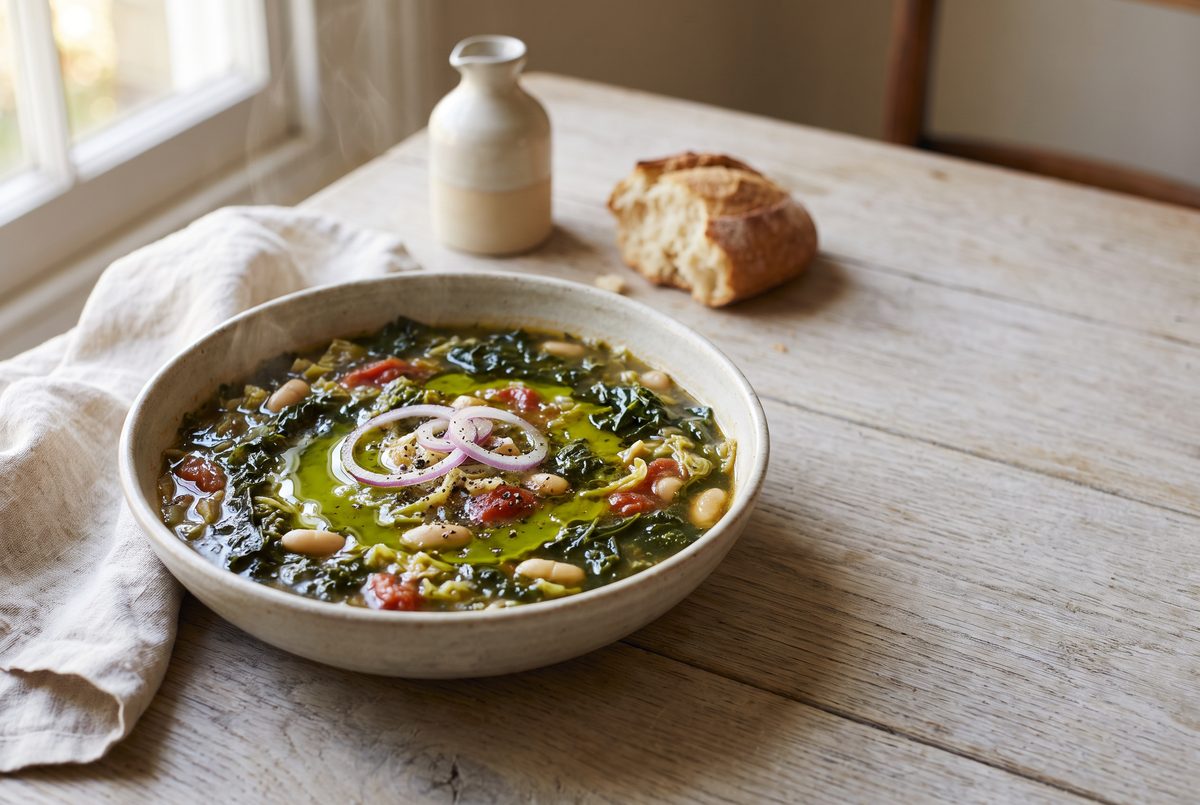
Ribollita: The Tuscan Kale, Bean and Bread Soup
Ribollita is the Tuscan soup that starts as a pot of cannellini beans and black kale and only becomes itself the next…
- 2 hr
- 418 kcal
- 15 g protein
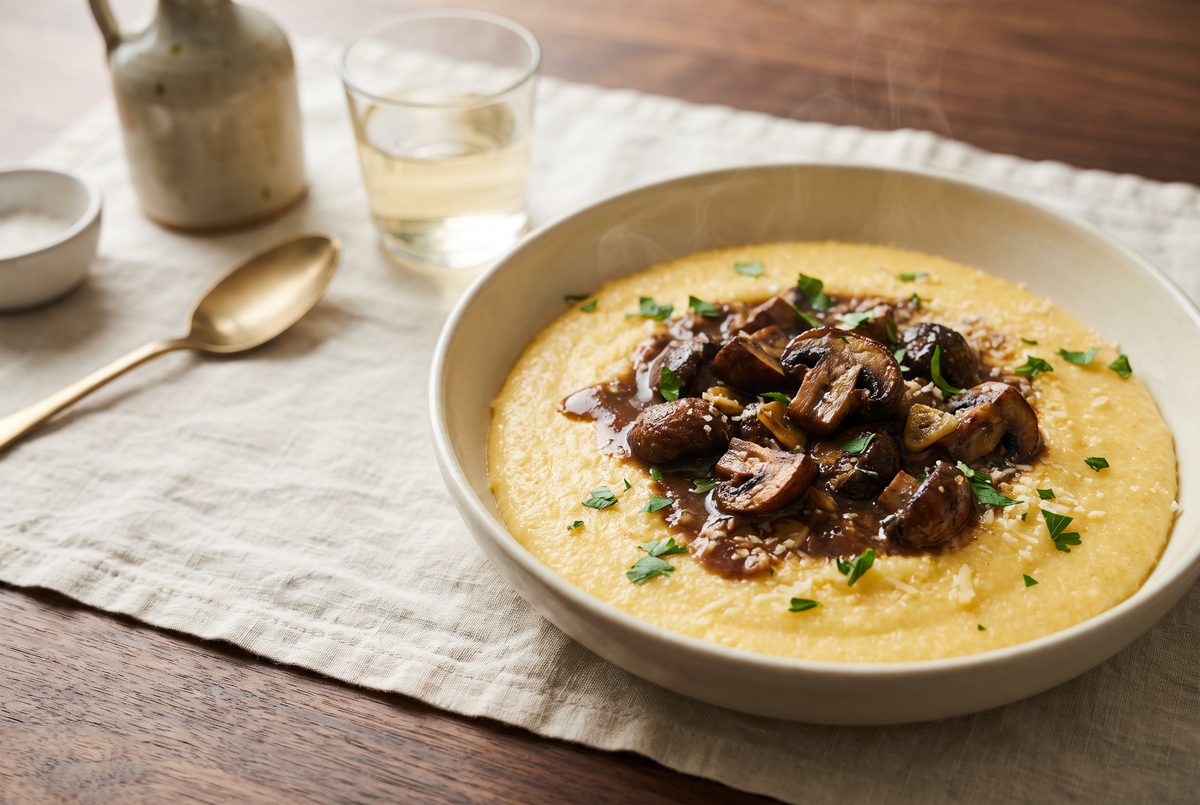
Creamy Mushroom Polenta (Polenta ai Funghi)
Polenta ai funghi is soft stone-ground cornmeal under a ragù of 1½ pounds of mushrooms, browned in two batches with…
- 1 hr
- 453 kcal
- 13 g protein
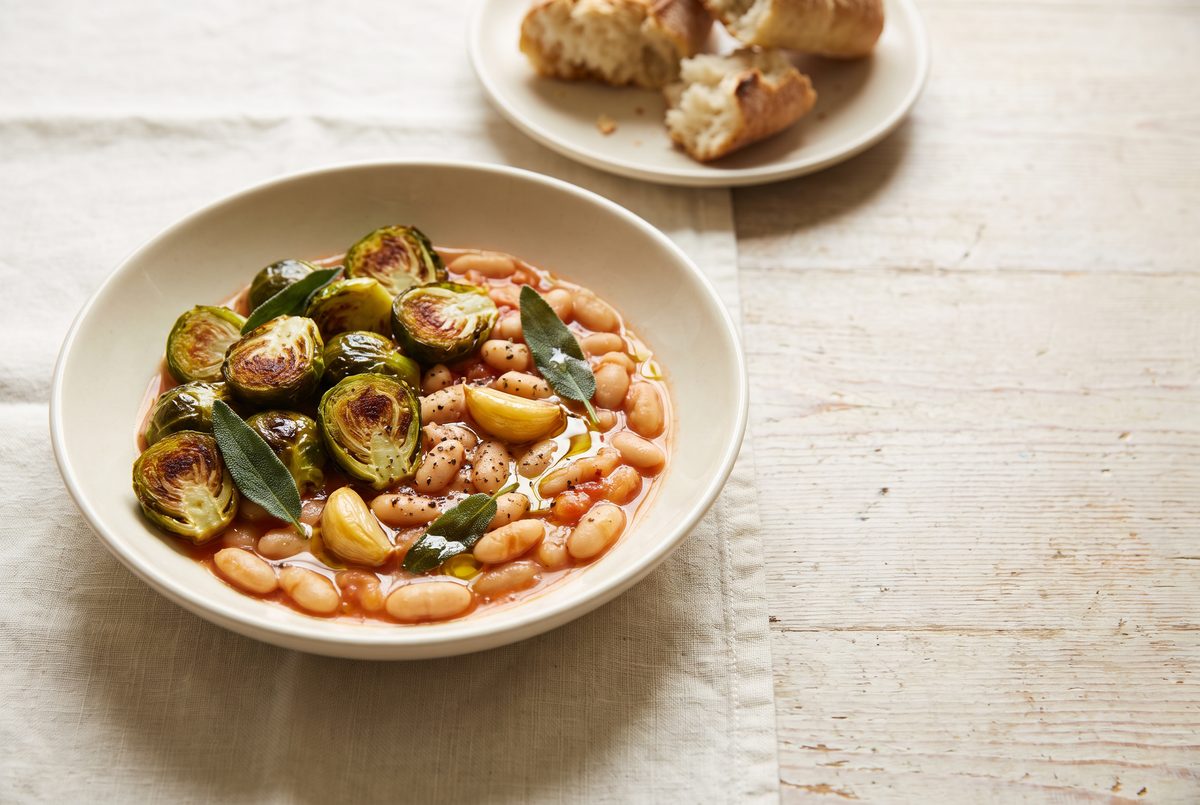
Brussels Sprouts with Tuscan White Beans
Brussels sprouts seared cut-side down until deeply browned, then finished in a pan of *fagioli all'uccelletto* — the…
- 35 min
- 383 kcal
- 18 g protein