Brussels Sprouts with Tuscan White Beans
Sprouts seared until the cut sides are mahogany, then folded into fagioli all'uccelletto — the Florentine pan of cannellini with garlic, sage and a spoonful of tomato.
Brussels sprouts seared cut-side down until deeply browned, then finished in a pan of *fagioli all'uccelletto* — the Florentine way with cannellini, garlic, sage and a spoonful of tomato. One main-course plate is 383 calories with 18 g of plant protein and 18 g of fiber, vegan as written, done in 35 minutes in a single skillet.
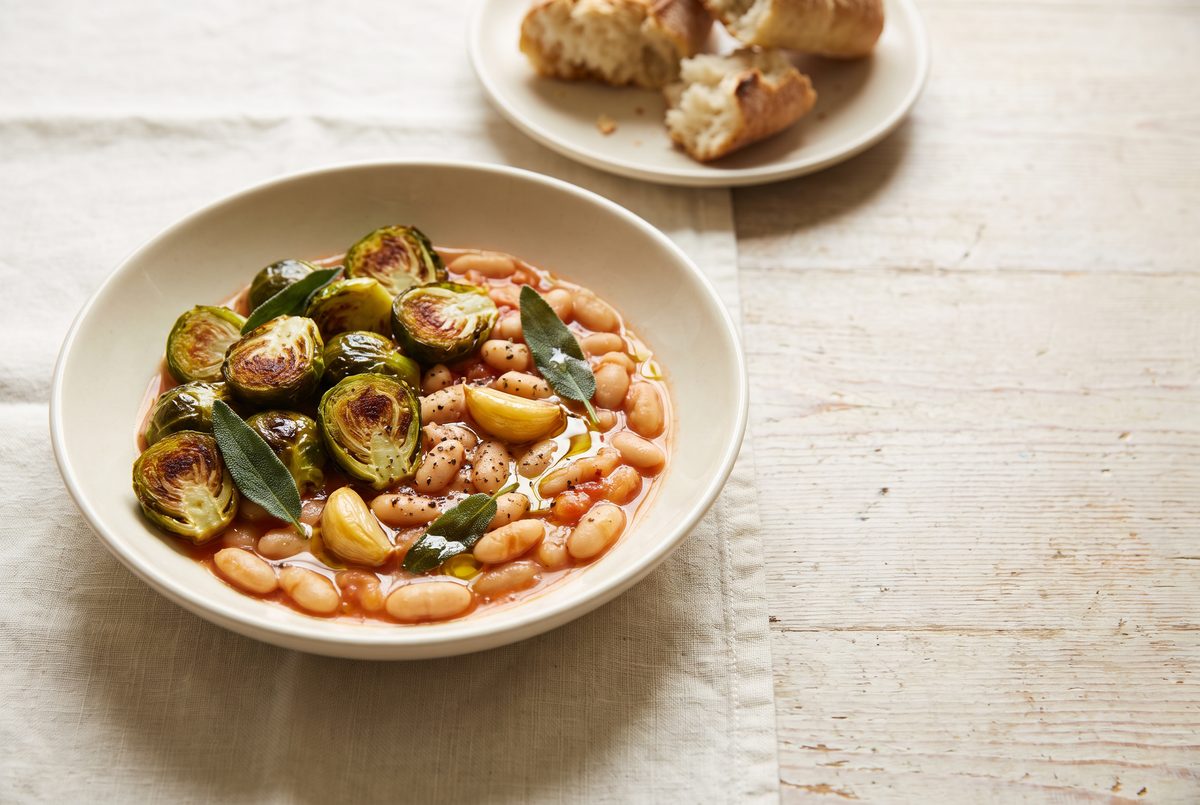
Brussels sprouts have a bad name in two countries for the same reason: they were boiled, or steamed under a lid, until the sulfur compounds came out and stayed in the pan. The fix is not a new vegetable, it's a dry hot surface — halve them, lay the cut sides down in oil and leave them alone until they're mahogany. That browning is where the sweetness comes from, and it takes five minutes of doing nothing.
The second half of this plate is older than the vegetable's reputation. Fagioli all'uccelletto — cannellini stewed with garlic, sage and a spoonful of tomato — is what a Florentine trattoria serves next to sausages, and the name means the beans are cooked the way small game birds were. It was built as a side dish for meat, which is exactly why it works as a base for a vegetable: salt, fat, a little acid and 8 g of fiber per serving, already seasoned to carry something else. In November, when the sprout stalks show up at the market and the only decent tomatoes left are the ones in a jar, the two halves meet in one pan.
Why this recipe works for healthy & green
Fiber is the number that defines this plate: 18 g per serving, against a 28 g daily value that average American intake, around 16 g a day, falls well short of (Quagliani & Felt-Gunderson, 2017). Half of it is from the sprouts, half from the beans, and the two kinds behave differently — beans bring the viscous, fermentable fraction, brassicas the insoluble. The Lancet series on carbohydrate quality found the clearest dose-response for mortality and cardiometabolic outcomes in the 25–29 g range of daily fiber (Reynolds et al., 2019), which one plate of this gets you two thirds of the way to.
Brussels sprouts are Brassica oleracea, the same species as cabbage and broccoli, and carry the glucosinolates of the family. Large prospective cohorts associate regular cruciferous intake with lower total and cardiovascular mortality (Zhang et al., 2011); the effect sizes are modest and observational, but at 43 calories per 100 g the vegetable costs you nothing to eat. A serving also covers the daily vitamin C and vitamin K requirement several times over, which is a USDA fact rather than a health claim.
The protein is 18 g and it is entirely from plants. Cannellini supply about 10 g of that, the sprouts a surprising 7.6 g. Beans are low in methionine and brassicas are not, so the mix is better than either alone — the practical point from the literature on vegetarian protein is that variety across a day, not within a meal, is what matters (Mariotti & Gardner, 2019). If you want a plate built around protein from the start, see our muscle-gain recipes; for more cooking in this register, the healthy & green collection and our guide to vegan Italian food.
Sodium is the honest weak point: 735 mg per serving, and roughly 375 mg of that is the canned beans. Rinsing them under the tap takes a good share of it away before it reaches the pan, and cooking 7 oz of dry cannellini yourself drops the plate to 368 mg — at the cost of 415 calories instead of 383, since home-cooked beans are denser than canned.
Ingredients
4 main-course plates, or 8 side portions
The sprouts
Fagioli all'uccelletto
To finish
Instructions
- Trim and halve the sprouts. Cut a thin slice off the dry stem end of each sprout and pull off any loose outer leaves — keep the ones that are still tight and green, they crisp up in the pan. Halve every sprout through the stem so each half has a flat cut side. Sort out anything smaller than a walnut and leave those whole; they cook at about the same rate as the halves. Dry them well if you washed them: water in the pan is the difference between searing and steaming.
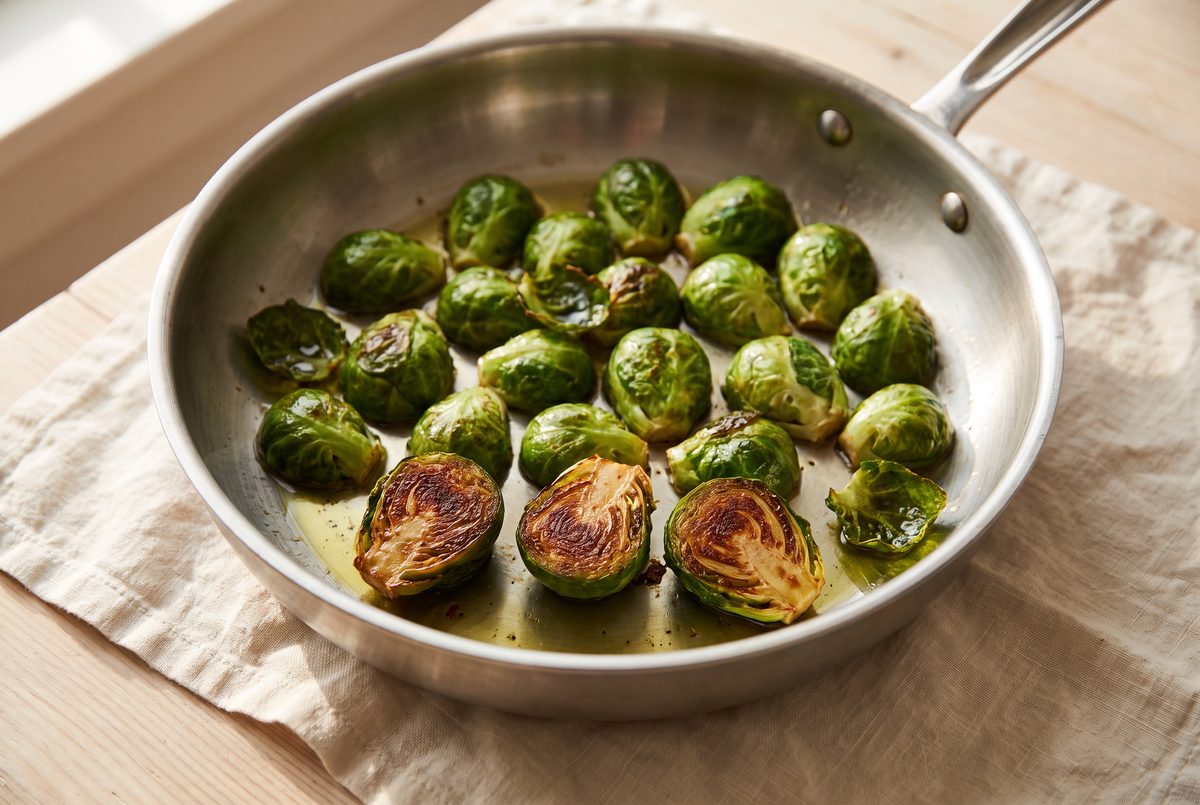
- Sear them cut-side down, in two batches. Warm 1 tbsp of the olive oil in a 12-inch skillet over medium-high heat until it shimmers. Lay in half the sprouts, every cut side against the metal, in one layer with a little space between them. Now leave them alone for 5 to 6 minutes — no stirring, no shaking. They are ready when the cut sides are deep mahogany brown, almost burnt at the edges, and come away from the pan on their own. Season with half the salt, tip them onto a plate and repeat with the second tablespoon of oil and the rest. A crowded pan steams: two batches is the whole trick.
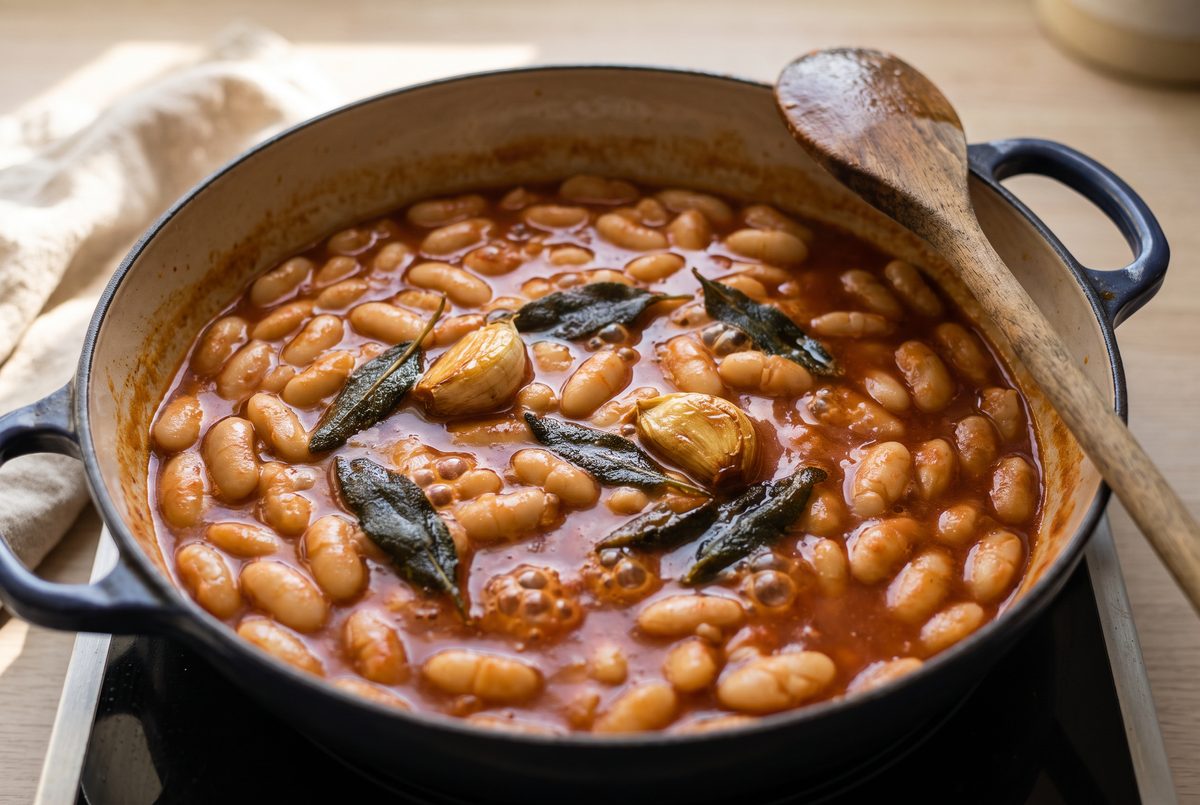
- Start the beans: garlic, sage, chili. Turn the heat down to medium-low and add the remaining 1 tbsp oil to the same pan, with the crushed garlic cloves, the sage leaves and the chili flakes. Cook 2 to 3 minutes, until the garlic is pale gold and the sage has gone dark and papery and smells of sage rather than of grass. Pale gold, not brown — scorched garlic turns the whole pan bitter and cannot be rescued.
- Add the tomato, then the cannellini. Pour in the passata and let it bubble 4 to 5 minutes, until it darkens a shade and no longer smells raw. Add the drained beans, the rest of the salt and about ¼ cup of water, and simmer 6 to 8 minutes. Crush a dozen beans against the side of the pan with the back of a spoon: their starch is what thickens the sauce, and it is the only thickener in the dish. You want a pan that is saucy, not soupy — the spoon should leave a trail that closes slowly.
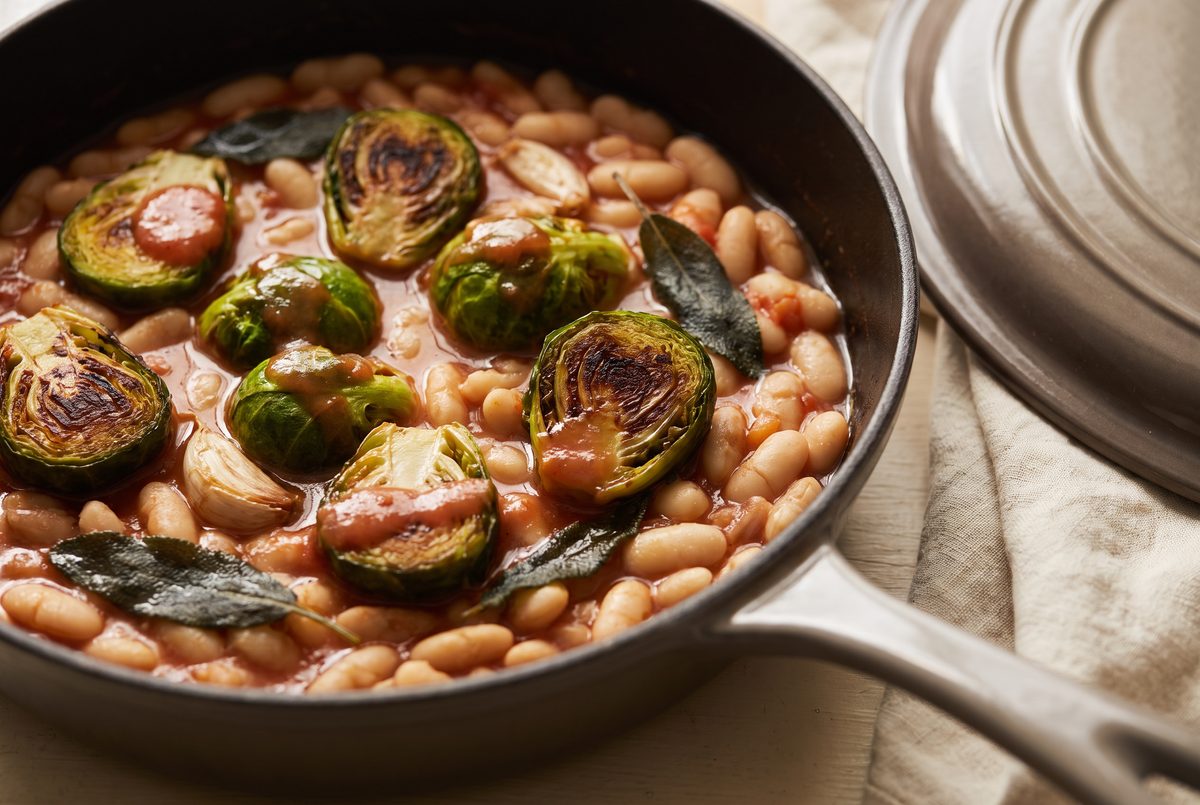
- Fold the sprouts back in and finish them. Return the sprouts and any juices from the plate, browned sides up where you can manage it, and spoon some of the beans over them. Cover and cook 3 to 4 minutes over low heat — long enough that a knife goes through the thickest half with slight resistance, short enough that they keep their shape and their color. This is the only moment a lid belongs on this pan. Fish out the garlic cloves if you like; most Florentine cooks leave them in.
- Oil, pepper, taste. Off the heat, pour over the last tablespoon of raw olive oil and grind the black pepper on top. Taste for salt now and not before: the beans and the passata both bring their own, and the pan usually needs a pinch or nothing at all. Serve warm rather than hot, which is how it is eaten in Tuscany, with bread for the bottom of the bowl.
Tips from our kitchen
- Buy sprouts on the stalk if you see them. They keep two weeks in the fridge against five or six days loose, and the ones you cut off yourself have intact stem ends that don't brown in storage. Small and tight beats large and open: the big ones are the bitter ones.
- A 12-inch skillet is the minimum for 2¼ lb of sprouts in two batches. In a 10-inch pan make three batches instead of crowding — it costs four minutes and saves the browning.
- Rinse the canned beans properly, in a colander under running water until the foam stops. It takes a noticeable share of the 375 mg of sodium they carry per serving, and the liquid from the can tastes metallic in a dish this plain.
- Sage burns faster than garlic. If your leaves go black and brittle in the first minute, the pan was too hot from the searing: take it off the heat for thirty seconds before the oil goes in.
Variations
- With pancetta, the trattoria version: 2 oz diced pancetta rendered in the pan before the garlic, searing the sprouts in its fat. No longer vegan; adds about 60 calories, 3 g of protein and 200 mg of sodium per serving, and it is what you would be served in Florence.
- Home-cooked beans: 8 oz (225 g) dry cannellini, soaked overnight and simmered with a sage sprig until tender, replace both cans. The plate becomes 415 calories with 21 g of protein and 368 mg of sodium instead of 735 — the single biggest improvement you can make to this recipe.
- Balsamic at the end: 1 tsp of good balsamic vinegar off the heat, stirred through. Negligible calories, and the sweetness against the browned sprouts is closer to a northern Italian plate than a Tuscan one.
- Make it a full dinner: a thick slice of grilled bread rubbed with garlic under the beans turns this into fagioli e cavolini su crostone — add about 90 calories and 3 g of protein for a 1 oz slice. For the same idea built as a soup, our ribollita uses the bread inside the pot instead of under it.
- Other vegetables, same pan: halved radicchio, quartered fennel or wedges of savoy cabbage all take the sear-then-fold method. Cut the covered finish to 2 minutes for radicchio, which collapses fast.
Storage & meal prep
Keeps 3 days in the fridge and is arguably better on day two, when the sprouts have taken up the tomato. Reheat gently in a skillet with a splash of water — the microwave brings back the sulfur note the searing removed. Add the raw finishing oil after reheating, not before. It does not freeze well: the sprouts go soft and water out.
Nutrition per serving
| Nutrient | Amount | % DV* |
|---|---|---|
| Calories | 383 kcal | 19% |
| Total fat | 15 g | 19% |
| Saturated fat | 2.2 g | 11% |
| Carbohydrates | 51 g | 19% |
| Fiber | 18 g | 64% |
| Sugars | 8.1 g | — |
| Protein | 18 g | 36% |
| Sodium | 735 mg | 32% |
*Percent Daily Values are based on a 2,000-calorie diet. Values are calculated from USDA FoodData Central and manufacturer data for the ingredients as listed; they are estimates, not lab analyses. Nutrition disclaimer.
Frequently asked questions
Are Brussels sprouts healthy?
They are 43 calories per 100 g with 3.8 g of fiber, and a single 8 oz serving covers the daily value for vitamin C and several times over for vitamin K (USDA). As a cruciferous vegetable they also belong to the group that large cohort studies link with lower total and cardiovascular mortality (Zhang et al., 2011). The honest limit of that evidence is that it is observational — but nothing about eating half a pound of them is a gamble.
How do you cook Brussels sprouts so they don't taste bitter?
Brown them and don't cover them. Bitterness and the sulfur smell come from glucosinolate breakdown, which a long moist cook under a lid encourages; a hot dry pan instead caramelizes the sugars on the cut side and reads as sweet. In this recipe the sprouts are seared for 5 to 6 minutes before any liquid goes near them, and spend only 3 to 4 minutes covered at the end. Choosing small, tight sprouts helps too: the large open ones are genuinely more bitter.
What is fagioli all'uccelletto?
A Florentine dish of cannellini beans stewed in olive oil with whole garlic cloves, fresh sage and a little tomato. The name means "cooked like small birds", because those are the seasonings Tuscans used for game birds. It is normally served beside sausages; using it as the base for a vegetable, as here, is the same dish doing a different job.
Can I make this ahead?
Yes, and it is one of the few vegetable dishes that improves. Cook it through, cool it and refrigerate up to 3 days; reheat in a skillet with a splash of water and add the raw olive oil at the end. If you want the sprouts to keep more bite, sear them and make the beans a day ahead but keep them separate, then do the 3-minute covered finish when you eat.
Can I use frozen Brussels sprouts?
You can, but you will not get the sear — frozen sprouts release too much water to brown, whatever the pan. Thaw them completely, squeeze them dry in a towel, and add them straight to the beans at the folding-in stage for 5 minutes. The dish still works; it is a stew of sprouts and beans rather than the browned version, and roughly the same 383 calories.
Can I serve this as a Thanksgiving side?
That is what the 8-portion yield is for: a side serving is about 190 calories with 9 g of fiber, it holds warm for half an hour without suffering, and it can be made the day before. It also solves the usual problem of the Thanksgiving sprout, which is that bacon and maple syrup are doing the work the vegetable should be doing.
Sources
- USDA FoodData Central — Brussels sprouts (raw), cannellini beans (canned, drained), tomato passata, olive oil
- Zhang, X. et al. (2011). Cruciferous vegetable consumption is associated with a reduced risk of total and cardiovascular disease mortality. American Journal of Clinical Nutrition
- Reynolds, A. et al. (2019). Carbohydrate quality and human health: a series of systematic reviews and meta-analyses. The Lancet
- Mariotti, F. & Gardner, C. D. (2019). Dietary protein and amino acids in vegetarian diets — a review. Nutrients
- Quagliani, D. & Felt-Gunderson, P. (2017). Closing America's fiber intake gap. American Journal of Lifestyle Medicine
You might also like
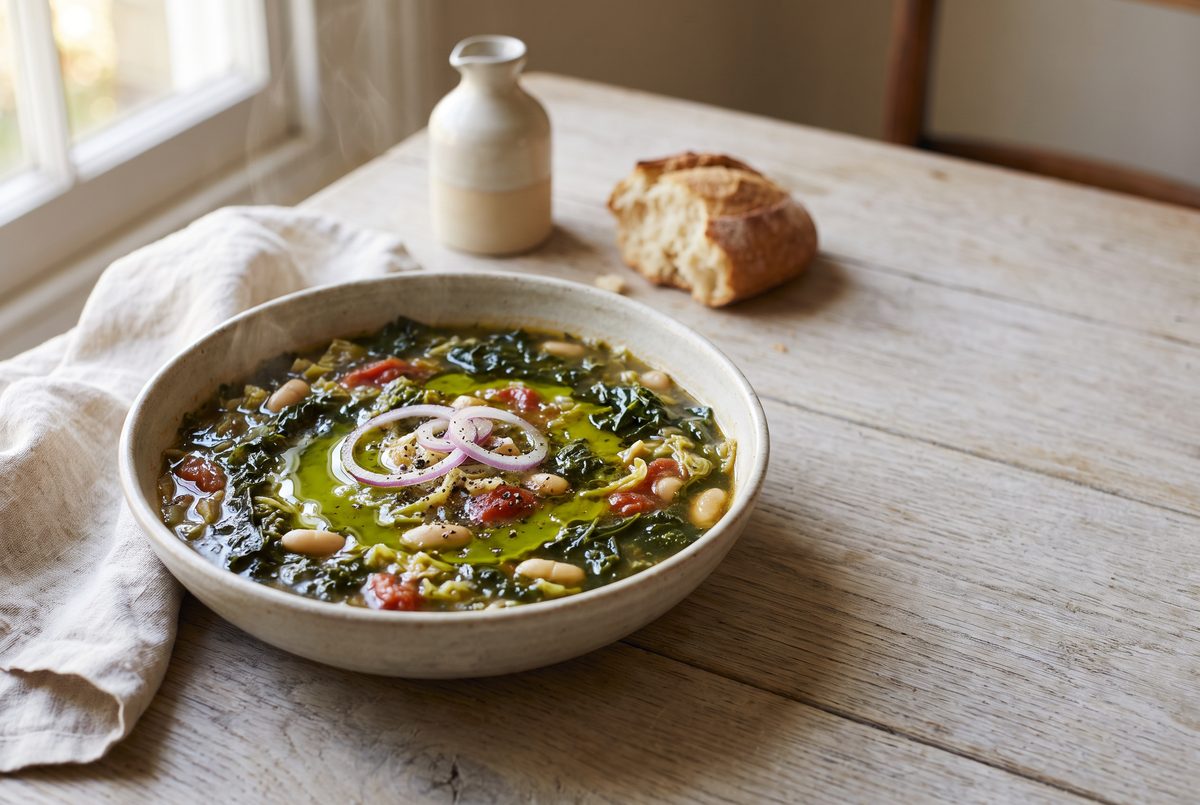
Ribollita: The Tuscan Kale, Bean and Bread Soup
Ribollita is the Tuscan soup that starts as a pot of cannellini beans and black kale and only becomes itself the next…
- 2 hr
- 418 kcal
- 15 g protein
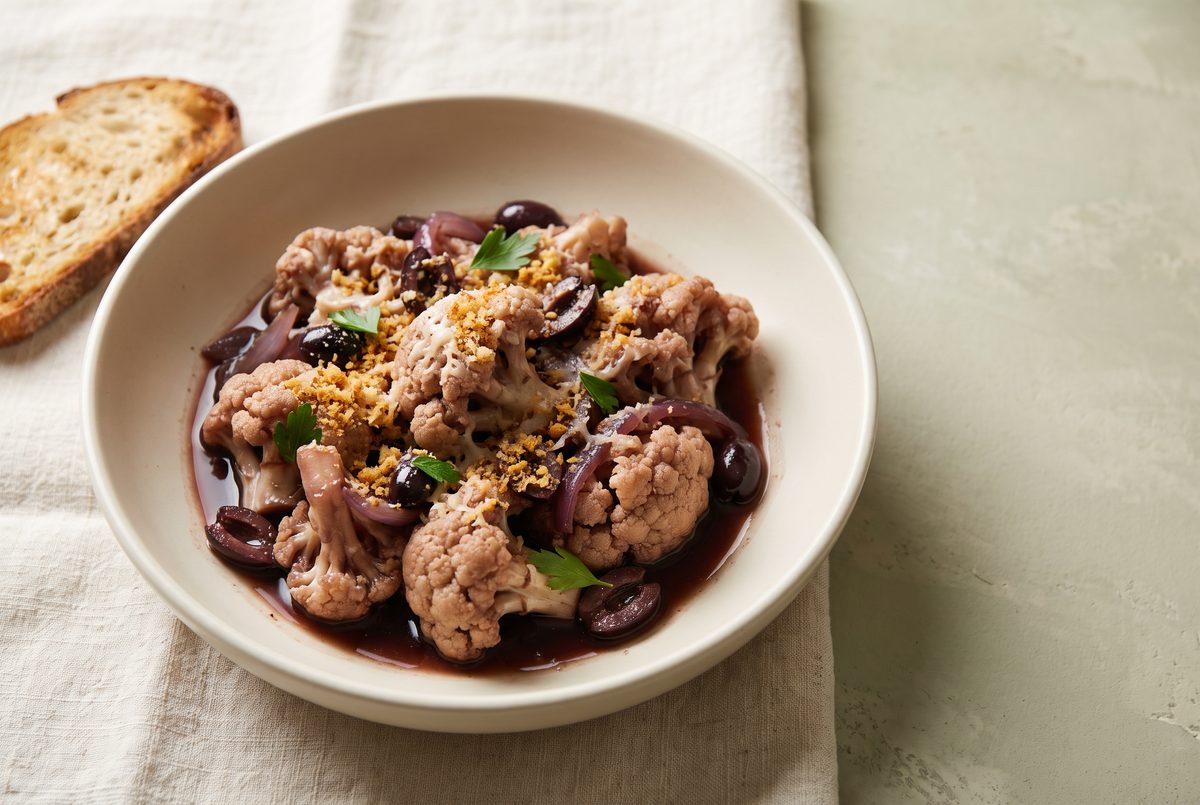
Sicilian Cauliflower Affogato
*Cavolfiore affogato* is the Palermo way with cauliflower: florets layered in a pot with red onion, black olives and…
- 50 min
- 412 kcal
- 15 g protein
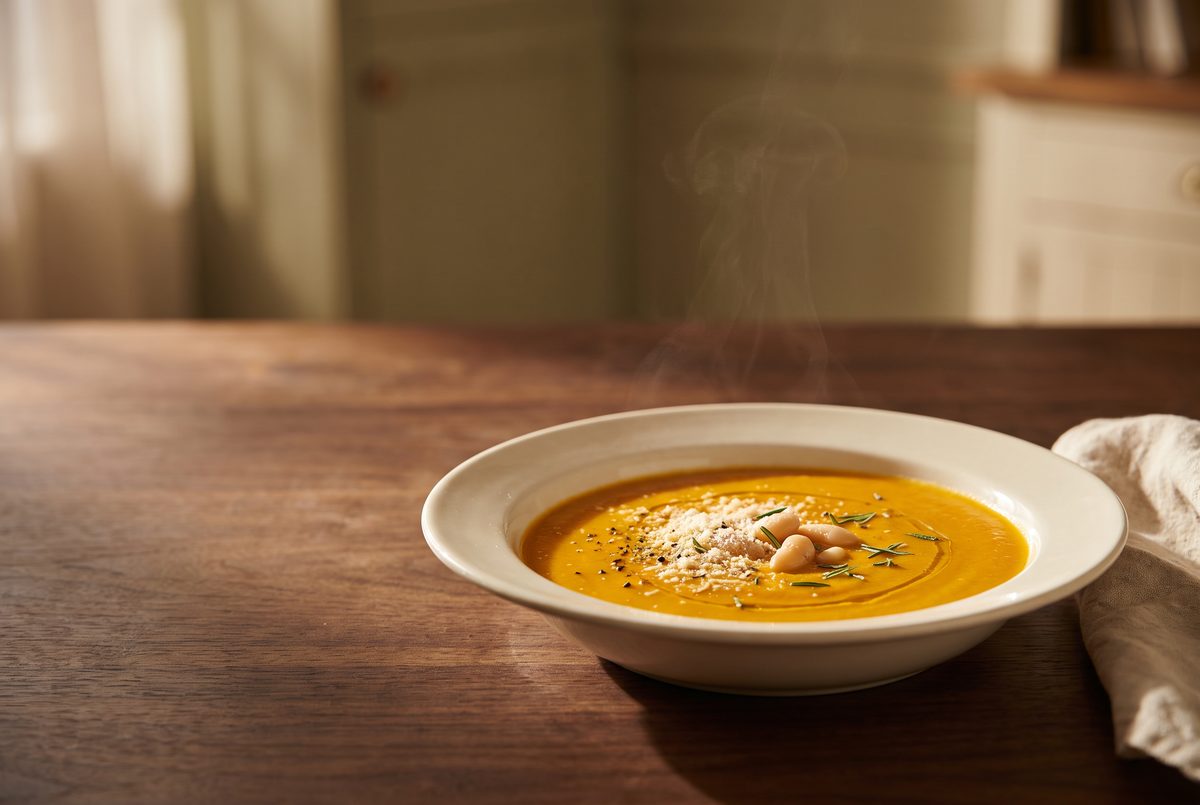
Butternut Squash Soup with Cannellini
An Italian butternut squash soup built on roasted squash instead of boiled: 2½ lb of butternut, a leek and four cloves…
- 1 hr 5 min
- 425 kcal
- 16 g protein