Healthy & Green
Vegan Italian Food: What's Already Plant-Based, and What Isn't
Most of the Italian dishes people think of as vegetable dishes really are vegan — and five common ingredients quietly aren't. A practical guide to eating Italian without animal products, with protein numbers.
The question arrives in two forms. Someone is going to Italy and wants to know how hard it will be. Or someone is cooking at home, has decided to eat less meat, and has a vague sense that Italian food is the right place to start but that it is also mostly cheese.
Both instincts are correct, and the second one is correct in a more interesting way than it sounds. A very large share of what Italians actually cook at home is already plant-based — not as a choice, but because the food of southern and central Italy was built by people who could not afford meat. The cheese is real too. The useful thing is knowing precisely where it is.
Why so much of it is already plant-based
Look at the structure of an Italian meal rather than the highlights. There is an antipasto, often vegetables. There is a primo — pasta, rice, soup — which is starch, lightly dressed. There is a secondo, the piece of meat or fish, and it is small. And there is a contorno, a vegetable side, which is not a garnish on the same plate but a separate course that arrives in its own dish.
In that structure the meat is one item out of four, and it is the one that was historically rationed. What filled the gap was legumes. Pasta e fagioli, pasta e ceci, ribollita, minestra di lenticchie, fagioli all'uccelletto, farinata — the entire category of Italian food that Anglophone menus label "rustic" is a category of bean dishes, and most of them contain no animal product at all in their original form.
Two more accidents help:
- Dried pasta is flour and water. Italian law (DPR 187/2001) requires pasta secca to be made from durum wheat semolina and water. No egg, no dairy, no exceptions for the DOP-style designations.
- Olive oil does the work butter does elsewhere. South of Bologna, the cooking fat is oil. This is why a southern Italian vegetable dish is usually vegan and a northern risotto usually isn't.
The five things that quietly aren't vegan
This is the part worth memorizing, because none of it is obvious from a dish name.
| What | Where it hides | What to do |
|---|---|---|
| Animal rennet in cheese | Parmigiano-Reggiano DOP (calf), Pecorino Romano DOP (lamb), Grana Padano (calf) | There is no vegetarian version of these three. Nutritional yeast is a flavor substitute, not the same thing; toasted breadcrumbs (pangrattato) are the traditional Sicilian answer |
| Anchovy | Puttanesca, many broccoli-rabe and greens dishes, bagna càuda, a lot of "just garlic and oil" sauces | Ask, or cook it yourself. Capers and olives give you much of the same salt-and-savor |
| Lard (strutto) | Piadina, some focaccia, taralli, several regional breads and pastries | Read labels on imported flatbread and crackers; ordinary bread is almost always oil or nothing |
| Egg in fresh pasta | Tagliatelle, tortellini, ravioli, most filled shapes | Dried pasta is the safe default. Semolina-and-water fresh shapes exist too: orecchiette, trofie, pici, cavatelli |
| Meat stock | Brodo, risotto, many soups, and the Parmigiano rind dropped into a pot of beans | Vegetable broth works everywhere. The rind trick is the one substitution with no equivalent — accept the loss |
Note the pattern: four of the five are seasoning rather than substance. You are not rebuilding these dishes, you are removing a flavoring and usually replacing it with salt, acid and fat from somewhere else. That is why the Italian repertoire adapts more gracefully than, say, the French one.
Getting the protein out of it
This is where plant-based Italian cooking actually needs planning, and it is not because plants lack protein. It is because the most appealing Italian vegetable dishes are low in it. The caponata further down this page is 249 calories and 3.9 g of protein — a beautiful side dish and not a meal.
The numbers that matter:
| Food | Portion | Protein |
|---|---|---|
| Lentils, dry | ½ cup (95 g) | 23 g |
| Chickpeas, canned, drained | one 15-oz can (250 g) | 18 g |
| Cannellini, canned, drained | one 15-oz can (250 g) | 19 g |
| Chickpea pasta, dry | 3.5 oz (100 g) | 22 g |
| Durum pasta, dry | 3.5 oz (100 g) | 13 g |
| Farro, pearled, dry | 2 oz (60 g) | 7 g |
| Whole-wheat bread | 2 slices (80 g) | 10 g |
| Almonds | 1 oz (28 g) | 6 g |
A sedentary adult needs roughly 0.8 g of protein per kg of body weight; someone training regularly is better served by 1.2–1.6 g/kg, as we set out in the protein guide. For a 155-lb (70 kg) person that is 56 g at the low end and 85–110 g if you lift. A can of beans in the pasta and a handful of nuts in the afternoon covers a surprising amount of it.
On "complete proteins": legumes are relatively low in methionine and cereals are relatively low in lysine, so a diet of only one or the other runs short. Put them together and the gap closes, which is exactly what pasta e fagioli and pasta e ceci do — and what bread-and-bean soups like ribollita do, and riso e piselli, and farro with chickpeas. The dishes predate the biochemistry by several centuries. What has changed is the advice: the older idea that you had to combine complementary proteins within a single meal has been dropped. Mariotti and Gardner's 2019 review concluded that total protein across the day, with reasonable variety, is what determines adequacy for adults.
Swapping the pasta itself is the single biggest lever available. Chickpea or red-lentil pasta is not traditional and it does not taste like durum, but it takes a plate of pasta from 13 g to 22 g of protein with more fiber attached, and it behaves normally in a tomato sauce.
The one nutrient the food cannot give you
Vitamin B12 is made by bacteria, not by plants. No vegetable, grain, legume, nut or fruit contains it in a usable amount, and the deficiency in unsupplemented vegans is well documented — Pawlak and colleagues (2013, Nutrition Reviews) found high rates across vegan populations regardless of how carefully the diet was otherwise composed. Fortified foods or a supplement are both fine. Nothing about the Mediterranean pattern helps here, and no amount of good cooking substitutes.
Two more, less absolute:
- Iron from plants is non-heme and less well absorbed. Vitamin C eaten at the same meal improves that absorption substantially (Hurrell & Egli, 2010, American Journal of Clinical Nutrition), which is a decent argument for the lemon on the greens and the tomato in the beans.
- Omega-3s: walnuts and flax give you ALA, which the body converts to EPA and DHA inefficiently. Algal oil is the direct route if you want one.
Beyond that, the evidence on well-planned plant-based eating is reassuring rather than dramatic. Dinu and colleagues (2017, Critical Reviews in Food Science and Nutrition) pooled the observational literature and found vegetarian and vegan diets associated with lower BMI, lower LDL cholesterol and lower incidence of ischemic heart disease. Satija and colleagues (2017, JACC) added the necessary caveat: which plant foods matters. A diet of refined starch and sugar is plant-based too.
A week of it, from this site
Four of our recipes are vegan as written, and none of them were designed to be — they are traditional dishes that happen not to need anything removed.
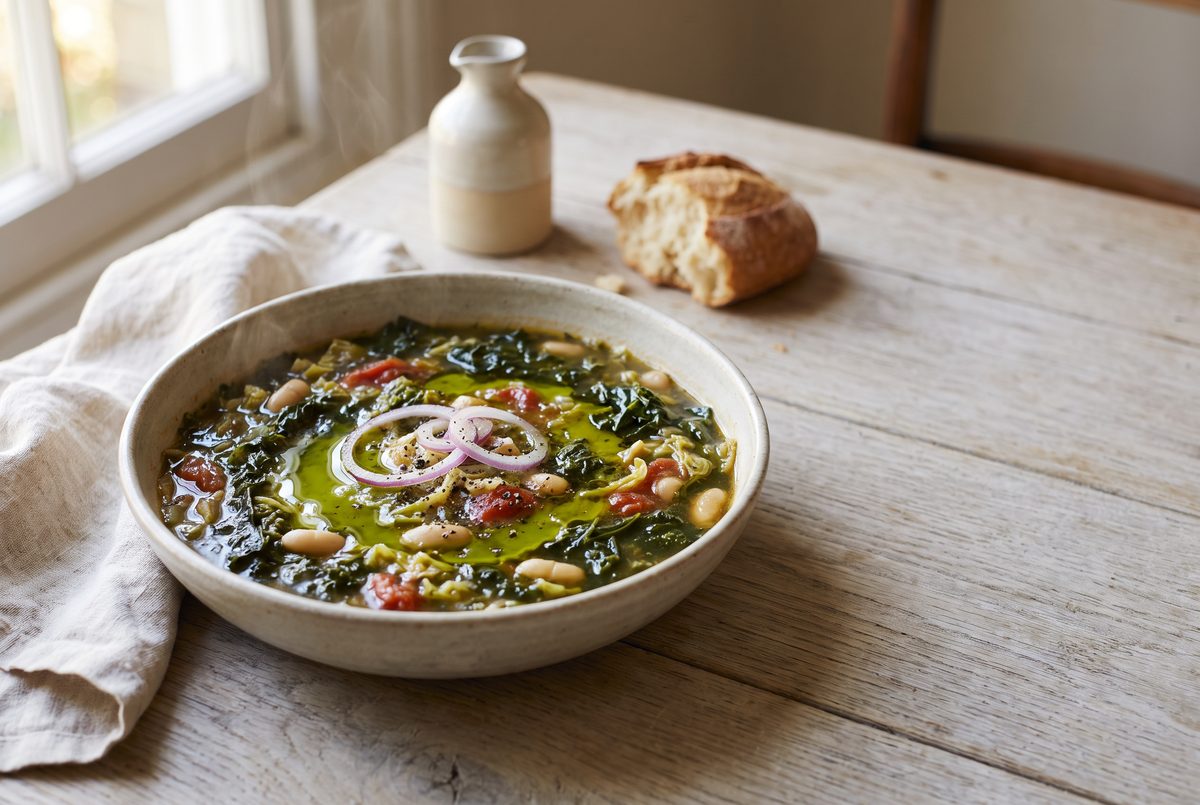
Fifteen grams of protein and 14 g of fiber a bowl, and it keeps three days getting better.
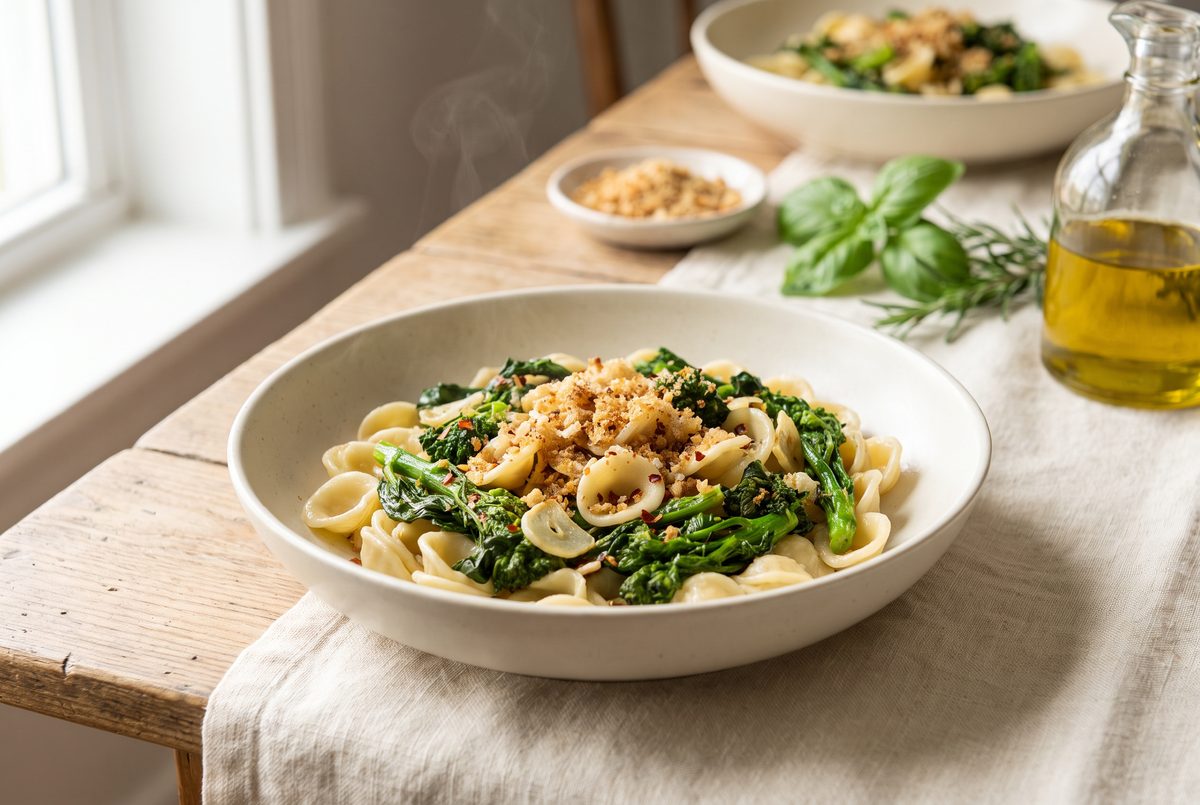
Sixteen grams, thirty minutes, and the version without the anchovy that Bari would consider optional anyway.
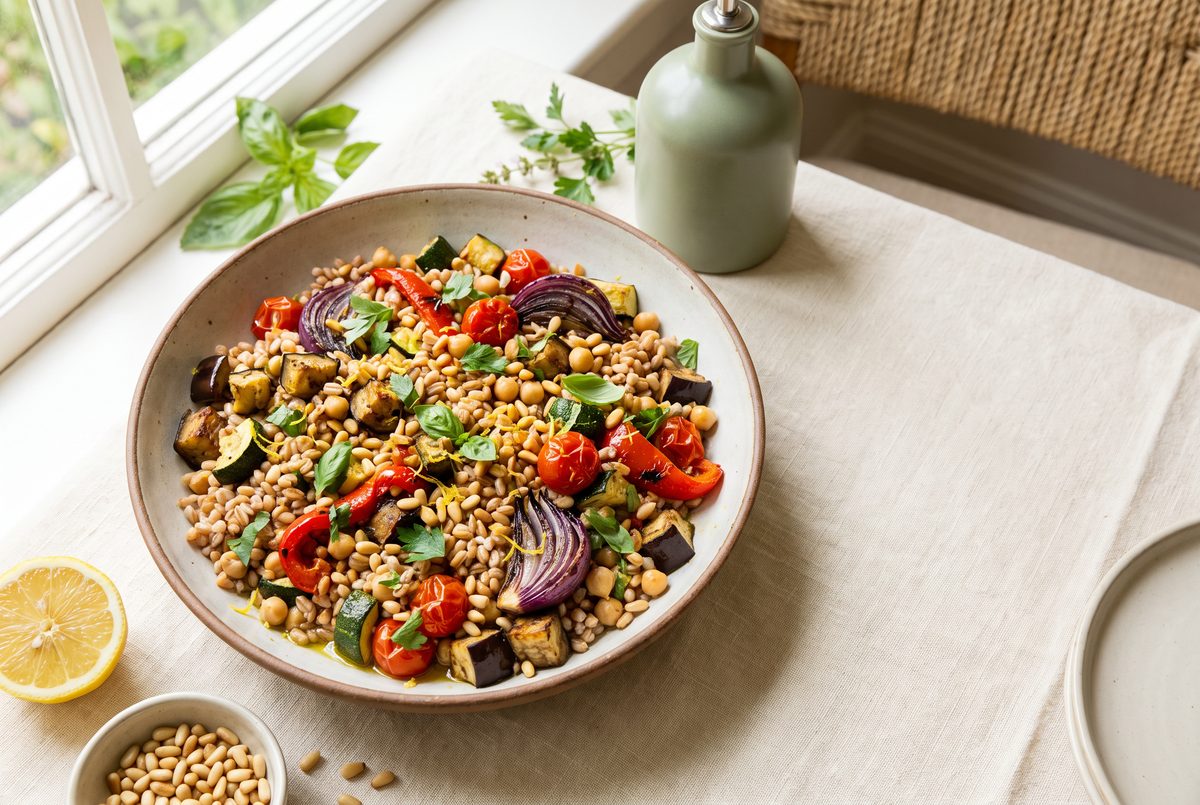
Fourteen grams, and the one to make on Sunday for weekday lunches.
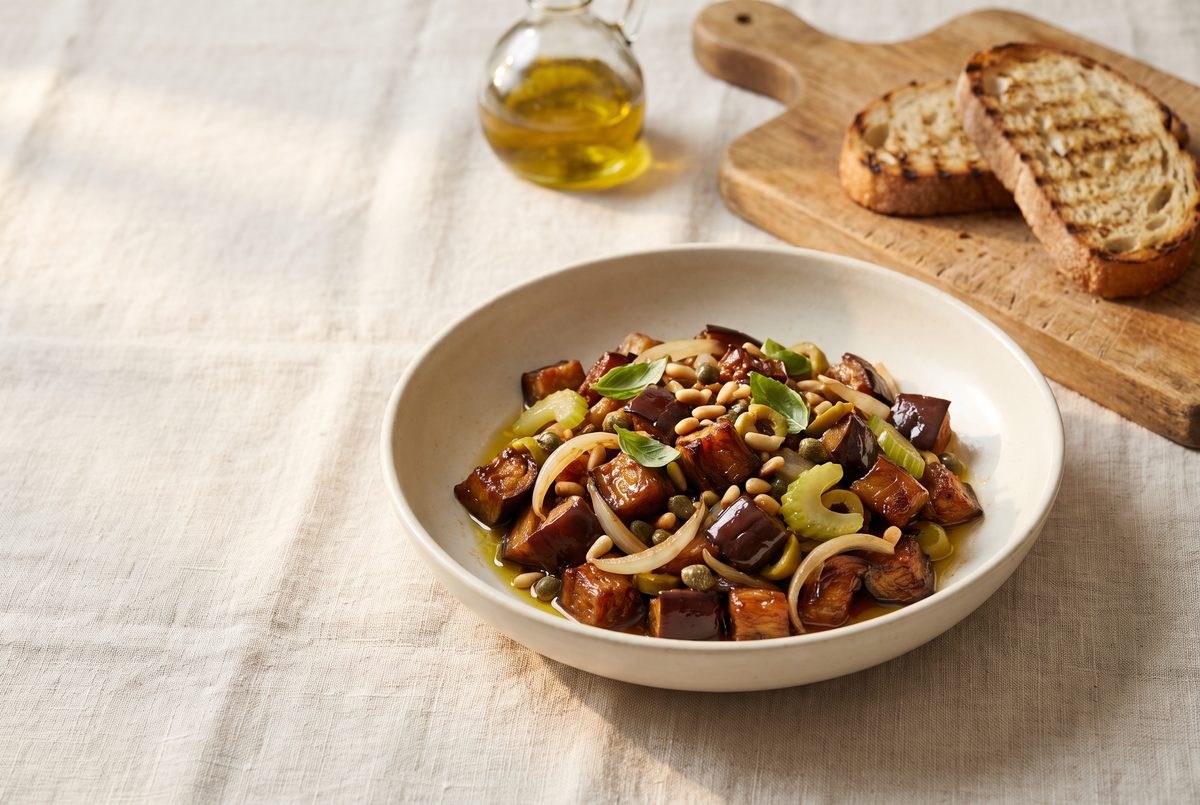
Sicilian Caponata: Sweet-and-Sour Eggplant, Roasted Not Fried
- 1 hr 10 min
- 249 kcal
- 3 g protein
The side dish, not the meal: four grams of protein, and the thing that makes the other three feel like a spread rather than a plate.
A plausible week: ribollita twice from one pot, the farro salad for three lunches, orecchiette on a night you get home late, and a jar of caponata in the fridge to put next to any of them. Add a can of beans to the soup and a handful of almonds to the salad and you are past 20 g of protein in every one of those meals. For the whole collection, see healthy & green; for the dishes with cheese in them that you might want to adapt, most of the weight-loss recipes lose their Parmigiano without much complaint.
Where to start
Cook one bean dish and one green dish this week, and buy one box of chickpea pasta. That is the whole plan. The Italian part of it takes care of itself — you are not adapting a cuisine to a restriction, you are cooking the older version of it.
General information for healthy adults, not medical advice. Vitamin B12 status and iron status are worth checking with a physician if you eat no animal products, particularly during pregnancy or while breastfeeding. See our nutrition disclaimer.
Sources: Mariotti F. & Gardner C. D., Nutrients 2019 (dietary protein and amino acids in vegetarian diets); Pawlak R. et al., Nutrition Reviews 2013 (vitamin B12 in vegetarians and vegans); Hurrell R. & Egli I., Am J Clin Nutr 2010 (iron bioavailability); Dinu M. et al., Crit Rev Food Sci Nutr 2017 (vegetarian and vegan diets, meta-analysis); Satija A. et al., J Am Coll Cardiol 2017 (healthful and unhealthful plant-based diets); Consorzio del Formaggio Parmigiano-Reggiano and Consorzio per la Tutela del Pecorino Romano production standards (rennet); Italian Republic, DPR 187/2001 (pasta secca); USDA FoodData Central for food values.
Frequently asked questions
Is Italian food vegan-friendly?
More than most European cuisines, and by accident rather than design. Dried pasta is flour and water, pizza dough is flour, water, yeast and salt, and a large part of the traditional repertoire is beans, greens, bread and olive oil. The regular obstacles are cheese, anchovy and cured pork rather than meat as a main ingredient, which means most obstacles are removable.
Is Parmigiano-Reggiano vegetarian?
No. Parmigiano-Reggiano DOP is made with calf rennet, which is required by the production rules, and Pecorino Romano DOP uses lamb rennet. Grana Padano is the same. Some other Italian cheeses are made with microbial rennet and are vegetarian, but the three that go on pasta usually aren't, and none of them are vegan in any case.
Is pasta vegan?
Dried pasta almost always is. Italian law requires pasta secca to be durum wheat semolina and water, nothing else. Fresh pasta is the exception: tagliatelle, tortellini and most filled shapes are made with egg, and egg is often in the label name (pasta all'uovo). Check filled pasta for ricotta as well.
How do vegans get enough protein on an Italian diet?
From legumes, mostly, and in larger amounts than people expect: 18 g from a can of chickpeas, 23 g from half a cup of dry lentils, 19 g from a can of cannellini. Chickpea or lentil pasta pushes a plate of pasta from 13 g to 22 g. A sedentary adult needs about 0.8 g per kg of body weight and an active one 1.2–1.6 g per kg, so a 155-lb person aiming high is looking at roughly 85–110 g a day.
Do I need to take B12 as a vegan?
Yes. Vitamin B12 is produced by bacteria and is not present in plant foods in usable amounts, and deficiency in vegans who don't supplement is well documented. Fortified foods or a supplement are both fine. This is the one point where the Mediterranean pattern gives you no help at all.