Muscle gain
How Much Protein Do You Need to Build Muscle? A Practical Guide
The research answer is 1.6–2.2 g per kilogram of body weight per day, spread over 3–5 meals. Here's what that means in real food, why the Italian pantry makes it easy, and the mistakes that keep people from growing.
If you train with weights and want to add muscle, protein is the nutrient everyone talks about and almost nobody gets right — not because the science is unclear, but because the internet numbers range from "the RDA is enough" to "a gram per pound, minimum, or you're wasting your time." This guide gives you the actual research consensus, converts it into food, and shows how an Italian pantry makes hitting the target easy and pleasant.
The number
The most-cited analysis is a 2018 meta-analysis of 49 randomized trials (Morton et al., British Journal of Sports Medicine): protein supplementation increased gains in muscle mass and strength from resistance training, and the benefit plateaued at about 1.6 g per kg of body weight per day. Accounting for individual variation, the authors suggested up to 2.2 g/kg to be safe for most people. The International Society of Sports Nutrition's position stand lands in the same range.
In everyday units:
| Body weight | Daily target (1.6–2.2 g/kg) |
|---|---|
| 130 lb (59 kg) | 95–130 g |
| 150 lb (68 kg) | 110–150 g |
| 170 lb (77 kg) | 125–170 g |
| 190 lb (86 kg) | 140–190 g |
| 210 lb (95 kg) | 150–210 g |
The RDA of 0.8 g/kg — the number on nutrition labels — is the amount to avoid deficiency in sedentary adults. It is not a muscle-building target. Going far above 2.2 g/kg, on the other hand, doesn't add muscle; it adds expense and displaces carbohydrate you need to train.
Two adjustments: in a calorie deficit (cutting), aim for the upper end, 2–2.4 g/kg, because protein protects muscle when energy is short. Over 60, aim slightly higher per meal (40 g rather than 25), because older muscle responds less to smaller doses.
Timing and distribution
Once the daily total is right, distribution is the second lever.
- 3–5 meals with 25–45 g each produce more muscle protein synthesis over a day than the same total in one or two meals. A practical floor is about 0.4 g/kg per meal — 30 g for a 170-lb person.
- The post-workout window is wide. Eating 20–40 g of protein within a couple of hours after training is sensible; racing to a shaker within 30 minutes is not necessary. If you ate a protein-containing meal 2–3 hours before training, you're covered either way.
- Before bed helps a little. 30–40 g of slow-digesting protein (casein — think ricotta, Greek yogurt, cottage cheese) before sleep modestly increases overnight synthesis in several studies.
What 30 g of protein looks like
The numbers below are for foods as they land on an Italian table.
| Food | Amount for ~30 g protein | Calories |
|---|---|---|
| Chicken breast, cooked | 4 oz (115 g) | 190 |
| Tuna, canned in water, drained | 4 oz (115 g) | 130 |
| Salmon, cooked | 5 oz (140 g) | 290 |
| Cod, cooked | 5.5 oz (155 g) | 145 |
| Lean ground beef (93%), cooked | 4.5 oz (125 g) | 240 |
| Eggs | 4 large + 1 white | 300 |
| Greek yogurt, nonfat | 1⅓ cups (300 g) | 180 |
| Ricotta, part-skim | 1 cup (250 g) | 340 |
| Parmigiano-Reggiano | 3 oz (85 g) | 330 |
| Cannellini or chickpeas, canned, drained | 2 cups (390 g) | 480 |
| Lentils, cooked | 2 cups (400 g) | 460 |
Notice the pattern: animal proteins get you there in a small, low-calorie portion; legumes get you there with a lot of fiber and carbohydrate along for the ride. Both belong in a muscle-gain diet. Legumes work best combined with an animal protein or a grain in the same meal — pasta e ceci, tuna and beans, lentils and rice — which is exactly how Italian cooking uses them.
Why the Italian pantry makes this easy
An Italian kitchen keeps, at all times: canned tuna and sardines, a wedge of Parmigiano, eggs, a tub of ricotta, dried and canned beans, and something frozen from the sea. Every one of those is a 25-gram serving of protein waiting to be assembled into a real dish in under fifteen minutes:
- Frittata with whatever vegetables are around — 3 eggs + 1 oz Parmigiano = 28 g
- **
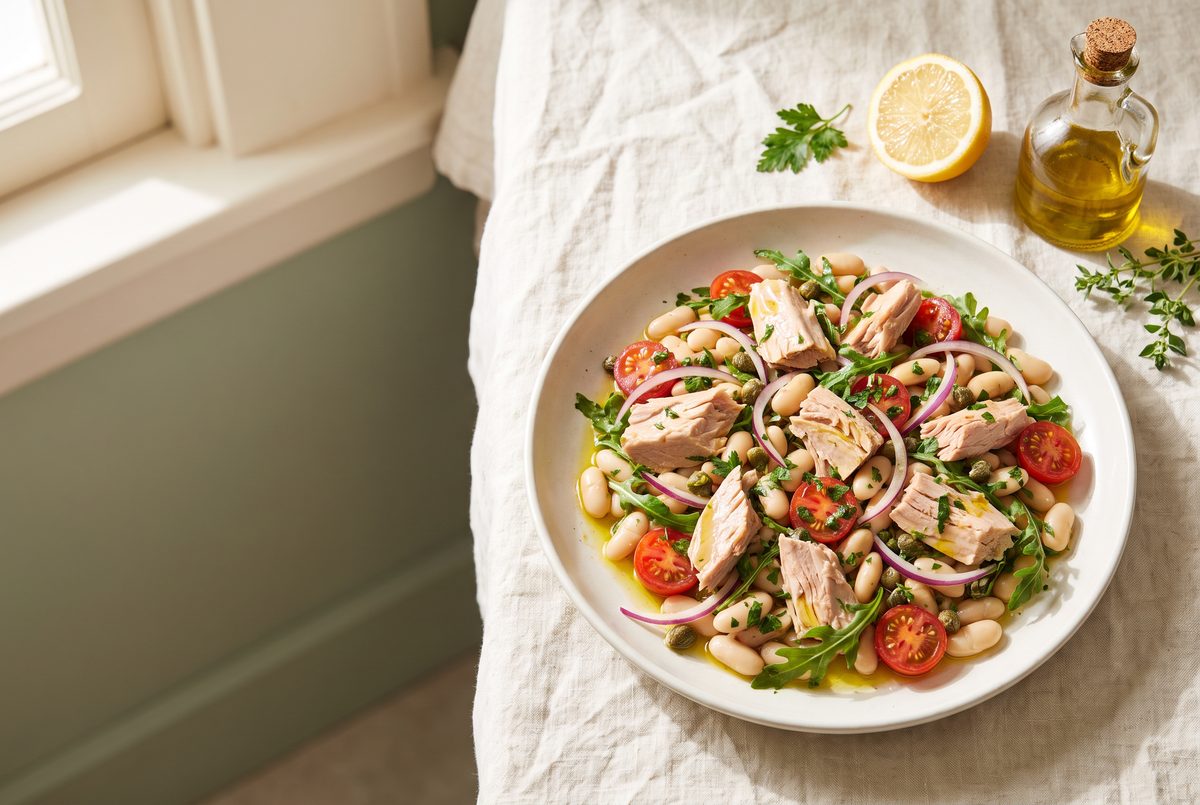
** — 40 g, no stove
- Pasta e lenticchie — 3 oz pasta + 1 cup lentils = 30 g
- Grilled fish with beans — 5 oz cod + ½ cup cannellini = 38 g
- Ricotta with honey and walnuts before bed — 1 cup = 28 g of slow casein
The other advantage is that Italian protein comes with the carbohydrate you need. Muscle gain requires a calorie surplus — typically 250–500 above maintenance — and most of that surplus should be carbohydrate, because carbohydrate fuels the training that drives growth. A plate of
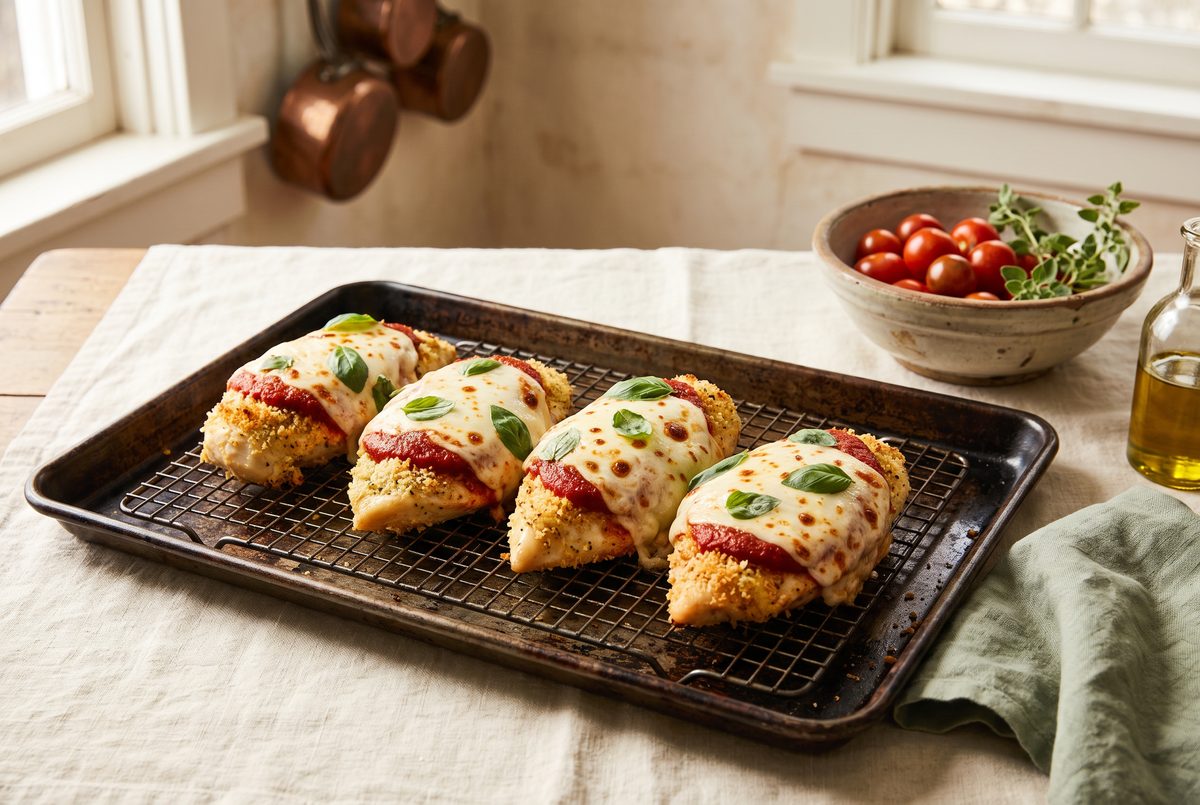
with a side of pasta is not a compromise; it's the correct meal.
A day at 160 g of protein (about 2,700 calories)
For a 170-lb lifter in a modest surplus:
- Breakfast: 3-egg frittata with spinach and 1 oz Parmigiano; 2 slices whole-grain toast; an orange — 38 g protein, 620 kcal
- Lunch: Tuscan tuna and white bean salad with a whole-grain roll — 44 g, 620 kcal
- Afternoon: Greek yogurt (1 cup) with a banana and honey — 22 g, 330 kcal
- Dinner: Sheet-pan chicken parmesan with 3 oz pasta tossed in the extra sauce and steamed broccoli — 66 g, 900 kcal
- Before bed: ½ cup ricotta with a spoon of honey and a few walnuts — 16 g, 230 kcal
Total: about 186 g protein and 2,700 calories — comfortably inside the target, with enough carbohydrate to train hard.
The mistakes that keep people small
- Under-eating. By far the most common. If you're hitting your protein but not gaining weight over four weeks, you're not in a surplus. Add carbohydrate, not more protein.
- Protein only at dinner. A 20-g breakfast and a 90-g dinner is worse than three 40-g meals with the same total.
- Over-relying on powder. Two shakes a day crowd out food that would bring vitamins, minerals and fiber. Use powder to fill a gap, not to build the day.
- Cutting carbs while bulking. Low-carb and muscle gain work against each other. Glycogen is what lets you do the extra reps that make the stimulus.
- Ignoring training. No amount of protein builds muscle without progressive resistance training. Nutrition is necessary, not sufficient.
Where to start
Every recipe in our muscle-gain collection delivers 30–50 g of protein per serving from whole foods, with the carbohydrate to train on. Start with the chicken parmesan for dinner and the tuna and bean salad for lunch, and you're already at 100 g before breakfast and snacks.
General information for healthy adults, not medical advice. If you have kidney disease or another medical condition, ask a physician before increasing protein intake. See our nutrition disclaimer.
Sources: Morton R. W. et al., Br J Sports Med 2018; Jäger R. et al., ISSN Position Stand: Protein and Exercise, JISSN 2017; Schoenfeld B. J. & Aragon A. A., JISSN 2018 (per-meal protein); Trommelen J. & van Loon L. J., Nutrients 2016 (pre-sleep protein); Phillips S. M. & Van Loon L. J., J Sports Sci 2011; USDA FoodData Central for food values.
Frequently asked questions
How much protein per day to build muscle?
1.6 to 2.2 grams per kilogram of body weight — roughly 0.7 to 1 gram per pound. For a 170-lb (77 kg) person that's 125–170 g a day. The lower end is enough for most people; the upper end may help during a calorie deficit or for very lean athletes.
Can you absorb more than 30 g of protein in one meal?
You absorb all of it; the old 30-gram rule is a myth. What's true is that muscle protein synthesis per meal plateaus somewhere around 0.4 g/kg (about 30–45 g for most adults) and a slow-digesting meal extends the response. Practically: 3–5 meals of 25–45 g is a better pattern than one 120-g dinner, but nothing is wasted.
Do I need protein powder to build muscle?
No. Powder is a convenient way to hit a target, especially around training or at breakfast, but it has no advantage over whole-food protein of the same amount. A cup of Greek yogurt, three eggs or a can of tuna each provide 20–30 g.
Is Italian food high in protein?
It can be. Fish, poultry, lean beef, eggs, ricotta, Parmigiano, cannellini and chickpeas are all central to Italian cooking. The dishes people think of as Italian — pasta with tomato sauce, pizza margherita — are carbohydrate-led, but the protein-rich dishes are just as traditional: bean soups, grilled fish, frittata, bresaola, roast chicken.
How much protein after a workout?
20–40 g within a couple of hours, as part of a normal meal, is plenty. The idea of a 30-minute anabolic window has been overstated; total daily intake and distribution matter far more than the clock.