Italian Beef Stew with Potatoes
The Sunday spezzatino: chuck braised until it gives way under a spoon, with the potatoes cooked in the sauce rather than next to it.
Spezzatino is the beef stew every Italian region cooks a version of: chuck browned hard, simmered in red wine and tomato until it pulls apart, with potatoes added for the last forty minutes so they cook in the sauce and thicken it. One bowl is 537 calories with 42 g of protein and 47 g of carbohydrate — dinner and side dish in the same pot, and it is better on the second day.
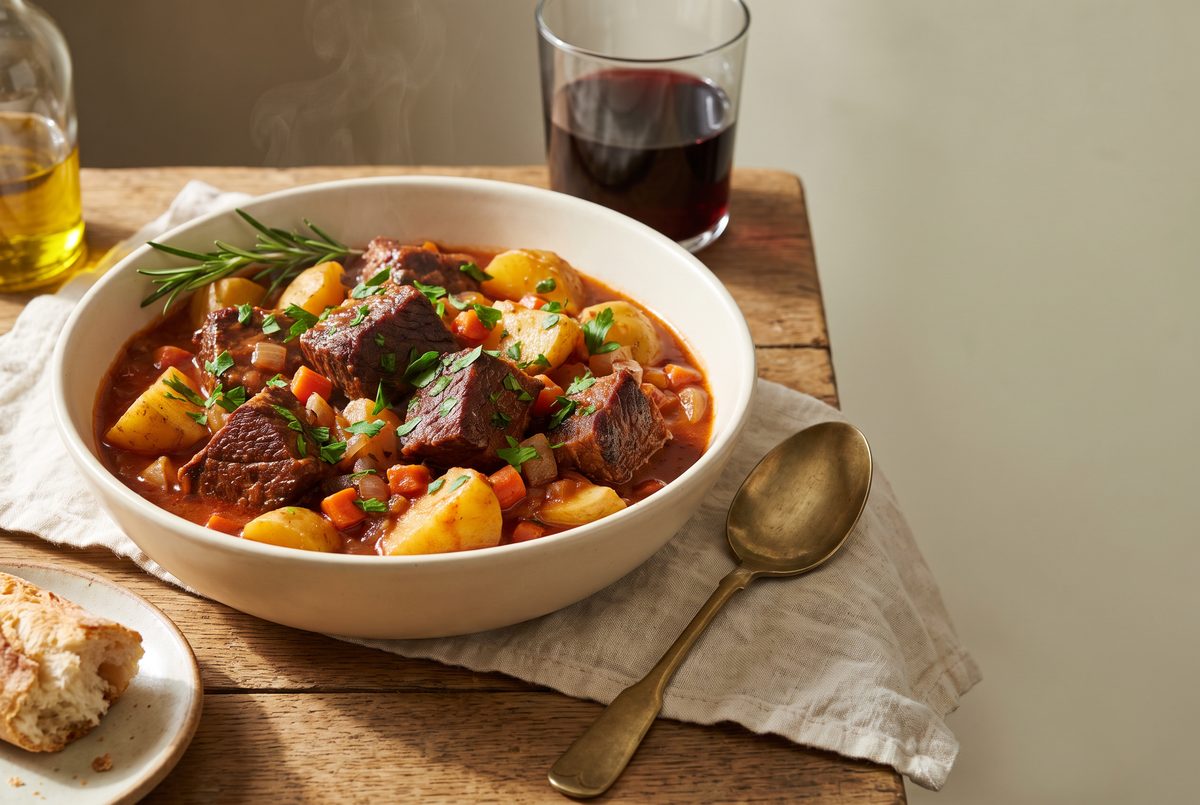
There is one evening in the middle of September when you come home, notice the kitchen is cold for the first time since May, and want the stove on for two hours. This is what to cook that evening. It isn't a fall-back-the-clocks stew — no root vegetables in a heap, no thickened gravy. Spezzatino means, roughly, "cut into pieces," and the whole dish is beef cut into pieces and persuaded to give up.
The part most American recipes get wrong is the cut. Search for a high-protein dinner and you get told to buy lean — sirloin, round, something with a low fat number on the label — and then the stew comes out dry and stringy after two hours, because lean muscle has nothing in it to melt. Chuck is the cut that works. It carries collagen through the shoulder, collagen turns to gelatin somewhere around 160–180°F given enough time, and gelatin is what makes a piece of braised beef feel tender and a sauce feel glossy. Trimmed of its outside fat, chuck is also about 21 g of protein per 100 g raw — within a rounding error of sirloin. You give up nothing to get the better result.
Why this recipe works for muscle gain
42 g of protein in one sitting is at the useful end of the range. The often-quoted 20–25 g per meal ceiling comes from studies on isolated protein doses in young men; reviews of per-meal distribution put the practical target for someone training toward muscle gain nearer 0.4 g per kg of body weight per meal, which for most adults means 30–45 g (Schoenfeld & Aragon, 2018). Beef also arrives with roughly 8–9% of its protein as leucine, the amino acid that does most of the signalling.
Total daily protein is what actually drives the adaptation, not any single meal: the meta-analysis by Morton et al. (2018) found gains from supplemental protein plateauing around 1.6 g/kg/day, with a plausible ceiling near 2.2. This bowl is one of three or four feedings in a day built that way — we work through the arithmetic in how much protein to build muscle.
The 47 g of carbohydrate is not an accident. Potatoes are in the pot because training on a low-carbohydrate plate is a bad trade: glycogen is what you spend in the gym, and putting the starch in the same pot as the protein is the oldest, least fussy way to eat both. For the rest of the collection built this way, see our muscle-gain recipes.
The fat number is modest for a beef dish — 18 g per serving, 4.9 g of it saturated — because the chuck is trimmed before it is cut and the browning fat is olive oil rather than butter. Beef is also one of the better dietary sources of heme iron and zinc, which matters more than people think for anyone training hard.
Ingredients
4 deep bowls
The beef
Soffritto and braise
Potatoes and finish
Instructions
- Cut and dry the beef. Trim the hard outside fat and any thick seams of gristle, then cut the chuck into 1½-inch cubes — bigger than looks right. Small cubes finish cooking before the collagen has melted, which is exactly the stringy result you're trying to avoid. Pat every piece dry with paper towels, then toss with the salt and the flour until barely dusted. Wet meat steams instead of browning; the flour is there to dry the surface further and to thicken the sauce a little, not to make a crust.
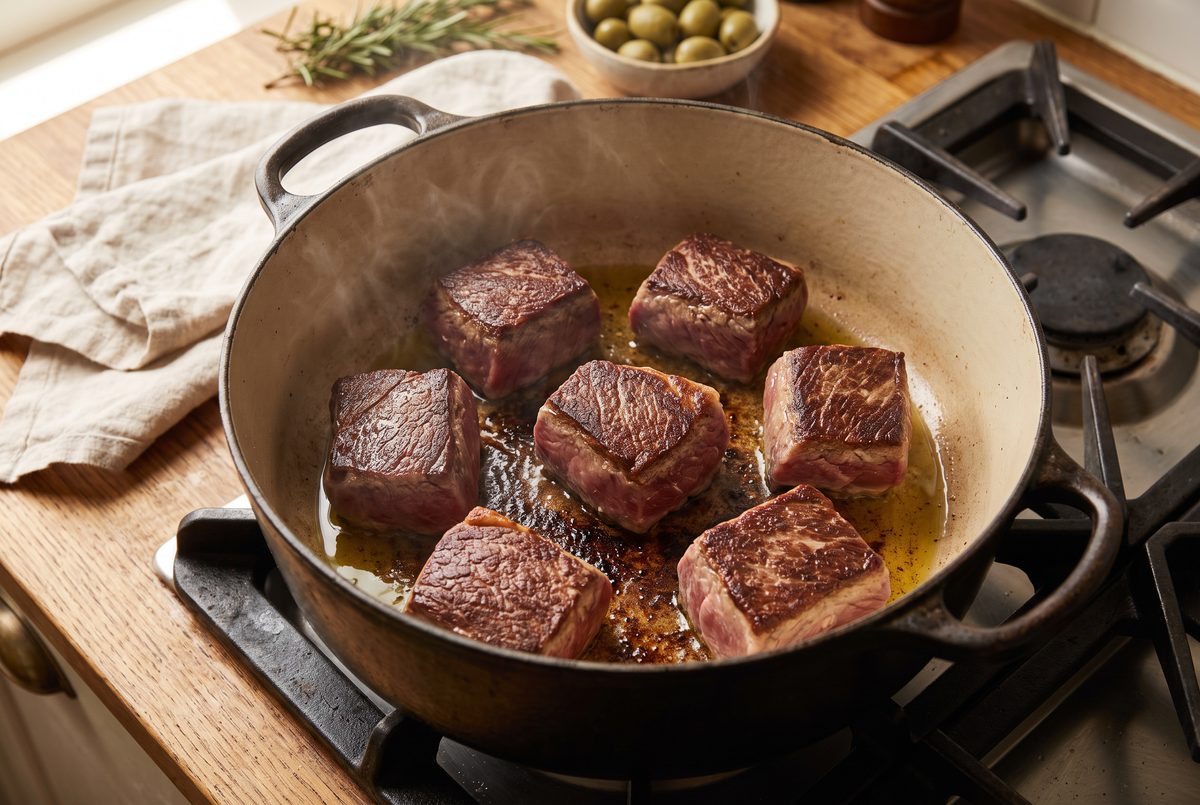
- Brown in two batches. Warm the olive oil in a wide, heavy pot over medium-high heat until it shimmers. Add half the beef in a single layer with space between the pieces and leave it alone for 3 minutes before turning. You want a deep mahogany crust on two or three sides of each cube, not a grey exterior all round — 5 to 6 minutes a batch. Move the browned beef to a plate and do the second half. If the bottom of the pot starts going past dark brown toward black, lower the heat.
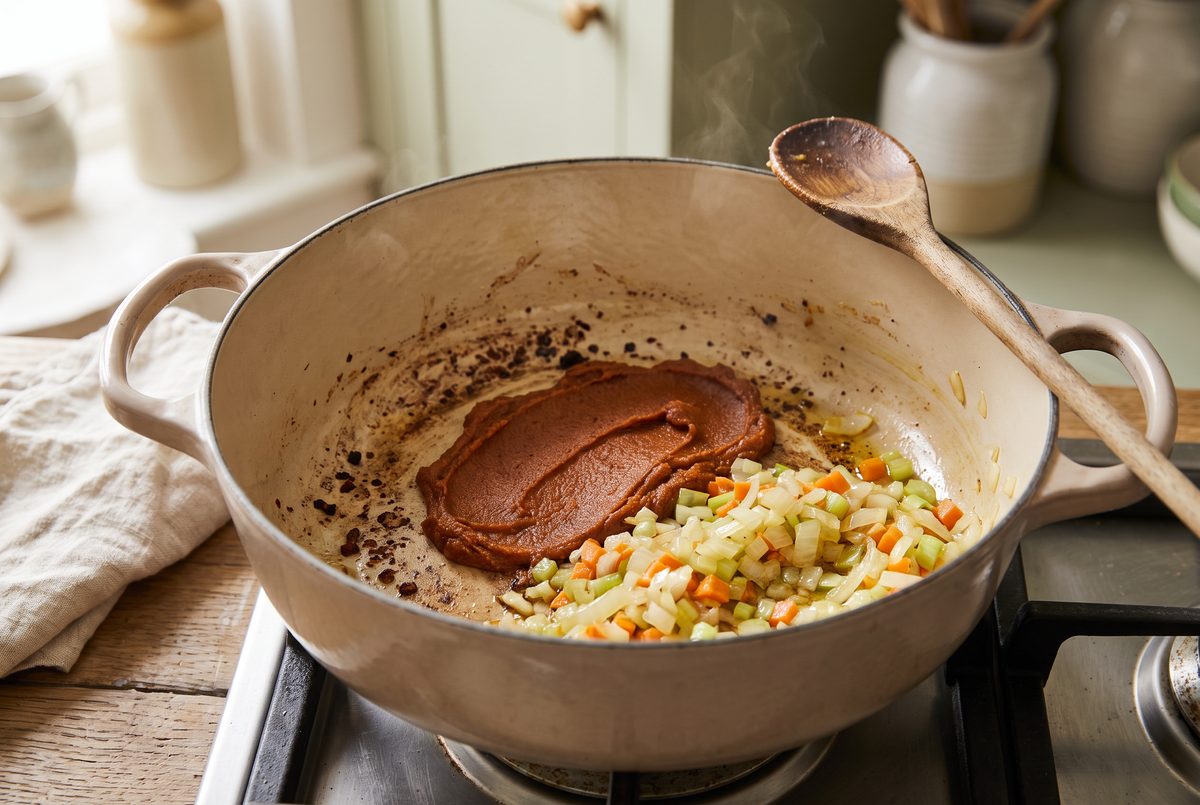
- Soffritto in the same pot. Lower the heat to medium, add the onion, carrot and celery to the fat left behind and cook 8 to 10 minutes, scraping now and then, until the onion is translucent and the vegetables have softened without colouring much. The browned bits on the bottom will start to loosen as the vegetables release water — that is the flavour going back into the dish. Add the garlic in the last minute.
- Tomato paste, then the wine. Push the vegetables to one side, add the tomato paste and cook it on the bare pot for 2 minutes, until it darkens from bright red to brick and smells sweet rather than tinny — this step is the difference between a stew that tastes of tomato and one that tastes of itself. Stir it through the vegetables, pour in the wine and let it bubble hard for 3 to 4 minutes, scraping the bottom clean, until the raw alcohol smell has gone and the pot is nearly dry.
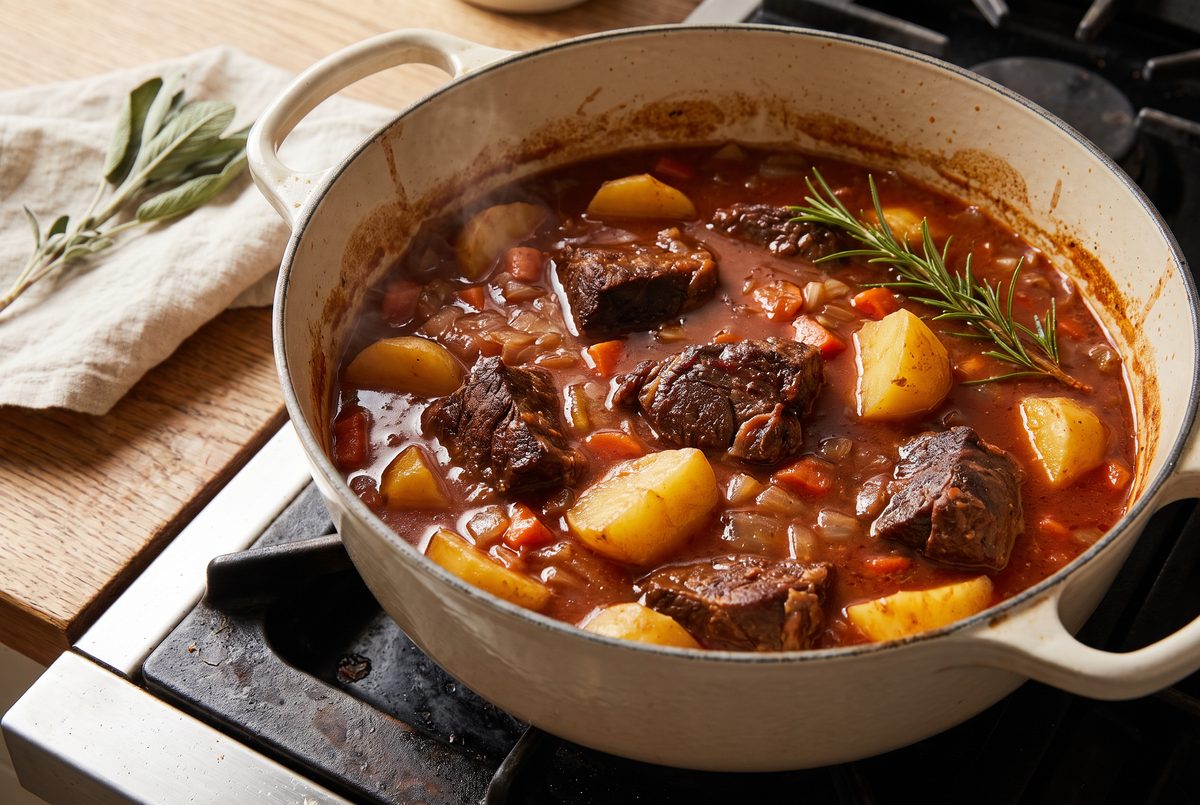
- Braise, covered, 1 hour 15. Return the beef and any juices on the plate. Add the broth, rosemary and pepper — the liquid should come about two-thirds of the way up the meat, not cover it. Bring to a simmer, then turn the heat down until the surface barely moves, one lazy bubble every second or two. Cover and cook 75 minutes. A hard boil at this stage tightens the muscle fibres and squeezes out the juice; the whole method rests on keeping it gentle.
- Potatoes in, lid off, 40 minutes. Add the potato chunks, nudging them under the liquid, and add a splash of broth if the pot looks tight. Leave the lid off now and simmer 35 to 40 minutes, stirring once or twice from the bottom. The potatoes cook through, shed starch into the liquid and thicken it while the sauce reduces — by the end it should coat a spoon and sit just below the surface of the meat, not swim over it.
- Check the beef, not the clock. A cube is done when a spoon pressed against it splits it without effort. If it still resists, it is undercooked rather than overcooked — put the lid back on and give it another 20 minutes, checking that there is enough liquid. Fish out the rosemary sprigs and the bay leaf. Taste for salt now, at the end, once the sauce has reduced to its final volume.
- Rest 10 minutes, then serve. Take the pot off the heat and let it stand for 10 minutes — the meat reabsorbs some of the liquid it gave up and the sauce settles. Stir the parsley through and serve in deep bowls with a piece of bread for the bottom of the bowl. There is nothing else the plate needs.
Tips from our kitchen
- Cut the cubes bigger than feels right. 1½ inches is the size that survives two hours. At ¾ inch the outside is dry long before the connective tissue has turned to gelatin, and no amount of extra time fixes it.
- Two batches, always. Crowding the pot drops the temperature, the beef releases water and you get grey meat and a pale sauce. The five extra minutes are the ones that matter most in the whole recipe.
- If the sauce is thin at the end, lift out the meat and potatoes with a slotted spoon and boil the liquid hard for 3–5 minutes. If it is too tight, a splash of hot broth. Judge it after the 10-minute rest, not before.
- Waxy potatoes hold their shape; Yukon Gold sits in the middle, which is what you want here — enough starch to thicken the sauce, enough structure to stay in chunks. Russets will dissolve into it, which some people prefer and some don't.
Variations
- With peas, the way it is usually served north of Rome: a cup of frozen peas (145 g) stirred in for the last 5 minutes, about 30 calories and 2 g of protein more per bowl.
- Over polenta instead of potatoes. Leave the potatoes out and the bowl becomes 383 calories with 12 g of carbohydrate; 2 oz (60 g) of dry cornmeal a person, cooked soft, brings it to roughly 600 calories and 58 g. This is the Lombard version.
- Without wine: replace it with the same volume of broth plus 1 tsp of red wine vinegar added at the end. Takes about 25 calories off each bowl and loses less than you would expect.
- Gluten-free: skip the flour entirely, or use 1 tbsp of rice flour. The flour contributes 7 calories a serving and a little body — the potatoes do most of the thickening either way.
- Pressure cooker: brown and build the sauce as written using the sauté function, then 35 minutes at high pressure with a natural release, add the potatoes and cook 5 minutes more. Faster, but the sauce reduces less, so expect a looser bowl.
- Leaner and quicker, if two hours isn't available tonight: the sheet-pan chicken parmesan gets to a similar protein number in 40 minutes.
Storage & meal prep
Refrigerate up to 4 days in a sealed container — it is genuinely better on day two, once the gelatin has set and redissolved and the potatoes have taken on the sauce. Reheat gently in a pot with a splash of broth or water; the microwave works but toughens the beef at the edges. To freeze, stop before the potatoes go in and freeze the meat and sauce for up to 3 months, then thaw, bring to a simmer and cook the potatoes fresh: boiled potatoes go grainy after freezing, and this way the second dinner tastes like the first.
Nutrition per serving
| Nutrient | Amount | % DV* |
|---|---|---|
| Calories | 537 kcal | 27% |
| Total fat | 18 g | 23% |
| Saturated fat | 4.9 g | 25% |
| Carbohydrates | 47 g | 17% |
| Fiber | 6.5 g | 23% |
| Sugars | 5.8 g | — |
| Protein | 42 g | 84% |
| Sodium | 592 mg | 26% |
*Percent Daily Values are based on a 2,000-calorie diet. Values are calculated from USDA FoodData Central and manufacturer data for the ingredients as listed; they are estimates, not lab analyses. Nutrition disclaimer.
Frequently asked questions
What cut of beef is best for Italian beef stew?
Chuck, from the shoulder, and it isn't close. It has the connective tissue that melts into gelatin over a long, gentle braise, which is what makes stew meat tender and the sauce glossy. Brisket or short rib also work; sirloin, round and anything labelled "lean stew meat" will be dry and stringy no matter how long you cook them. Trimmed chuck is about 21 g of protein per 100 g raw, essentially the same as sirloin.
Why is my beef stew meat tough?
Almost always because it hasn't cooked long enough, not because it cooked too long. Collagen needs both heat and time to become gelatin, and a cube that is still firm at 90 minutes will usually be tender at 120. The other cause is a braise that is boiling rather than simmering — a hard boil contracts the muscle fibres and forces out moisture, so keep it to one bubble every second or two.
Is beef stew good for building muscle?
This one is: 42 g of protein and 47 g of carbohydrate in a 537-calorie bowl, which covers a full feeding for most people training toward muscle gain. Beef also supplies heme iron and zinc. What matters more than any single meal is the daily total — roughly 1.6 g of protein per kg of body weight is where the benefit plateaus in the evidence (Morton et al., 2018).
Can I make beef stew ahead of time?
Yes, and you should. Cook it a day ahead, cool it and refrigerate; reheat gently the next evening. The flavour rounds out overnight and the sauce thickens as the gelatin sets. For longer storage, freeze the stew before adding the potatoes — up to 3 months — and boil fresh potatoes into it when you reheat.
Do I have to brown the beef first?
Yes, if you want the dish to taste like anything. Browning is where the roasted, meaty flavours come from, and the dark bits left on the bottom of the pot dissolve into the sauce when the wine goes in. Skipping it saves 12 minutes and costs most of the character — this is the one step in the recipe with no shortcut.
Sources
- USDA FoodData Central — beef chuck (separable lean, raw), potatoes, olive oil, tomato paste
- Morton, R.W. et al. (2018). A systematic review, meta-analysis and meta-regression of the effect of protein supplementation on resistance training-induced gains in muscle mass and strength in healthy adults. British Journal of Sports Medicine
- Schoenfeld, B.J. & Aragon, A.A. (2018). How much protein can the body use in a single meal for muscle-building? Journal of the International Society of Sports Nutrition
- Phillips, S.M. & Van Loon, L.J.C. (2011). Dietary protein for athletes: from requirements to optimum adaptation. Journal of Sports Sciences
You might also like
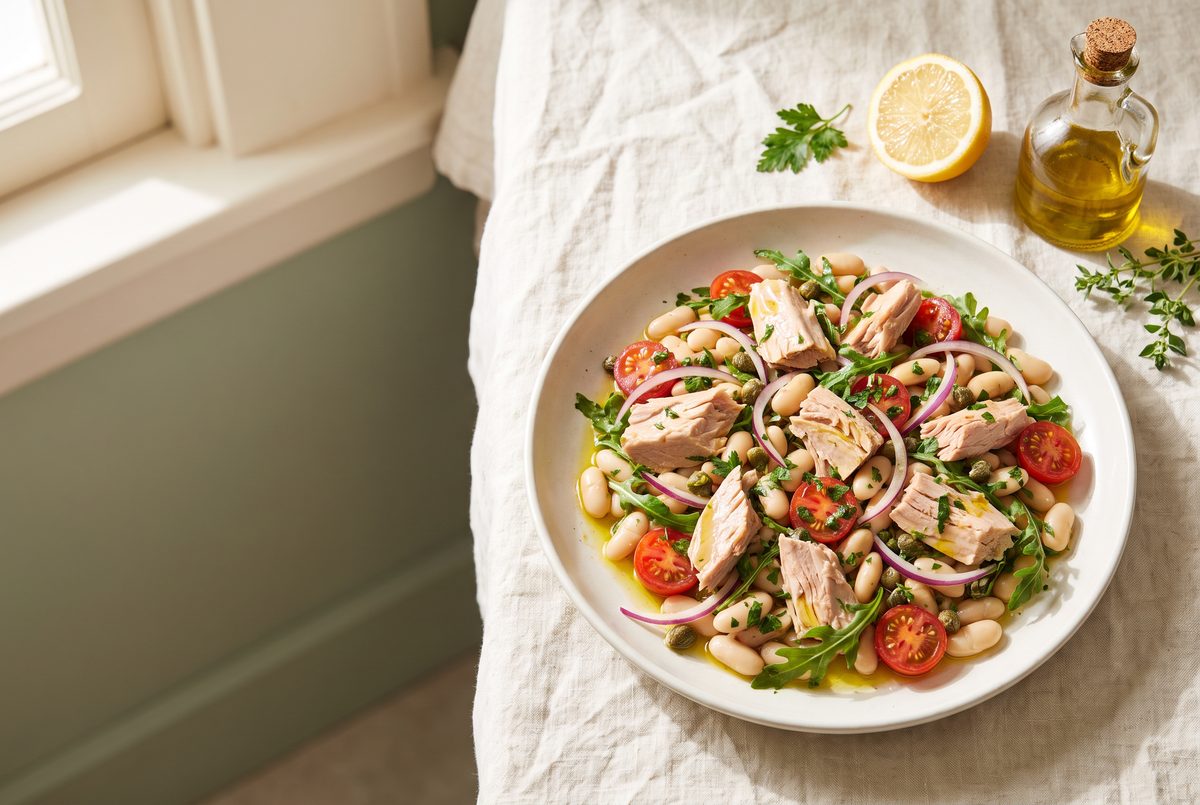
Tuscan Tuna and White Bean Salad
Tuscan tuna and white bean salad (fagioli e tonno) combines canned tuna, cannellini beans, red onion, cherry tomatoes…
- 10 min
- 426 kcal
- 40 g protein
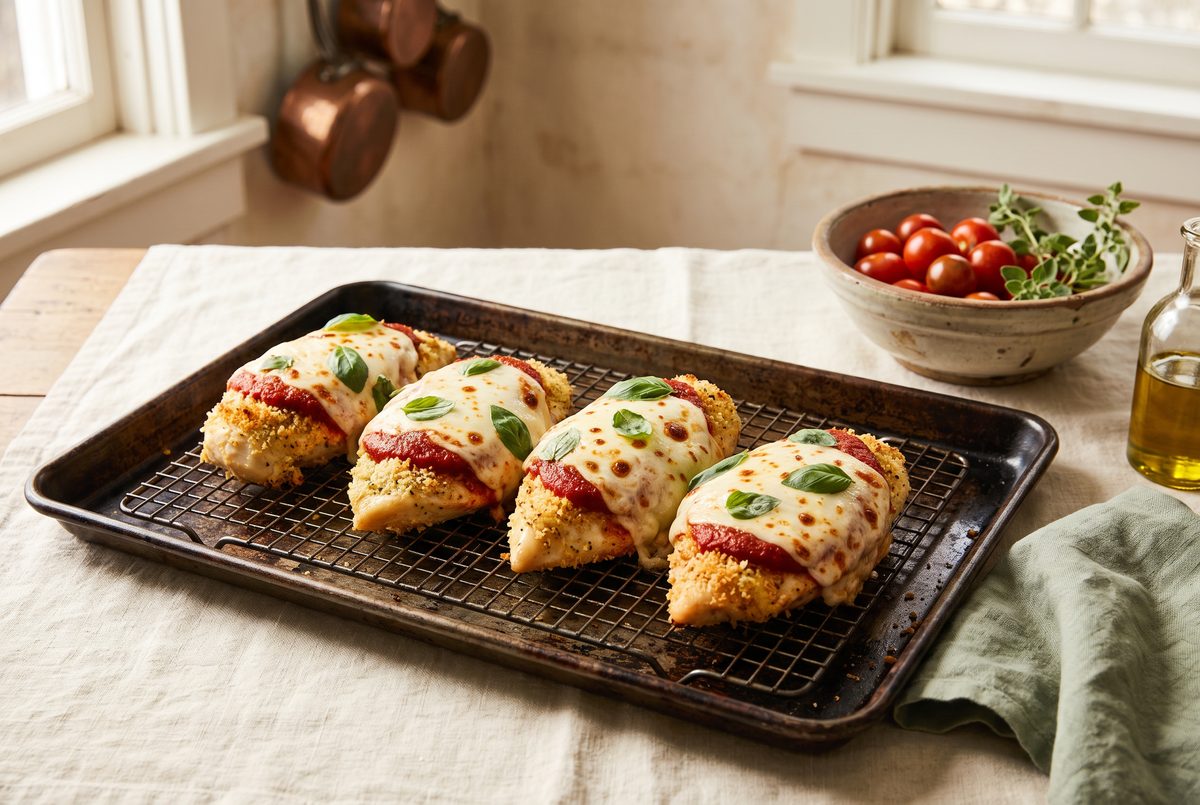
Sheet-Pan Chicken Parmesan, High-Protein
High-protein sheet-pan chicken parmesan bakes breaded chicken breasts on a wire rack so they crisp without frying…
- 40 min
- 478 kcal
- 56 g protein
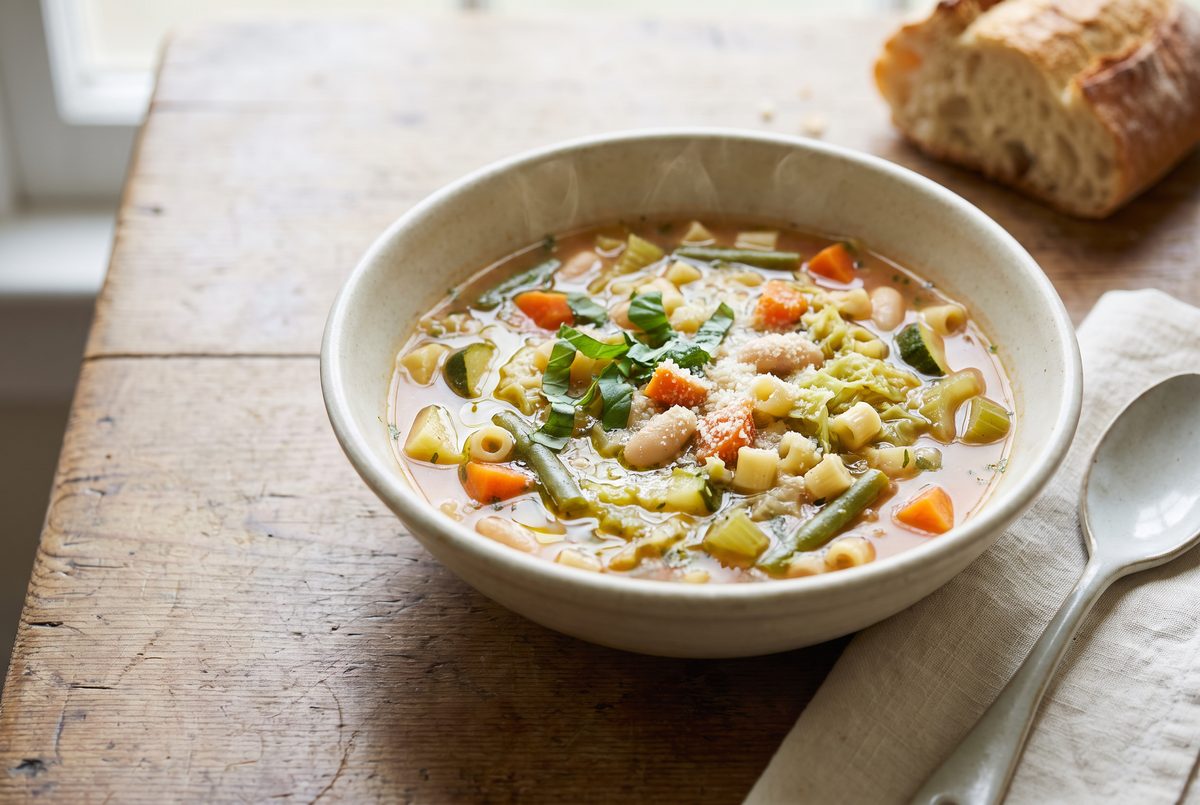
Classic Italian Minestrone Soup
Classic Italian minestrone is a thick vegetable soup with cannellini beans, seasonal vegetables and a handful of small…
- 1 hr 5 min
- 247 kcal
- 11 g protein