Tuscan Sliced Steak (Tagliata) with White Beans and Arugula
The dish is named after the knife: one 1¼-pound steak, seared hard, rested, and sliced across the grain onto a bed of cannellini beans stewed with garlic and sage, which is how a Tuscan table feeds four people from a piece of beef that would be one American steak dinner.
Tagliata is a steak that is portioned by the knife instead of the butcher: 1¼ lb of top sirloin seared, rested and sliced thin across the grain, fanned over cannellini beans stewed with garlic and sage and a handful of dressed arugula. One plate is 496 calories with 45 g of protein, 30 g of carbohydrate and 9.4 g of fiber, on the table in 45 minutes, and it is naturally gluten-free.
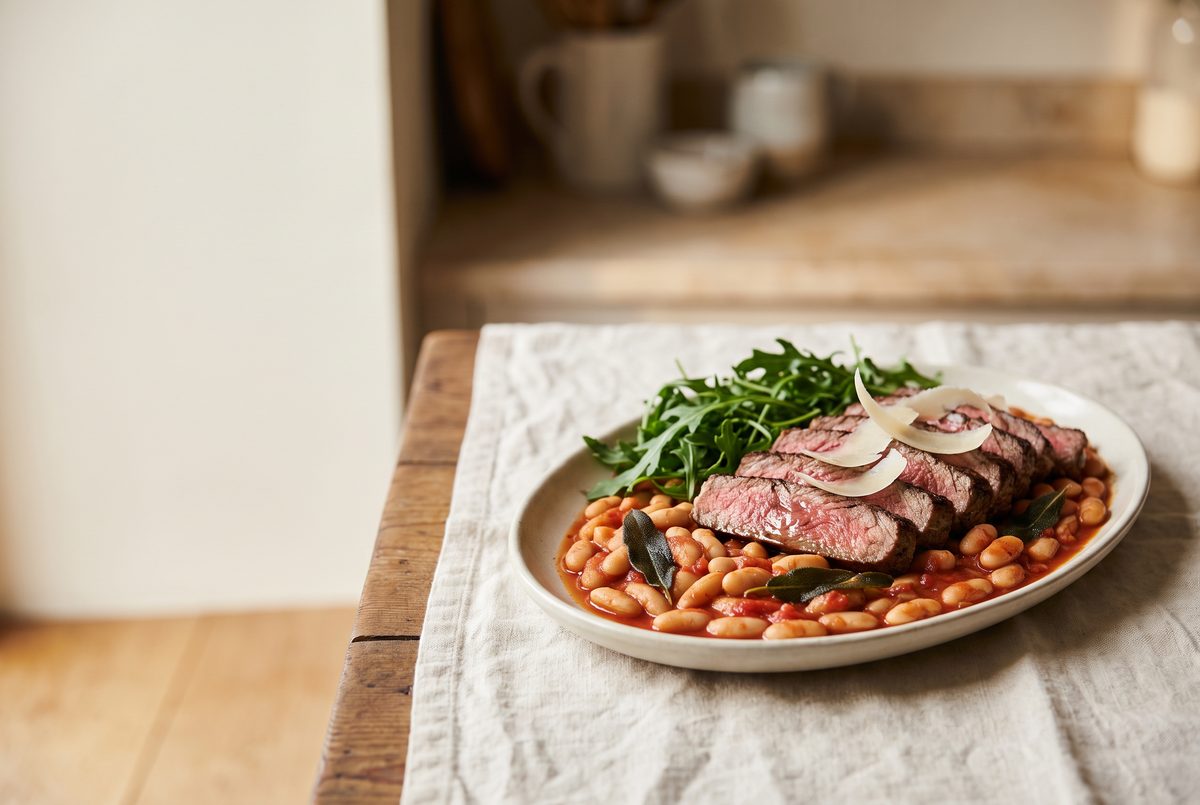
Tagliata is a past participle. It means "cut", and it is the only Italian main course named after what happens to it after it leaves the heat, which tells you where the recipe actually lives. Not in the grill marks: in the eight minutes of resting and the angle of the knife.
The rest of Italy calls Tuscans mangiafagioli, bean-eaters, and it is not meant as a compliment. But the beans are the reason the steak can be small. A bistecca alla fiorentina is a two-inch porterhouse for two people and costs what it costs; a tagliata is the trattoria answer — one piece of sirloin, seared, sliced, fanned across a warm platter, and set down in the middle of the table over a pot of cannellini that cost almost nothing. Everyone gets steak. Nobody gets a 12 oz slab.
That arithmetic is the useful part for anyone eating to train. A quarter-pound of raw sirloin per person sounds mean until you weigh what comes with it: 1¼ lb of beef, two cans of beans and three ounces of arugula make four plates at 45 g of protein and 496 calories, which is a smaller number than most restaurant salads. The beans are fagioli all'uccelletto — cannellini stewed with whole garlic cloves, sage and a little tomato. Artusi, writing the Italian cookbook in 1891, explains the name in a line: they are seasoned the way small birds were, with sage. From a can they take fifteen minutes, which is exactly the time the steak needs to stand on the counter and lose its chill before it meets the pan.
Why this recipe works for muscle gain
Lean sirloin is the cheapest 32 g of protein in the meat case. Top sirloin with the fat trimmed is 131 calories and 22.3 g of protein per 100 g raw, with 4.1 g of fat of which 1.6 g is saturated. That puts it under 93% lean ground beef (152 calories, 21.4 g of protein, 7 g of fat) and chuck (145 calories, 21.3 g), and within half a gram of protein per 100 g of skinless chicken breast — at a third of the price per pound of tenderloin or veal. The 5 oz raw portion each person gets here carries about 32 g of protein on its own; the beans add 10 and the Parmigiano shavings 2, which is how the plate reaches 45 g while the whole thing stays at 496 calories and 22 g of fat.
45 g is one full feeding, and beef protein is the kind that triggers one. The practical per-meal target for someone training is roughly 0.4 g of protein per kg of body weight across three to five feedings (Schoenfeld & Aragon, 2018), with the daily point of diminishing returns near 1.6 g per kg and a plausible ceiling around 2.2 (Morton et al., 2018). One plate covers a feeding for an adult of up to about 110 kg. Beef is also a complete protein with a high leucine fraction — leucine being the amino acid that actually starts the muscle-protein-synthesis response — which is why a mixed plate like this one does not need a shake behind it. The day's arithmetic is in our guide on how much protein you need to build muscle.
The beans do the carbohydrate, the fiber and the price. Two 15 oz cans, drained, are 510 g of cannellini: 26 of the plate's 30 g of carbohydrate and 8 of its 9.4 g of fiber, against the 25 to 34 g of fiber a day adults are told to get and almost never do. Thirty grams of carbohydrate is a training dinner, not a carb-load — if the point of the evening is to fill glycogen before a long run, the carb-loading guide and the endurance recipes are built for that and this is not. What it is good for is the evening after lifting, when the job is protein with enough starch to recover on. The rest of the muscle-gain recipes are sized the same way.
Two honest numbers: the red meat and the sodium. Red meat is the one protein on this site that comes with a ceiling rather than an encouragement — IARC classified it as probably carcinogenic to humans (Group 2A) in 2015, and the Dietary Guidelines ask for lean cuts in modest amounts rather than daily beef. Five ounces raw, once or twice a week, inside a week that otherwise runs on fish, poultry and legumes, is the frame this recipe is written for; the Tuscan tuna and white bean salad gets to 40 g of protein with no meat at all. The other number is sodium: 763 mg a plate, and 382 mg of that — half — is the canned beans, before any salt is added in the pan. Draining and rinsing them takes about 41% of it out (Duyff et al., 2011), which is why step 3 says rinse and the recipe adds no salt to the beans at all.
Ingredients
1 sliced steak with beans and arugula, 4 plates
The steak
The beans (fagioli all'uccelletto)
To finish
Instructions
- Salt the steak and walk away for 30 minutes. Take the steak out of the fridge, pat both faces properly dry with paper towel, and rub the whole ½ teaspoon of salt over it. Then leave it on the counter for 30 minutes while you make the beans. Two things happen: the salt draws moisture out and then back in, seasoning past the surface, and the middle of the steak comes up from 38°F to somewhere near 55°F, which is about two minutes less time in the pan and a narrower band of grey under the crust. No pepper yet — cracked pepper burns and turns bitter in a sear this hard.
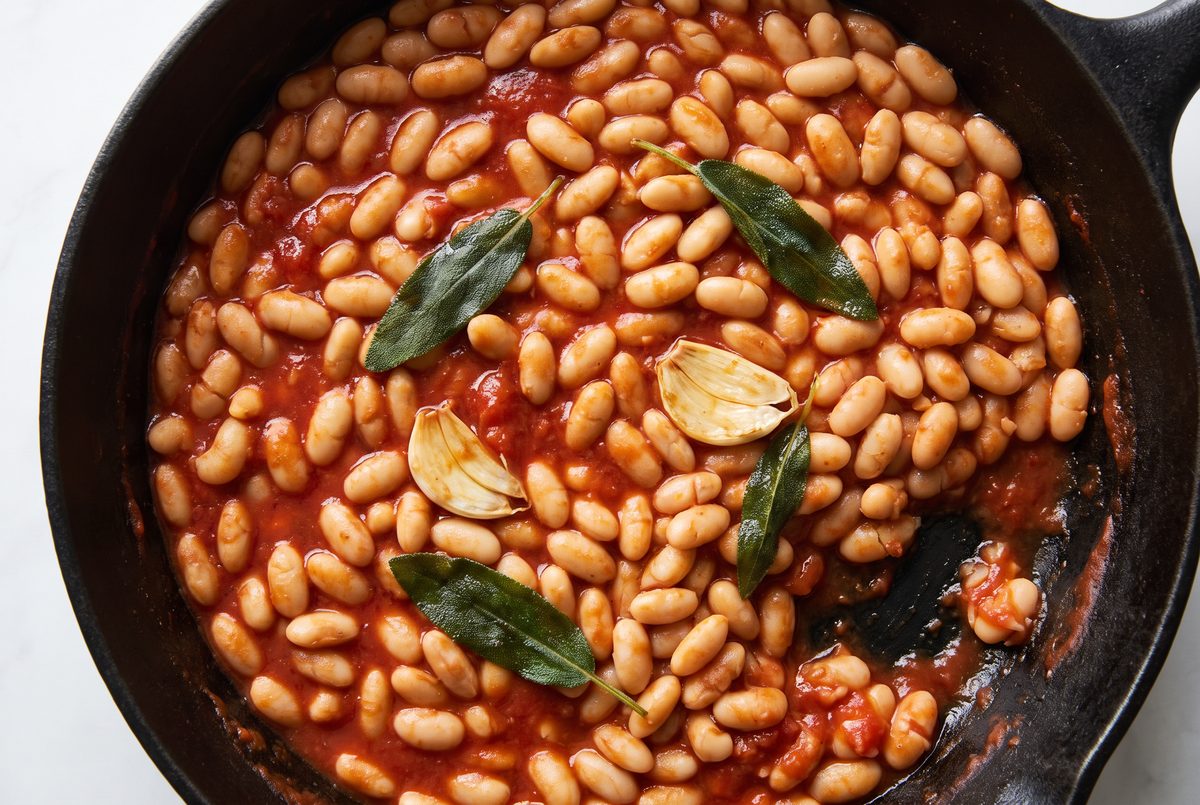
- Garlic, sage and chili in oil — 2 minutes, blond not brown. Warm the 2 tablespoons of oil in a wide pan over medium heat and add the crushed garlic cloves, the sage leaves and the chili flakes. Give it about 2 minutes, until the garlic is pale gold at the edges and the sage has gone dark and crisp-looking. Watch it: garlic goes from sweet to acrid in about twenty seconds, and there is no fixing a pan of beans built on burnt garlic. The cloves stay whole so you can find them and pull them out later, or crush them into the beans if you like it strong.
- Tomato in, beans in, 15 minutes at a bare simmer. Pour in the ½ cup of passata and let it bubble 2 minutes until it loses the raw-tin smell and darkens a shade. Add the drained, rinsed beans and ¼ cup of water, bring it to the laziest possible simmer, and leave it 12 to 15 minutes, stirring twice. Crush a spoonful of beans against the side of the pan halfway through — that starch is what makes the sauce cling instead of sitting in a puddle. They are done when a spoon dragged through the middle leaves a channel that fills in slowly. No salt: two cans of beans and the Parmigiano on top bring 763 mg of sodium to the plate already. Taste at the end and only then decide.
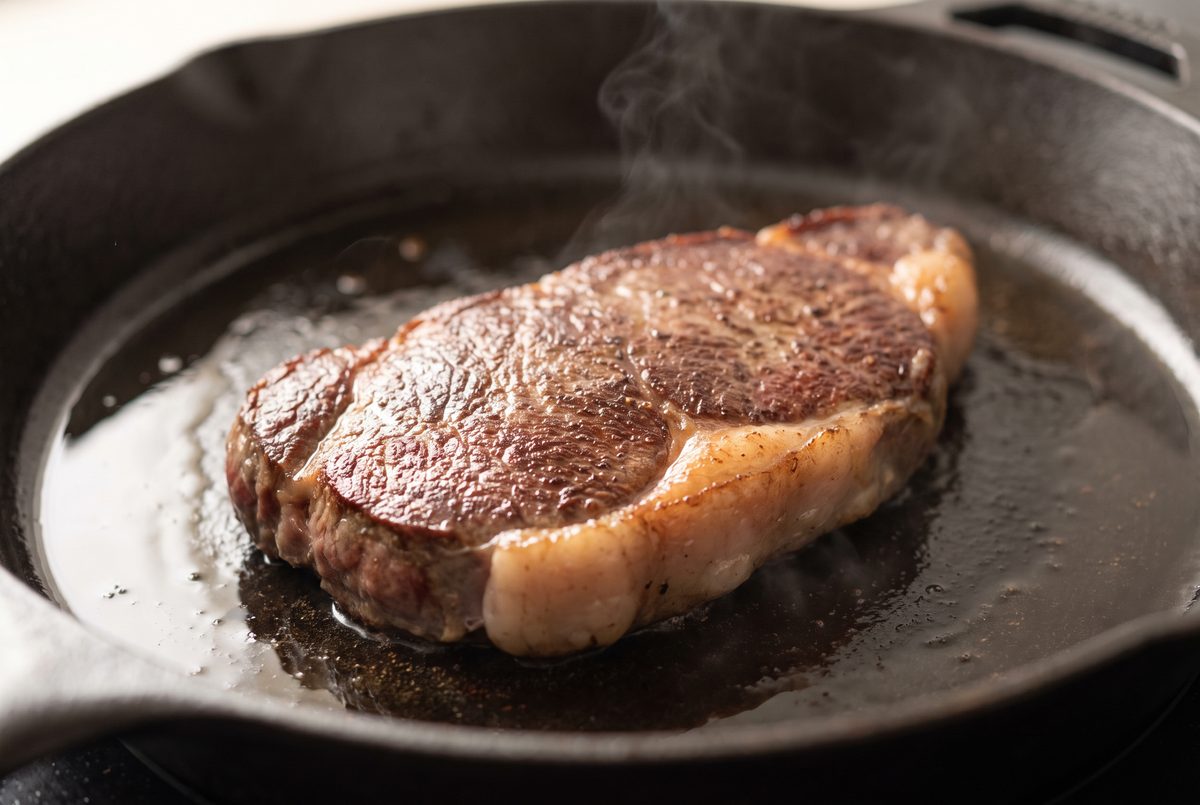
- Sear hard: 3 to 4 minutes, then 3, and do not move it. Get a heavy pan — stainless steel, enameled cast iron, whatever holds heat — hot over medium-high until a drop of water skitters instead of sizzling, then add the tablespoon of oil and lay the steak down away from you. Leave it 3 to 4 minutes without touching it. Moving a steak in the first two minutes is the single most common reason it comes out grey: the crust forms where the meat and the metal stay in contact, and every nudge starts the clock again. Turn it once and give the second face 3 minutes, then stand it on its fatty edge for 30 seconds.
- Check the temperature — 125–130°F for medium-rare. Push an instant-read thermometer in through the side, into the center, and take the steak out at 125 to 130°F (52 to 54°C): it climbs another 5°F while it rests, landing at medium-rare, which is how a tagliata is served and what the slicing is designed for. If you want the USDA's recommended temperature for whole cuts of beef it is 145°F (63°C) with a 3-minute rest — that is medium, the slices will be rosy-brown rather than red, and you should pull the pan at 138°F to allow for carryover. This is the step for a thermometer rather than a timer: a 1-inch steak and a 1½-inch steak are four minutes apart.
- Rest 8 to 10 minutes. Pepper now. Move the steak to a board and leave it completely alone for 8 to 10 minutes. Cut it straight out of the pan and the juice runs onto the board — a rested steak holds it in the slices, which is most of what people mean when they say a steak is juicy. Now press the cracked black pepper onto both faces, where it tastes of pepper instead of scorched husk. Dress the arugula in a bowl with the lemon juice and tablespoon of raw oil at the very last moment; dressed greens collapse in four minutes.
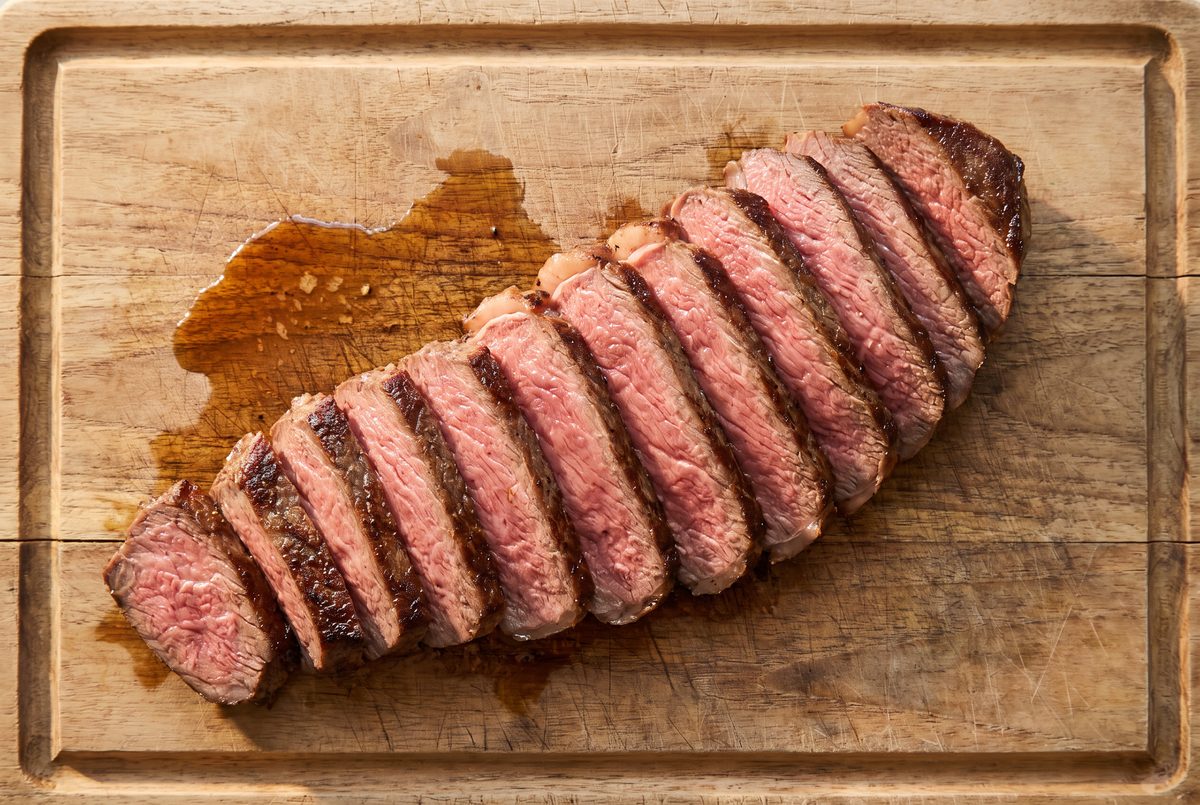
- Slice across the grain, ¼ inch thick. Look at the steak: the fibers run in one direction along its length. Set the knife across them, not with them, and cut slices a scant ¼ inch (6 mm) thick, holding the blade at a slight angle to make the slices wider. Cutting across the grain shortens every muscle fiber to the thickness of the slice, which is why a cheap cut sliced correctly eats more tenderly than an expensive one sliced wrong. Any juice left on the board goes back over the meat — do not pour it away.
- Build it: beans, arugula, steak, shavings. Spoon the beans onto a warm platter or four warm plates, pile the dressed arugula loosely over one side, and lay the steak slices across the top, overlapping, with the board juices poured over. Finish with the Parmigiano shavings — a peeler, not a grater, because the point is the thin sheet that softens on the warm meat. Eat it immediately; this is not a dish that waits, and the arugula under the hot steak is already wilting by the time you sit down.
Tips from our kitchen
- Thickness matters more than weight. One 1¼-inch steak beats two ¾-inch steaks of the same total weight, every time: a thin steak reaches 130°F in the middle before the outside has browned, so you get no crust and a uniformly pink interior. If the case only has thin steaks, buy a thick one and slice the raw steak in half horizontally later for two meals — or sear thin ones 90 seconds a side and accept a paler crust.
- A dry surface is half the crust. Water has to boil off before browning can start, so a wet steak steams for the first ninety seconds. Pat it dry when it comes out of the fridge and again right before it goes in the pan. If you remember a night ahead, salt it and leave it uncovered on a rack in the fridge: the surface dries out properly and sears in half the time.
- Open a window and skip the butter. This is a hard sear in a dry pan and it smokes. Olive oil is fine at this heat for the three minutes it is in there — the pan is nowhere near its smoke point when there is a cold steak sitting in it — but a knob of butter added at the start will be black before the first turn. Butter belongs in the last thirty seconds, if at all.
- No thermometer? Use the thickness, then cut and look. For a 1¼-inch sirloin, 3½ minutes a side over medium-high is close to medium-rare on most home stoves. Then cut into the thickest part before it rests: if it is redder than you want, the slices go back into the hot pan for twenty seconds. Nobody at the table will know, and it is a better outcome than guessing by pressing it with a finger, which is unreliable on anything this thick.
- Dried beans, if you have the afternoon. Half a pound of dried cannellini soaked overnight and simmered 60 to 75 minutes with a sage leaf and a garlic clove is better than any can, mostly because the cooking liquid becomes part of the sauce. The nutrition table on this page is calculated for canned, so the numbers shift if you go that way — downward on sodium, which is the one that matters here.
Variations
- The classic, with nothing but arugula and Parmigiano. Skip the beans entirely: steak, dressed arugula, shavings, oil, salt. This is what tagliata means on most Italian menus, it takes 20 minutes, and it is 275 calories and 34 g of protein a plate — a lighter dinner, but no longer one with carbohydrate in it.
- With a cheaper cut, sliced stricter. Flank, skirt or bavette cost less and have more flavor; they also have a coarser, more obvious grain, so they must be cut thin and dead across it. Sear 2½ to 3 minutes a side, pull at 125°F, and rest the full 10 minutes.
- Over the coals, which is where it belongs. On a charcoal grill: steak dry and salted, grate wiped and hot, 2 to 3 minutes a side directly over the coals, then across to the cool side with the lid on if the center is still under 120°F. The beans can sit on the grate in a pan at the edge.
- The beans on their own, as a vegetarian main. Fagioli all'uccelletto with a slice of grilled bread rubbed with garlic is a Tuscan supper in its own right; double the recipe, let it go 25 minutes instead of 15 so it thickens, and finish with raw oil. For the same idea taken further, the ribollita is what Tuscan cooks do with yesterday's bread and beans.
- For the same protein without red meat, the saltimbocca alla romana reaches 47 g in half an hour in one skillet, and the sheet-pan chicken parmesan gets to 56 g in the oven.
Storage & meal prep
The honest answer is that the steak does not keep as a hot dish and no container changes that: reheated medium-rare beef is medium-well beef with dry edges. What it does do is keep beautifully cold. Wrap the sliced steak tight and it holds 3 days in the fridge, and on day two it is a lunch rather than a leftover — the slices over the rest of the arugula with a squeeze of lemon, or in a ciabatta roll with the cold beans spread in it like a pâté. Do not slice what you are not eating: a steak kept whole and sliced the next day loses far less juice. The beans keep 4 days and genuinely improve for the first two as the sage settles into them; they also freeze for 3 months, which is an argument for cooking a double batch while the pan is out. Reheat them over low heat with a splash of water, never in the microwave on full power, which bursts the skins. Dress only the arugula you are serving; dressed greens are finished in an hour.
Nutrition per serving
| Nutrient | Amount | % DV* |
|---|---|---|
| Calories | 496 kcal | 25% |
| Total fat | 22 g | 28% |
| Saturated fat | 5.3 g | 27% |
| Carbohydrates | 30 g | 11% |
| Fiber | 9.4 g | 34% |
| Sugars | 2.5 g | — |
| Protein | 45 g | 90% |
| Sodium | 763 mg | 33% |
*Percent Daily Values are based on a 2,000-calorie diet. Values are calculated from USDA FoodData Central and manufacturer data for the ingredients as listed; they are estimates, not lab analyses. Nutrition disclaimer.
Frequently asked questions
What is tagliata di manzo?
A steak that is cooked whole, rested, then sliced thin across the grain and served fanned out on a platter, usually with something underneath it — arugula and Parmigiano shavings in most of Italy, beans in Tuscany. Tagliata simply means "cut". It is a sharing dish by design: one steak between three or four people instead of a whole steak each, which is also what makes it a sensible way to eat beef regularly.
How many calories are in tagliata with white beans?
496 calories a serving as written here, for a quarter of a 1¼ lb steak with the beans, arugula and Parmigiano, which works out at 45 g of protein, 30 g of carbohydrate, 22 g of fat and 9.4 g of fiber. The classic version without the beans — steak, arugula and shavings only — is 275 calories and 34 g of protein. Restaurant tagliata is usually a 10 to 12 oz steak for one person and lands closer to 700 calories before anything is served with it.
Is steak good for building muscle?
Lean beef is one of the most efficient protein sources available: top sirloin is 22.3 g of protein per 100 g raw for 131 calories, it is a complete protein, and it is rich in leucine, heme iron, zinc and B12. The 5 oz raw portion here gives about 32 g of protein, and the plate reaches 45 g — a full feeding, given a practical per-meal target of roughly 0.4 g per kg of body weight (Schoenfeld & Aragon, 2018). The caveat is frequency, not nutrition: IARC classifies red meat as probably carcinogenic to humans (Group 2A), so the sensible pattern is lean cuts in modest portions once or twice a week rather than beef as the daily default.
What temperature should steak be cooked to for tagliata?
Take it off the heat at 125–130°F (52–54°C) and rest it 8 to 10 minutes; carryover brings it to about 130–135°F, which is medium-rare, and that is the doneness tagliata is sliced for. The USDA's recommendation for whole cuts of beef is higher — 145°F (63°C) with a 3-minute rest — and if you want to follow it, pull the steak at 138°F and expect medium: rosy-brown slices rather than red. Ground beef is a different case entirely and still needs 160°F, because grinding moves surface bacteria through the whole mass.
What are fagioli all'uccelletto?
Tuscan white beans stewed with olive oil, whole garlic cloves, sage and a little tomato. The name means roughly "beans in the manner of small birds", and Artusi's 1891 cookbook gives the reason: they are seasoned the way small game birds were, with sage. From dried beans it is an afternoon; from two cans, drained and rinsed, it is 15 minutes and puts 26 g of carbohydrate and 8 g of fiber on each plate here.
Can I make tagliata ahead of time?
The beans yes, the steak no. Make the beans up to 2 days ahead — they improve — and reheat them with a splash of water while the steak comes to room temperature, which turns this into a 20-minute dinner. The steak itself has to be seared, rested and sliced to order; cooked in advance and reheated it goes from medium-rare to medium-well and dries at the edges. If you want beef you can cook ahead, the Italian beef stew with potatoes is built for it and holds four days.
Sources
- USDA FoodData Central — beef, top sirloin, separable lean only, trimmed, raw; beans, white, mature seeds, canned; arugula, raw; Parmigiano-Reggiano; olive oil; sage; tomato purée; lemon juice; ground beef 93% lean and chicken breast, raw (for the comparisons)
- USDA Food Safety and Inspection Service — safe minimum internal temperature for whole cuts of beef, 145°F (63°C) with a 3-minute rest; ground beef, 160°F (71°C)
- Morton, R.W. et al. (2018). A systematic review, meta-analysis and meta-regression of the effect of protein supplementation on resistance training-induced gains in muscle mass and strength in healthy adults. British Journal of Sports Medicine
- Schoenfeld, B.J. & Aragon, A.A. (2018). How much protein can the body use in a single meal for muscle-building? Implications for daily protein distribution. Journal of the International Society of Sports Nutrition
- Duyff, R.L., Mount, J.R. & Jones, J.B. (2011). Sodium Reduction in Canned Beans After Draining, Rinsing. Journal of Culinary Science & Technology
- IARC Monographs Volume 114 (2015), International Agency for Research on Cancer — red meat classified as Group 2A, probably carcinogenic to humans; processed meat as Group 1
- Dietary Guidelines for Americans 2020–2025 — dietary fiber 25 to 34 g per day for adults; sodium under 2,300 mg per day
- Pellegrino Artusi (1891). La scienza in cucina e l'arte di mangiar bene — fagiuoli a guisa d'uccellini, on sage as the seasoning of small birds
You might also like
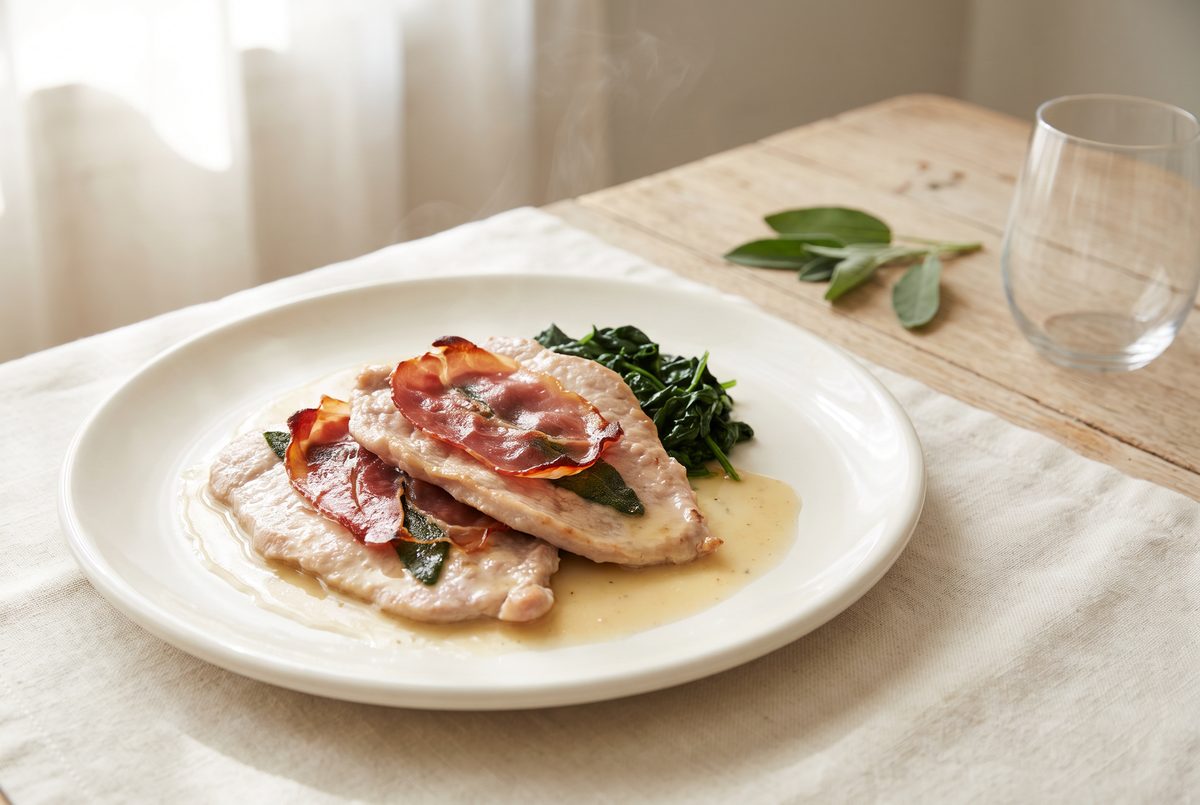
Saltimbocca alla Romana (Veal, Prosciutto, Sage)
Saltimbocca alla romana is veal pounded thin under a slice of prosciutto and a sage leaf, seared four minutes total…
- 30 min
- 463 kcal
- 47 g protein
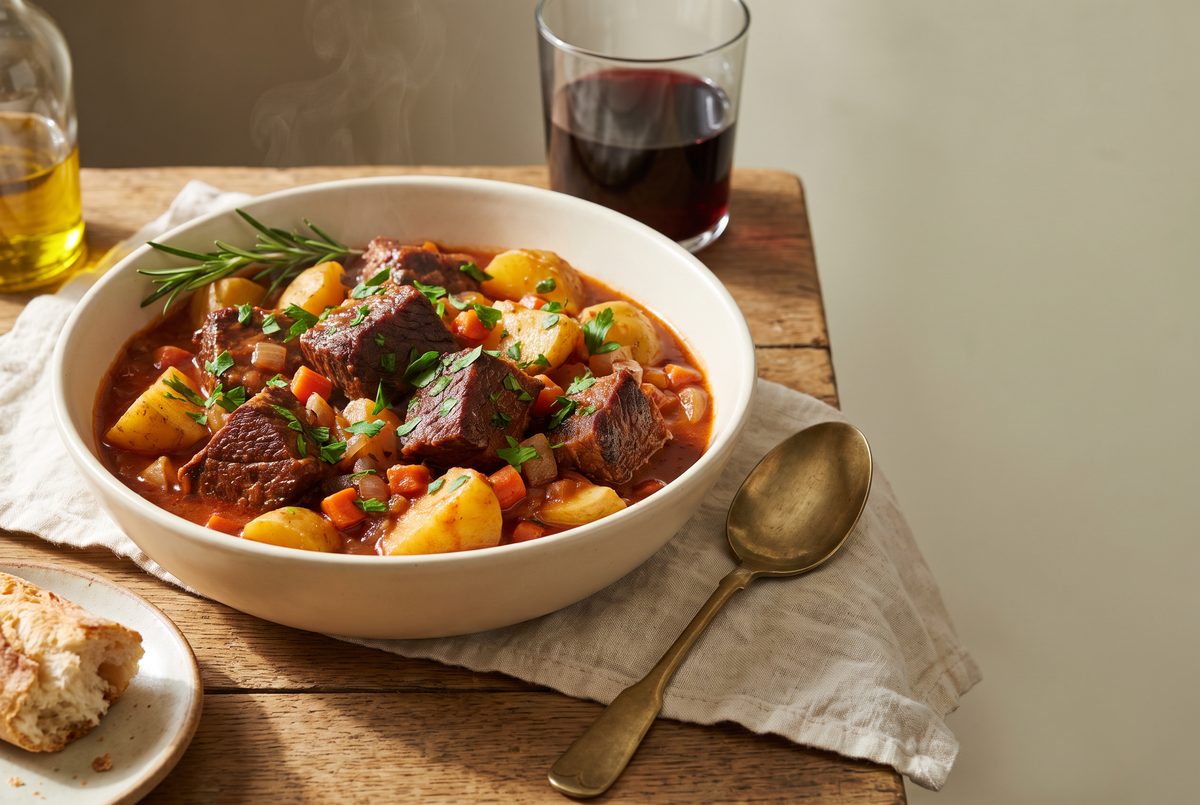
Italian Beef Stew with Potatoes
Spezzatino is the beef stew every Italian region cooks a version of: chuck browned hard, simmered in red wine and…
- 2 hr 50 min
- 537 kcal
- 42 g protein
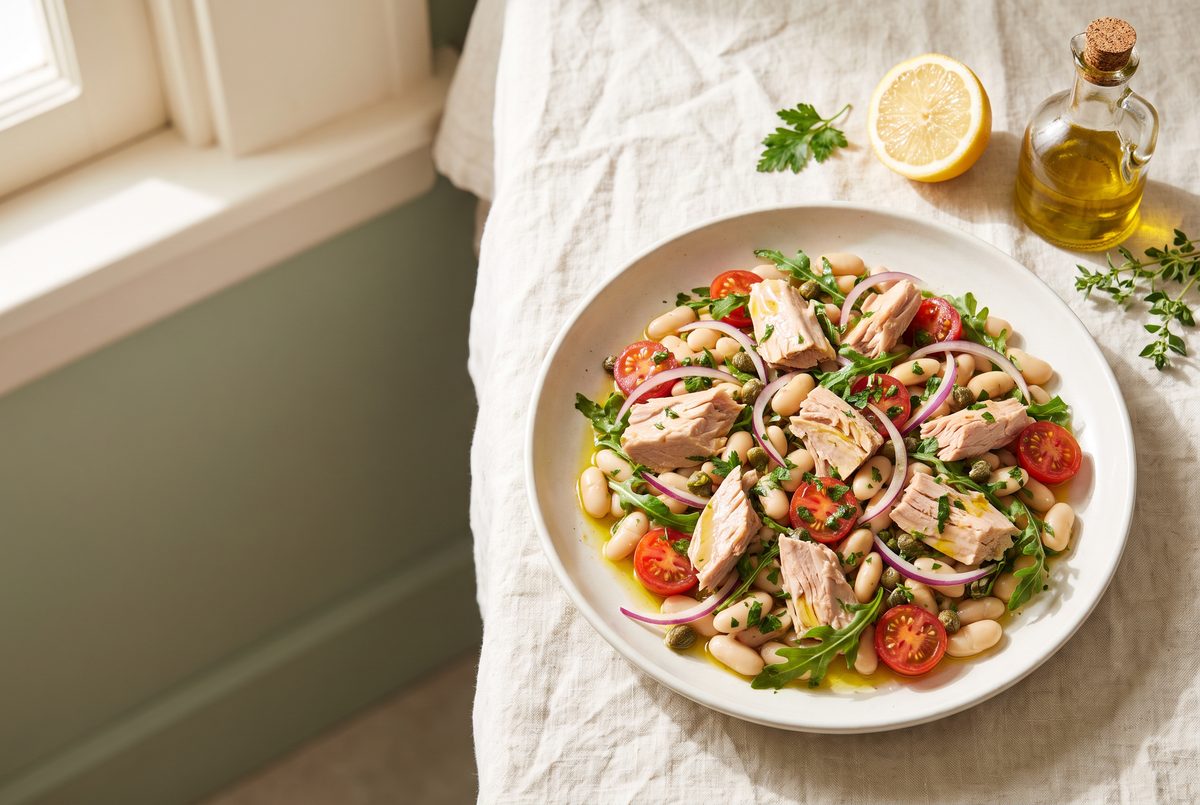
Tuscan Tuna and White Bean Salad
Tuscan tuna and white bean salad (fagioli e tonno) combines canned tuna, cannellini beans, red onion, cherry tomatoes…
- 10 min
- 426 kcal
- 40 g protein