Saltimbocca alla Romana (Veal, Prosciutto, Sage)
Three ingredients on a cutlet pounded thin, four minutes in the pan, and a sauce made from what sticks to the bottom — the Roman trattoria dish that is almost impossible to improve and very easy to overcook.
Saltimbocca alla romana is veal pounded thin under a slice of prosciutto and a sage leaf, seared four minutes total and finished with a white wine pan sauce. Two cutlets with sauteed spinach come to 463 calories and 47 g of protein in 30 minutes, which makes it the fastest serious protein plate in Italian cooking.
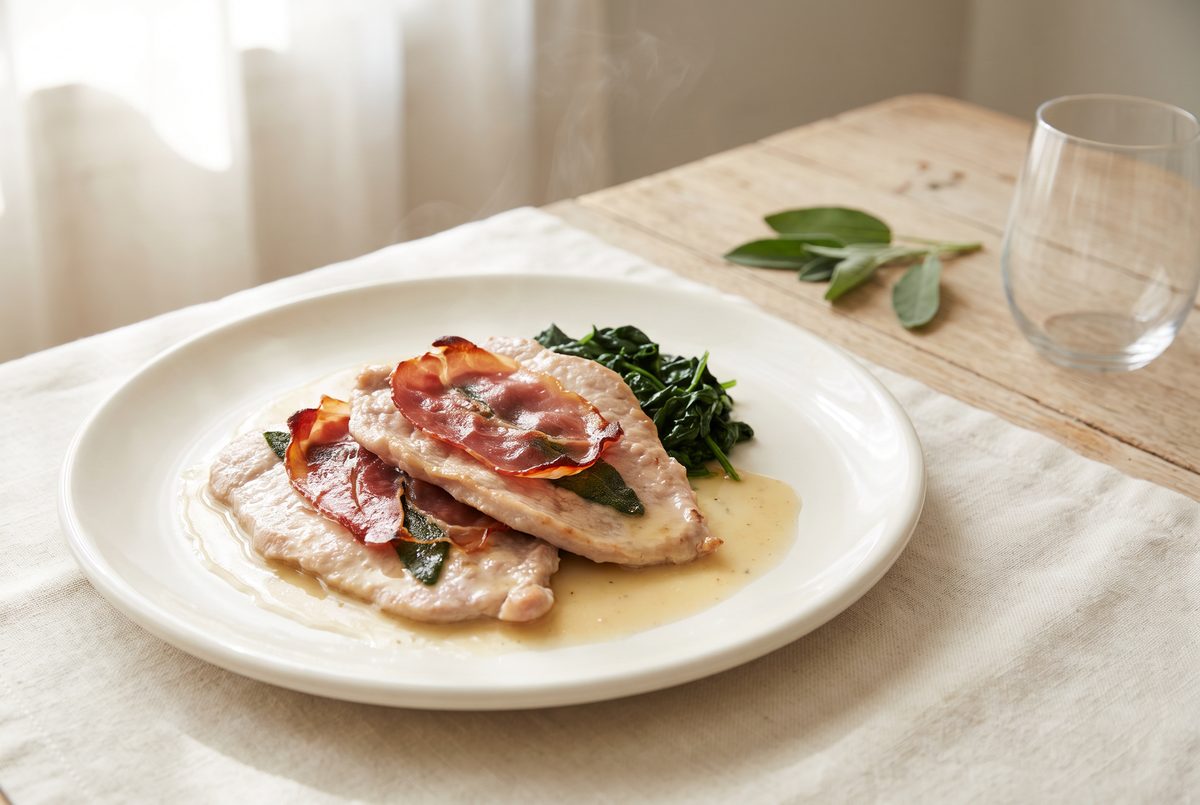
The problem with saltimbocca in an American kitchen is not the recipe, it is the butcher counter. Veal cutlets here are usually sold at a quarter inch or thicker, sometimes labelled scallopini anyway, and at that thickness the dish does not work: by the time the centre of the meat is hot the outside has tightened, the prosciutto has gone from crisp to leathery, and you have spent good money on something chewy. Rome solves this before the pan is even on the heat. The cutlet gets pounded until you can almost see the board through it — an eighth of an inch, thin enough to go limp when you lift it — and then it cooks faster than the sauce takes to come together.
What goes on top is fixed and short. A slice of prosciutto, a sage leaf, nothing else. Roman cooks argue about whether the prosciutto goes over or under, whether the sage sits on top of the ham or between ham and meat, and whether a toothpick is a crutch; they do not argue about adding garlic or cheese or lemon, because those are not in the dish. The flour is the one thing people leave out and should not: a thin coat of it is what browns, what keeps the meat's juices in, and what thickens the sauce later when the wine goes in.
It is also, by some distance, the fastest way to get forty-odd grams of protein onto a plate from whole food. Two cutlets, a handful of spinach wilted in the same pan before the meat goes in, a sauce that is wine, pan drippings and butter. Half an hour, one skillet, and a dish that has been served in trattorias off Campo de' Fiori for longer than anyone can date it.
Why this recipe works for muscle gain
Veal leg is the leanest cut of red meat in common use. Top round, trimmed, is 107 calories and 21.3 g of protein per 100 g raw, with 1.8 g of fat — compare 152 calories for 93% lean ground beef at the same protein, or 131 for lean sirloin. That is why 1½ lb of it feeds four people 47 g of protein each inside a 463-calorie plate without any of the arithmetic gymnastics the same number usually needs.
47 g is a full feeding, and the daily total is what matters. The practical per-meal target for someone training is around 0.4 g of protein per kg of body weight, which is 30 to 45 g for most adults, taken across three to five feedings (Schoenfeld & Aragon, 2018). The meta-analysis by Morton et al. (2018) put the point where extra protein stops adding anything at roughly 1.6 g per kg per day, with a plausible ceiling near 2.2. One plate of this is one of those feedings — the arithmetic is worked through in how much protein to build muscle.
The spinach is doing more than filling the plate. A pound and a half wilts down to about 10 oz and brings 3.7 g of the plate's 4.3 g of fibre, plus a useful amount of non-heme iron, which the veal's heme iron helps absorb when they are eaten together. It also costs almost nothing in calories: all 680 g of it comes to 156 calories in total, which is 39 of the 463 on each plate.
The carbohydrate is deliberately low, and that is a choice to make with your day. At 12 g a serving this is not a plate to train on. In Rome it arrives with bread to wipe the pan, and that is the honest fix: two thick slices of country bread add about 160 calories and 31 g of carbohydrate, while 1 lb of potatoes roasted alongside adds about 470 calories and 79 g of carbohydrate across four plates. The rest of the muscle-gain recipes are built the same way — protein first, carbohydrate sized to the training.
Ingredients
8 cutlets, 2 per plate, with spinach
The saltimbocca
The sauce
The spinach
Instructions
- Spinach first, then get the pan back. Warm the tablespoon of oil with the crushed garlic in a wide skillet over medium heat for 1 minute, then add the spinach in two or three handfuls, letting each one collapse before the next goes in. It takes about 4 minutes in total. Salt it, tip it into a colander set over a bowl and press it once with the back of a spoon — wet spinach under a pan sauce is the one way to ruin this plate. Fish out the garlic, wipe the skillet dry and put it back on the stove.
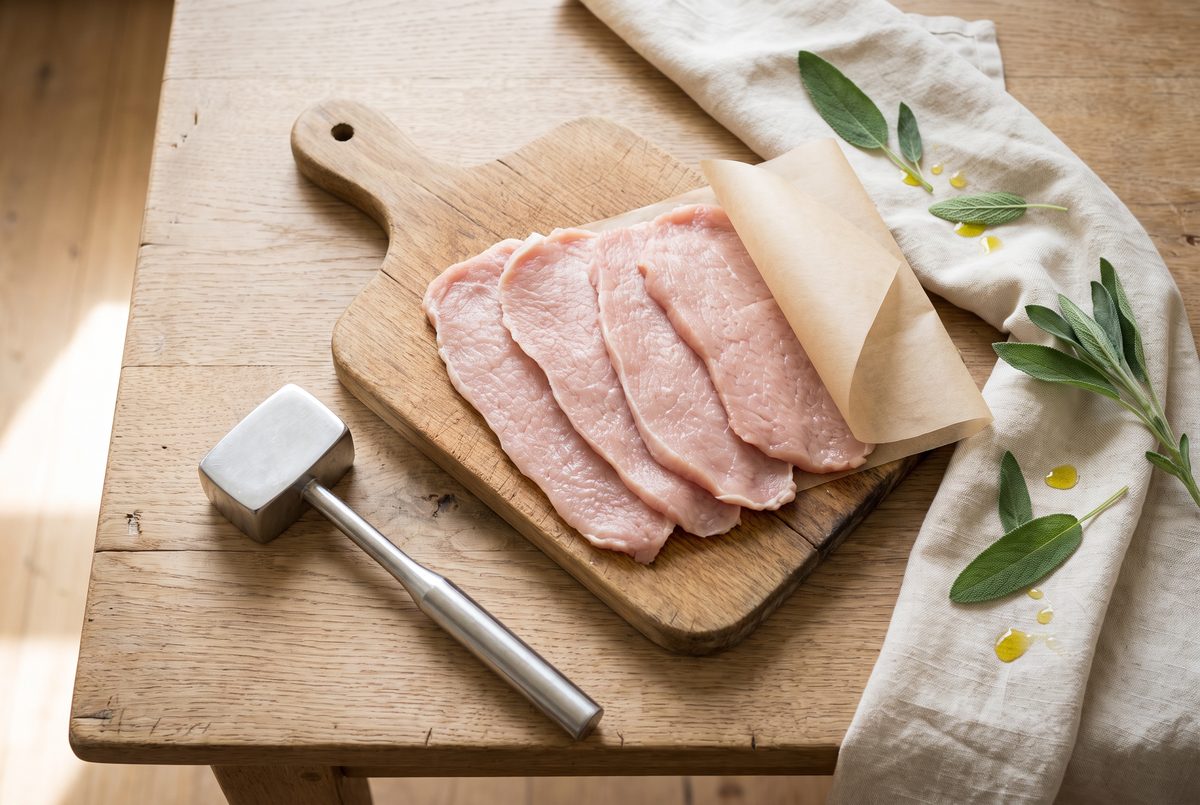
- Pound the cutlets to ⅛ inch. Lay a cutlet between two sheets of parchment or in a freezer bag and work it from the centre outwards with the flat side of a mallet or the bottom of a heavy pan — firm, gliding strokes, not hammer blows, which tear the meat. You want ⅛ inch, about 3 mm: thin enough that the cutlet goes limp when you lift a corner. Three ounces of veal spreads to roughly the size of your palm and fingers. Grind pepper over the top side only.
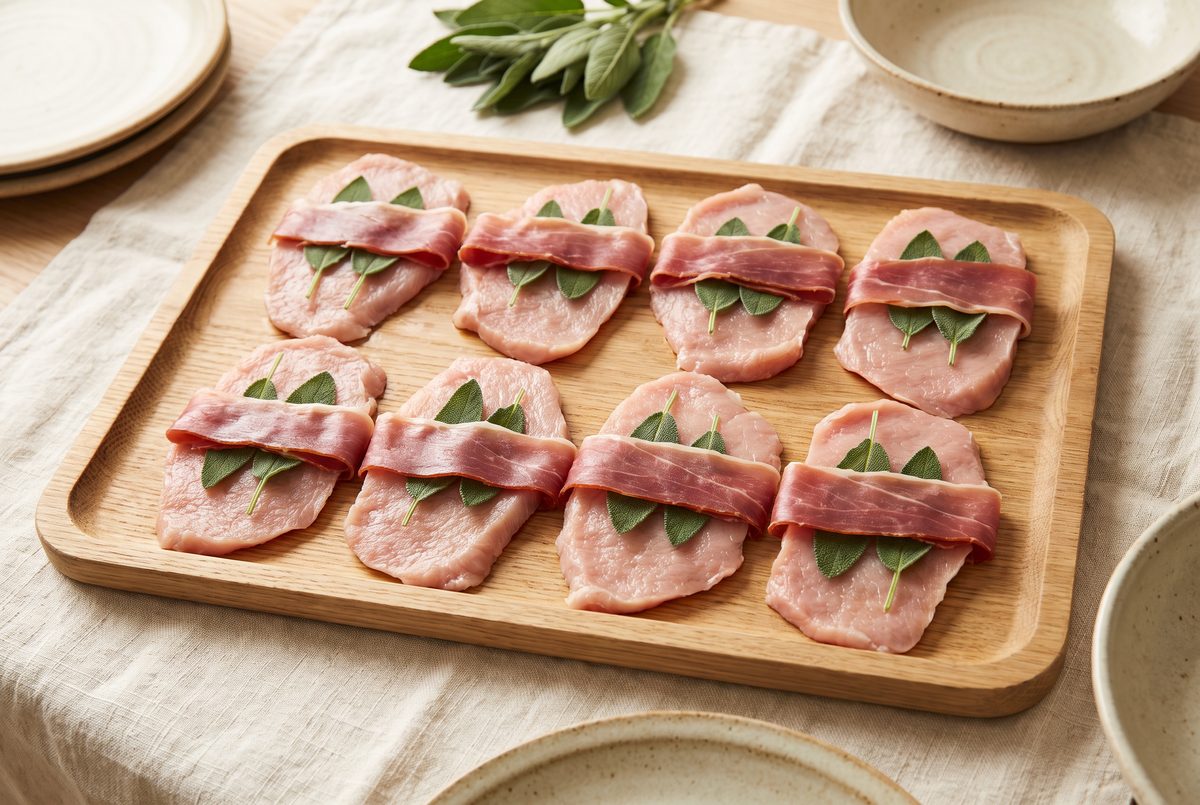
- Sage, then prosciutto, then press. Put two sage leaves on the peppered side of each cutlet and lay a slice of prosciutto over them, stretching it to the edges — the sage goes under the ham, where it steams into the meat instead of burning in the oil. Press the whole thing firmly with your palm for a few seconds. The flour in the next step is what finally glues it; a toothpick through the middle is insurance if your prosciutto is very thin, and it comes out before serving.
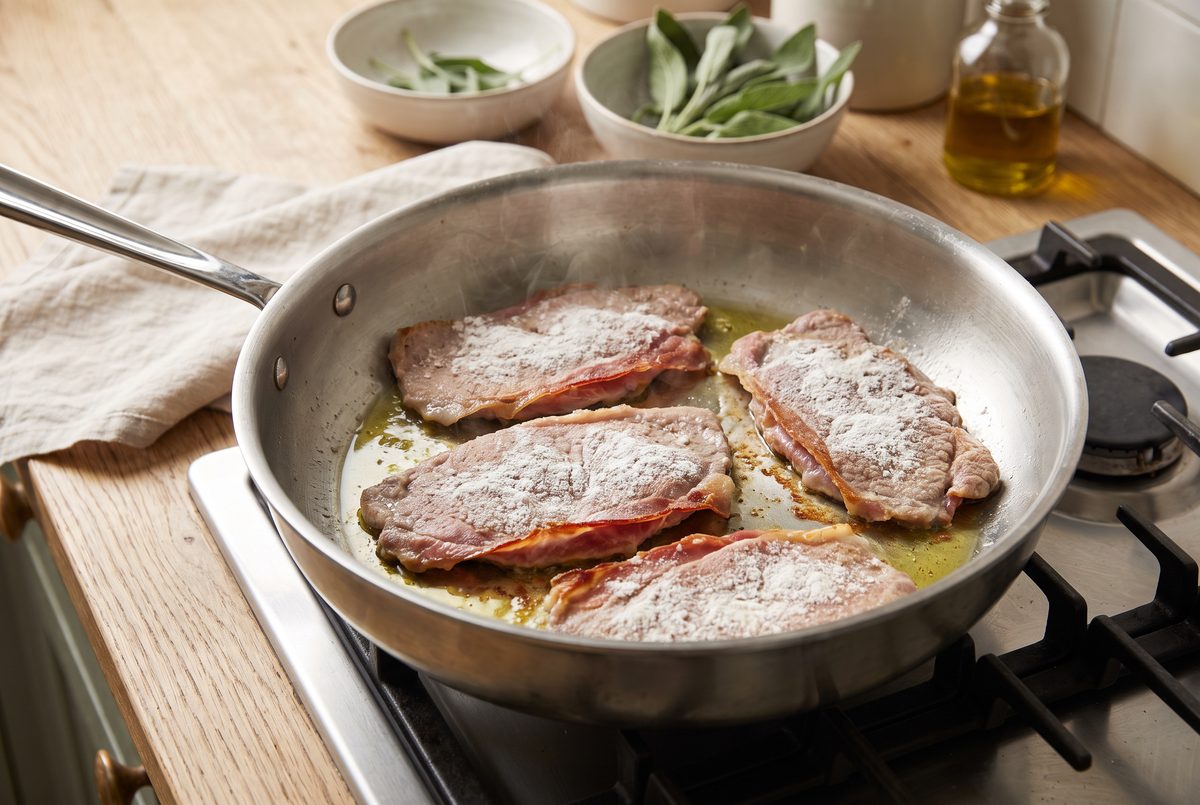
- Flour the veal side only. Spread the flour on a plate. Dip each cutlet meat side down, press lightly, lift and shake off everything that is not clinging — you want a dusting you can see the meat through, not a coating. Leave the prosciutto bare. Flour on the ham steams rather than crisps and turns pasty in the sauce. Done this way, about 2 tablespoons of the ¼ cup actually makes it into the pan.
- Sear prosciutto side down, 90 seconds. Heat the 2 tablespoons of oil in the dry skillet over medium-high until it shimmers. Lay in four cutlets prosciutto side down, not touching, and leave them alone 90 seconds — the ham goes from pink to deep rose and crisps at the edges, and its fat renders into the pan, which is where the sauce comes from. Flip and give the floured side 45 seconds, until it is golden. Move them to a warm plate, prosciutto side up, and do the second batch. Veal cutlets this thin are cooked through at this point; 145°F (63°C) is the mark if you want to check one.
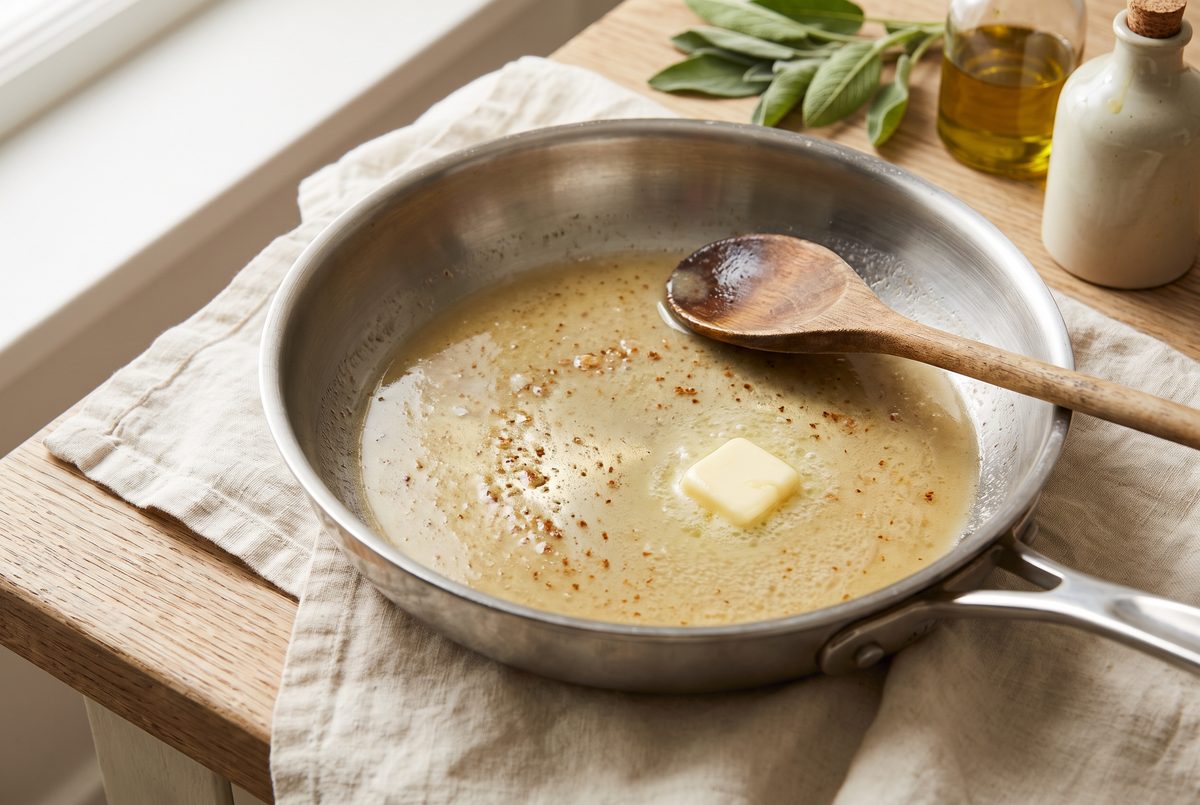
- Wine into the hot pan. With the pan still on medium-high and empty, pour in the wine. It will seize and hiss; scrape the browned bits off the bottom with a wooden spoon and let it boil hard 2 minutes, until it has reduced by about half and no longer smells sharp. Add the broth and give it another 2 minutes. You are looking for roughly ½ cup of liquid, thickened just slightly by the flour that came off the cutlets.
- Butter off the heat. Take the pan off the burner, wait 20 seconds, then add the cold butter a cube at a time, swirling the pan until each one disappears. The sauce turns glossy and opaque and thickens enough to coat a spoon. Off the heat is not fussiness: boiled butter splits into oil and solids and you cannot bring it back. Taste it — it should not need salt, and if it does, a quarter teaspoon is the most it will take.
- Build the plate. Divide the spinach between four warm plates, set two cutlets on each prosciutto side up, and spoon the sauce over the veal so it runs down into the greens. Serve immediately. This is not a dish that waits — five minutes under foil and the prosciutto softens, which is the whole difference between saltimbocca and a veal cutlet with ham on it.
Tips from our kitchen
- Buy the veal thick and pound it yourself. Pre-sliced scallopini are usually cut at ¼ inch and sold pounded only in name. A 1½ lb piece of veal top round, sliced across the grain into eight pieces at home and then flattened, costs less and gives you control over the one variable that decides the dish.
- Two pans or two batches, never eight cutlets at once. Crowded, they steam: the prosciutto stays pale and limp and no fond forms on the bottom, so there is nothing to make a sauce from. Four at a time in a 12-inch skillet, and the second batch takes the same 90 and 45 seconds.
- Dry sage leaves burn, fresh ones don't — which is why they go under the prosciutto rather than on top of it. If all you can find is dried, use ½ tsp crumbled into the flour instead and accept that it is a different, quieter dish.
- No lemon. Every American version adds a squeeze, and it flattens the sage. If you want acidity, it is already in the wine; reduce it a little less and the sauce stays brighter.
Variations
- With pork tenderloin, which is what a lot of Roman households use midweek when veal is dear: slice 1½ lb of tenderloin into eight medallions, pound them the same way, and the plate comes to about 485 calories with 46 g of protein. Pork needs 145°F (63°C) and a three-minute rest.
- With turkey breast cutlets, the leanest swap of the three: about 475 calories and 51 g of protein per plate. Turkey dries out faster than veal, so cut the second side to 30 seconds.
- Saltimbocca alla sorrentina, the southern version: a thin slice of mozzarella and half a cherry tomato go on top of the ham and the pan is covered for the last minute so the cheese melts. Adds about 40 calories and 4 g of protein a plate.
- With Marsala instead of white wine — not Roman, but common in Lazio restaurants and very good. Use ½ cup dry Marsala with ½ cup broth and skip the butter, which the Marsala's sugar makes unnecessary.
- As a full training plate: 1 lb of potatoes cut in chunks and roasted at 425°F for 35 minutes with a tablespoon of oil and rosemary brings the meal to about 580 calories, 49 g of protein and 32 g of carbohydrate. For a proper carb-loading portion, serve it after a first course of pasta the way Romans do — see carb loading the Italian way.
- If you want the same protein for a slower evening, the Italian beef stew with potatoes does it in one pot over two hours, and the artichoke frittata does a lighter version of the same idea for lunch.
Storage & meal prep
Honestly: don't. Saltimbocca is one of the few dishes on this site that is worse the next day, and knowing that is more useful than a reheating trick. The prosciutto loses its crisp within minutes of leaving the pan, and veal pounded to ⅛ inch has nowhere to hide when it is warmed through a second time — it goes grey and tightens. If you have leftovers, slice them cold into strips the next day and put them on bread with the spinach and a spoonful of the sauce, which is what a Roman would do with them anyway. The sauce on its own keeps 3 days in the fridge and reheats gently over low heat with a splash of water. The spinach keeps 3 days and is good cold.
Nutrition per serving
| Nutrient | Amount | % DV* |
|---|---|---|
| Calories | 463 kcal | 23% |
| Total fat | 22 g | 28% |
| Saturated fat | 7 g | 35% |
| Carbohydrates | 12 g | 4% |
| Fiber | 4.3 g | 15% |
| Sugars | 1.3 g | — |
| Protein | 47 g | 94% |
| Sodium | 712 mg | 31% |
*Percent Daily Values are based on a 2,000-calorie diet. Values are calculated from USDA FoodData Central and manufacturer data for the ingredients as listed; they are estimates, not lab analyses. Nutrition disclaimer.
Frequently asked questions
What is saltimbocca alla romana?
A Roman dish of veal cutlets pounded very thin, topped with a sage leaf and a slice of prosciutto, floured on the meat side and seared for about four minutes total, then served with a pan sauce of white wine and butter. The name means roughly "jumps in the mouth". There is no cheese, no garlic and no lemon in the Roman version — the whole dish is four ingredients plus the sauce.
Is saltimbocca healthy?
Made this way, it is one of the better protein-to-calorie plates in Italian cooking: 463 calories with 47 g of protein and 22 g of fat, because veal leg is exceptionally lean (107 calories per 100 g raw) and the only added fat is 3 tablespoons of oil and 2 of butter across four servings. The sodium is the figure to watch at 712 mg per plate, nearly all of it from the prosciutto.
How much protein is in saltimbocca?
47 g per plate of two cutlets with spinach in this recipe — about 41 g from the veal and prosciutto alone, with the rest from the spinach. That covers a full feeding for most people training, where the practical target is around 0.4 g of protein per kg of body weight per meal (Schoenfeld & Aragon, 2018). Restaurant portions are usually two cutlets as well, but cut thicker and served with potatoes.
Can I use chicken instead of veal?
You can, and it is the most common substitution in the United States, but it is a different dish and worth knowing why. Chicken breast pounded thin dries out in the time it takes the prosciutto to crisp, because it has less intramuscular moisture than veal and a narrower window. Pork tenderloin medallions or turkey breast cutlets both work better: see the variations above for the numbers on each.
Can I make saltimbocca ahead of time?
Only to the point of assembly. Lay the cutlets out with their sage and prosciutto on a tray, cover and refrigerate for up to 8 hours, then flour and cook them straight from the fridge — the cooking takes four minutes, so there is little to gain beyond that. Cooking it ahead and reheating does not work: the prosciutto softens and the thin veal overcooks on the way back up to temperature.
Sources
- USDA FoodData Central — veal leg (top round), separable lean only, raw; prosciutto; spinach; butter; white wine; wheat flour
- Morton, R.W. et al. (2018). A systematic review, meta-analysis and meta-regression of the effect of protein supplementation on resistance training-induced gains in muscle mass and strength in healthy adults. British Journal of Sports Medicine
- Schoenfeld, B.J. & Aragon, A.A. (2018). How much protein can the body use in a single meal for muscle-building? Implications for daily protein distribution. Journal of the International Society of Sports Nutrition
- Phillips, S.M. & Van Loon, L.J.C. (2011). Dietary protein for athletes: from requirements to optimum adaptation. Journal of Sports Sciences
- USDA Food Safety and Inspection Service — safe minimum internal temperature for veal and pork cuts, 145°F with a 3-minute rest
You might also like
Sheet-Pan Chicken Parmesan, High-Protein
High-protein sheet-pan chicken parmesan bakes breaded chicken breasts on a wire rack so they crisp without frying…
- 40 min
- 478 kcal
- 56 g protein
Italian Meatballs in Tomato Sauce
Polpette al sugo are the meatballs Italians actually eat: about 1½ inches across, bound with bread soaked in milk…
- 1 hr
- 499 kcal
- 47 g protein
Italian Beef Stew with Potatoes
Spezzatino is the beef stew every Italian region cooks a version of: chuck browned hard, simmered in red wine and…
- 2 hr 50 min
- 537 kcal
- 42 g protein