Orecchiette with Broccoli Rabe
The Pugliese classic: bitter greens melted into garlic and chili oil, with toasted breadcrumbs where the cheese would go.
Orecchiette with broccoli rabe is the standard plate of Puglia: a pound and a half of rapini blanched in the pasta water, then melted into garlic, chili and olive oil until it coats the pasta like a sauce. Vegan, 456 calories with 16 g of protein and 7.5 g of fiber per plate, ready in 30 minutes and cooked in a single pot of water.
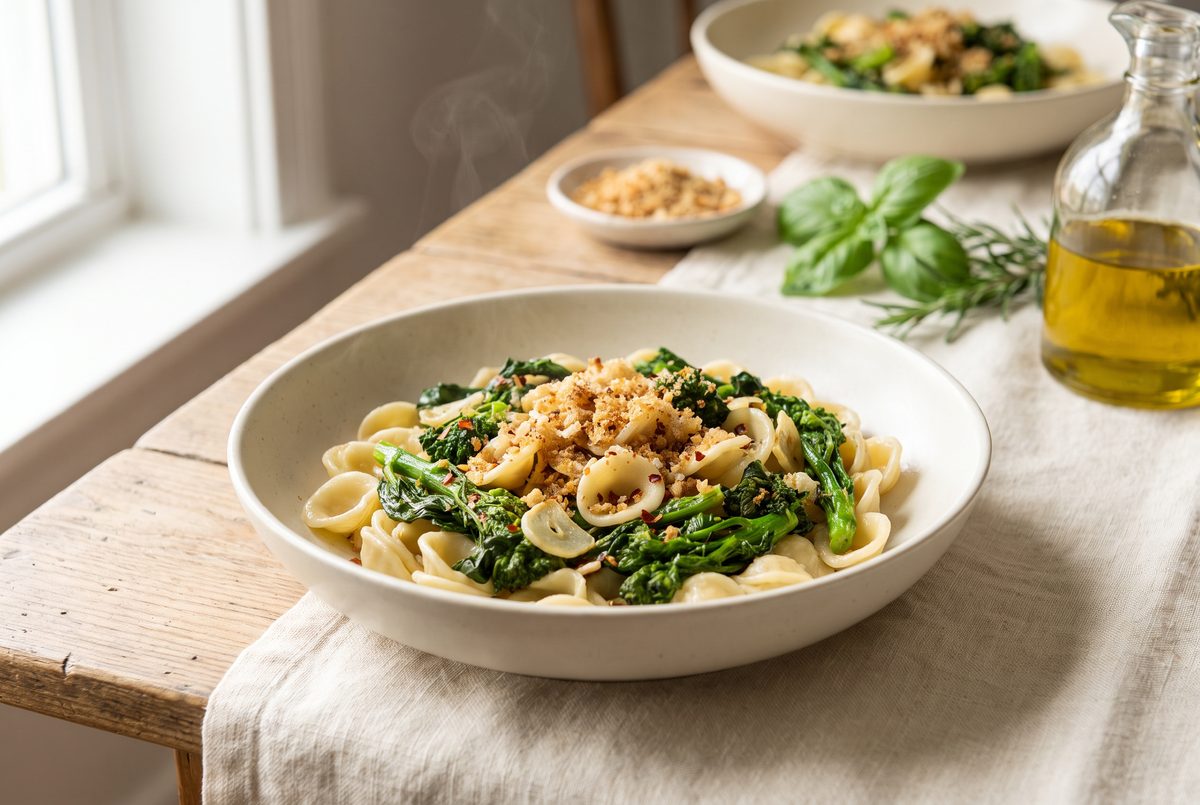
In Bari this is what's for lunch, and the recipe fits in a sentence: boil the greens, boil the pasta in the same water, and let a pan of garlicky oil put them together. There is no sauce to make. What there is instead is a decision about bitterness — how much of it you want left in the greens when they reach the plate — and everything in the method comes down to that.
Broccoli rabe, cime di rapa, arrives in American markets as the nights start cooling; by October the bunches are cheap and the buds are tight. It is not broccoli and it is not a mild vegetable, and recipes that pretend otherwise usually tell you to cook it in a covered pan, which concentrates exactly the compounds you're trying to tame. Blanching is the Italian answer, and it also seasons the greens and gives you the starchy water that turns three tablespoons of olive oil into something that clings.
Why this recipe works for healthy & green
Broccoli rabe is a brassica — Brassica rapa, closer to the turnip than to broccoli — and it carries the glucosinolates that give the family its bite. Large prospective cohorts associate regular cruciferous-vegetable intake with lower total and cardiovascular mortality (Zhang et al., 2011); the effect sizes are modest and observational, but the vegetables are cheap, filling and about 22 calories per 100 g, so the risk-benefit is easy.
Fiber is the number that makes this plate work: 7.5 g per serving, roughly a quarter of the daily target, most of it from the greens rather than the pasta. That is why 65 g of carbohydrate here doesn't behave like 65 g of carbohydrate from a bowl of plain pasta — the fiber and the fat slow it down.
Protein lands at 16 g, which is honest rather than impressive: semolina supplies most of it, the greens add about 5 g per plate. If you want this as a post-training meal, the white-bean variation below takes it to about 21 g. For plates built around protein from the start, see our muscle-gain recipes; for more vegetable-first cooking in this style, the healthy & green collection.
The olive oil is not a garnish. Thirteen grams per serving carries the fat-soluble vitamins in the greens — rabe is a good source of vitamin K and folate — and, in the PREDIMED trial, extra-virgin olive oil at generous doses was part of the pattern that lowered cardiovascular events (Estruch et al., 2018).
Ingredients
4 main-course plates
Pasta and greens
Garlic and chili oil
Toasted breadcrumbs
Instructions
- Trim the rabe. Cut off the bottom inch of the stems, where they're dry and woody. If any stems are thicker than a pencil, peel them with a vegetable peeler or split them lengthwise — thick stems are the part that stays tough and tastes most bitter. Wash in a bowl of cold water and lift the greens out, leaving the grit behind. Leave the bunches whole for now; they're easier to fish out of the water that way and you chop them later.
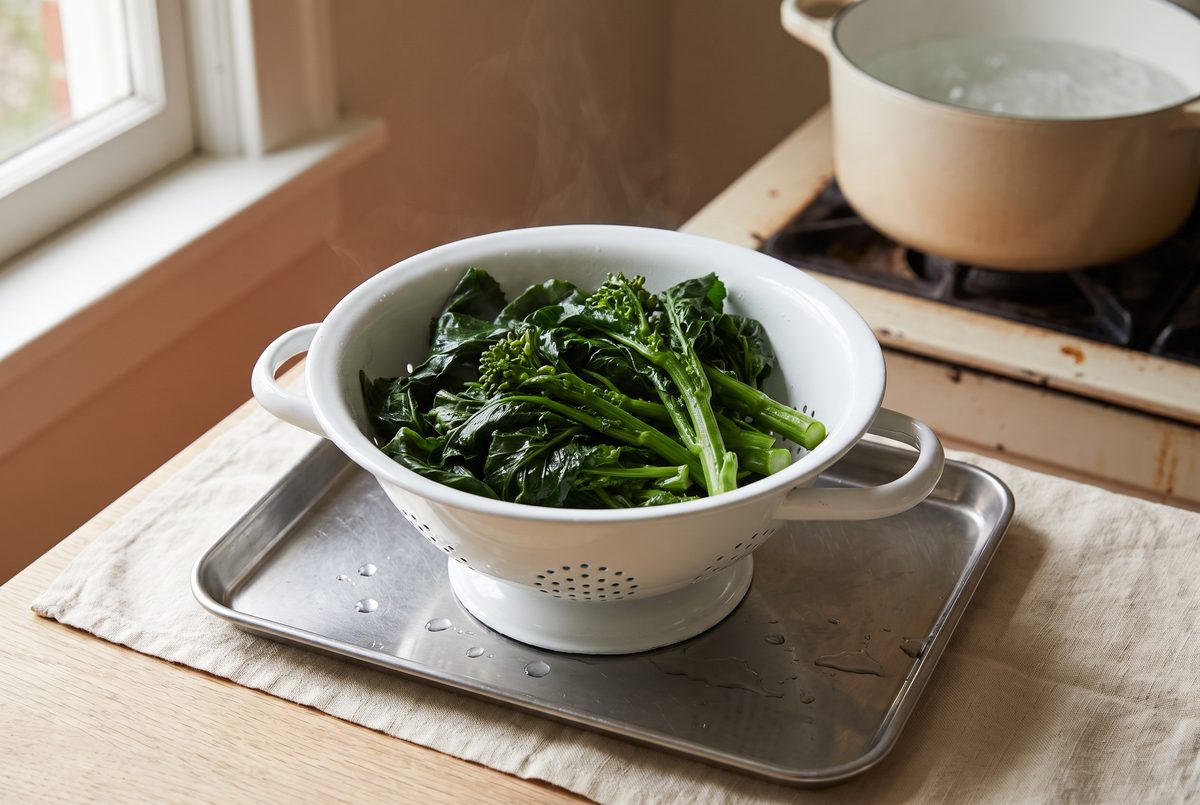
- Blanch the greens in the pasta water. Bring 5 quarts of water to a rolling boil in a large pot and add the 2 tbsp salt — it should taste like a good broth. Drop in the whole broccoli rabe and cook 2 to 3 minutes, until the stems bend without snapping and the color has gone deep, glossy green. Lift it out with a spider or tongs into a colander. Keep the water on the boil.
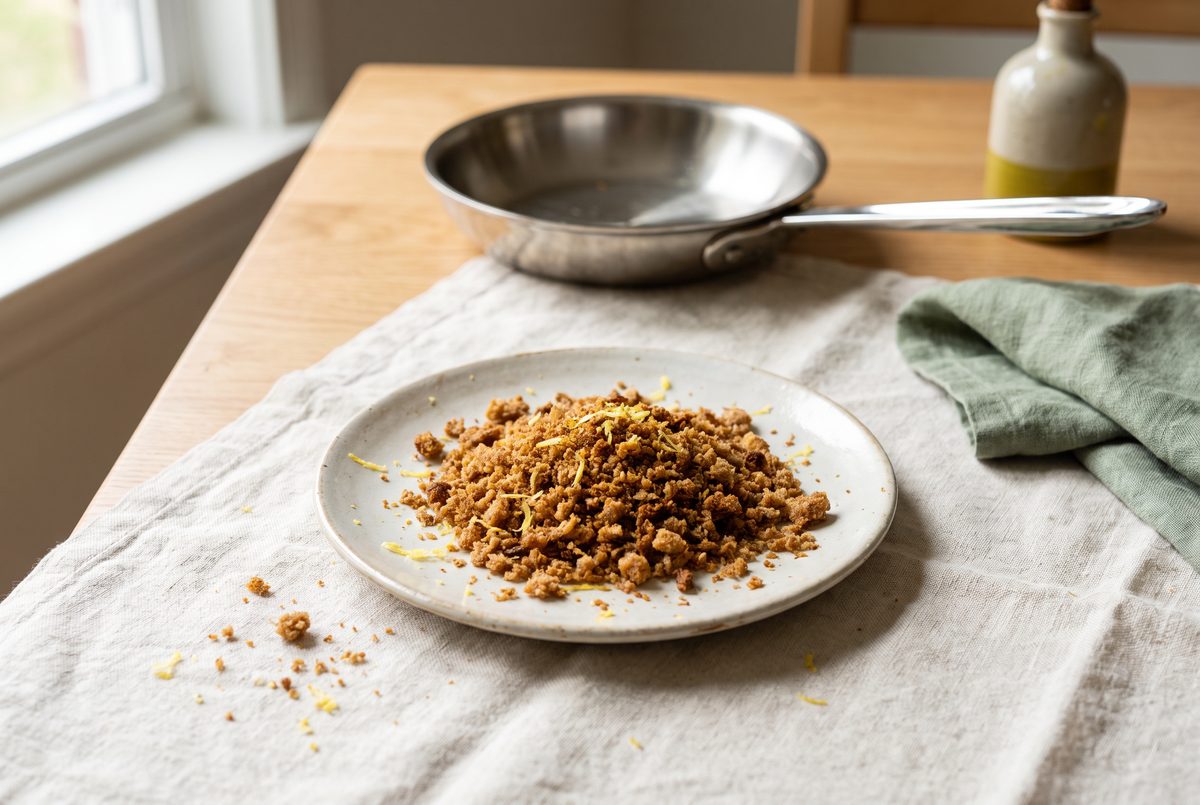
- Toast the breadcrumbs. In a small skillet, warm 1 tbsp olive oil over medium heat, add the breadcrumbs and toast, shaking the pan, 3–4 minutes, until deeply golden and dry — they should smell like toast, not like flour. Tip them onto a plate (they burn in the residual heat if left in the pan) and mix in the lemon zest once cool.
- Cook the orecchiette. Add the orecchiette to the same boiling water. Dried orecchiette are thick and cook slowly — start tasting at 11 minutes and expect 12–14. They should be tender with a firm center, not chalky.
- Build the garlic oil. While the pasta cooks, warm the 3 tbsp olive oil in a large skillet over medium-low heat with the sliced garlic and chili flakes. Cook gently 3–4 minutes, until the garlic is pale gold at the edges and the oil is fragrant. Pale gold, not brown: brown garlic turns the whole dish acrid.
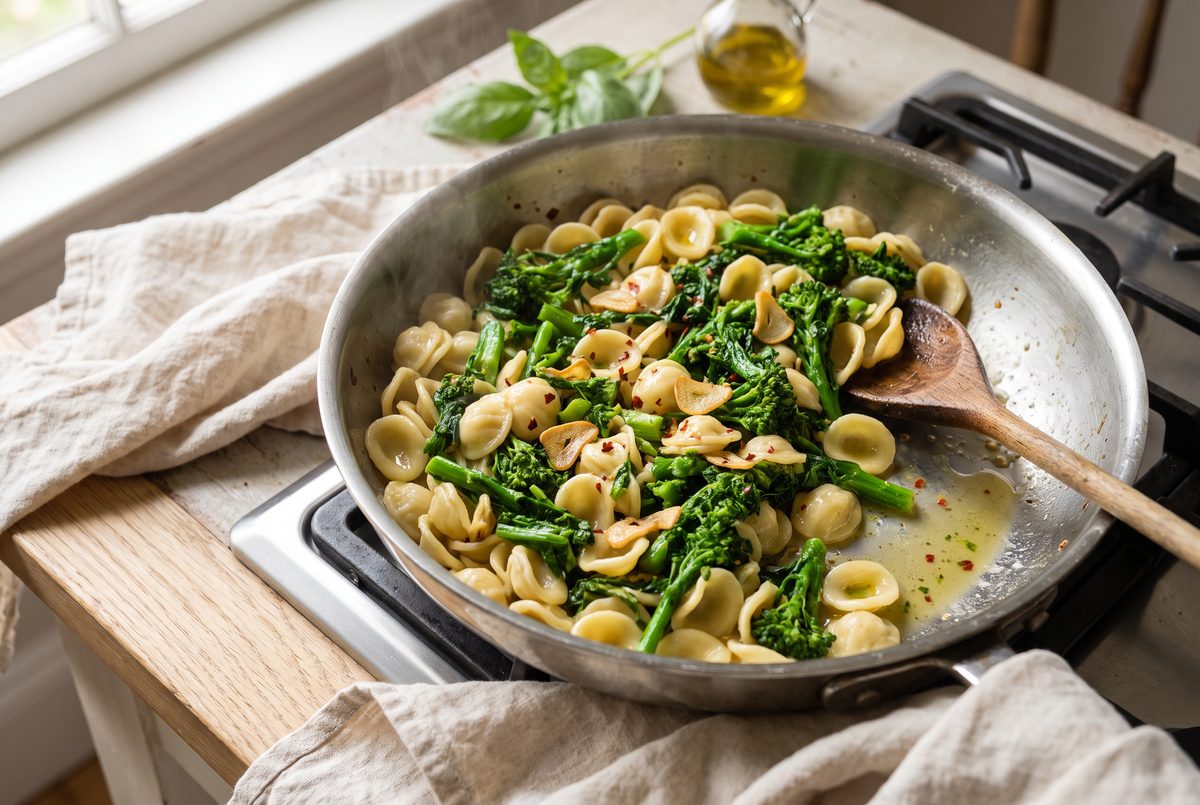
- Melt the greens into the oil. Squeeze the blanched rabe lightly to shed water, chop it roughly and add it to the skillet. Raise the heat to medium and cook 4–5 minutes, pressing the greens against the pan so they break down and take on the oil. They should look collapsed and almost creamy, not like a pile of leaves in a pan.
- Toss with a ladle of pasta water. Drain the orecchiette, reserving a cup of the water. Add the pasta to the skillet with about ½ cup of that water and toss over medium heat for a minute — the starch in the water and the oil emulsify into a light sauce that coats every ear of pasta. Add more water a splash at a time if it looks dry.
- Finish. Off the heat, taste for salt — it usually needs a pinch, occasionally nothing. Serve straight away with the lemony breadcrumbs scattered over each plate.
Tips from our kitchen
- Buy bunches with tight buds. Open yellow flowers mean the plant bolted; it will be noticeably more bitter and the stems woodier. Tight green buds and firm stems are what you want.
- Don't cover the pan when you cook the greens. A lid traps the sulfur compounds that make rabe taste harsh — the whole point of blanching in open water is to let them go.
- Reserve more pasta water than you think. Orecchiette absorb it as they sit; a plate that was glossy in the pan can look dry two minutes later. Keep the cup by the stove and loosen the pan again before serving.
- Frozen rabe works in winter: 12 oz frozen, thawed and squeezed dry, replaces the fresh. Skip the blanching — it's already been done — and go straight to the skillet.
Variations
- The Bari original: melt 4 oil-packed anchovy fillets into the garlic oil before the greens go in. No longer vegan, adds about 10 calories and just over 1 g of protein per plate (and a good deal of sodium), and it's the version most southern Italian households actually cook.
- With pecorino: ¼ cup finely grated pecorino romano (20 g) over the top instead of, or alongside, the breadcrumbs — about 20 calories and 1.5 g of protein per plate.
- Higher protein: add a 15-oz can of cannellini beans, drained, with the greens: roughly 70 calories, 5 g of protein and 4 g of fiber more per plate, and it becomes a one-pan dinner in the Pugliese habit of putting beans with greens.
- No broccoli rabe? Broccolini, escarole or kale all work with the same method, though none of them are bitter in the same way — cut the blanching to 90 seconds for broccolini, 2 minutes for escarole. If it's pasta and legumes you're after, our pasta e ceci is the other Puglian weeknight staple.
- Gluten-free: orecchiette exist in corn-and-rice versions; cook them a minute short and use gluten-free breadcrumbs, or skip the crumbs and use toasted chopped almonds.
Storage & meal prep
Best the day it's made. Refrigerate leftovers up to 2 days and reheat in a skillet with a splash of water rather than in the microwave, which dries the pasta and dulls the greens. Keep the breadcrumbs in a jar at room temperature and add them on the plate — in the fridge they go soft overnight. Doesn't freeze well.
Nutrition per serving
| Nutrient | Amount | % DV* |
|---|---|---|
| Calories | 456 kcal | 23% |
| Total fat | 16 g | 21% |
| Saturated fat | 2.1 g | 11% |
| Carbohydrates | 65 g | 24% |
| Fiber | 7.5 g | 27% |
| Sugars | 3.1 g | — |
| Protein | 16 g | 32% |
| Sodium | 506 mg | 22% |
*Percent Daily Values are based on a 2,000-calorie diet. Values are calculated from USDA FoodData Central and manufacturer data for the ingredients as listed; they are estimates, not lab analyses. Nutrition disclaimer.
Frequently asked questions
What is broccoli rabe?
It's a leafy green with small broccoli-like buds, sold in the US as broccoli rabe or rapini and in Italy as cime di rapa. Botanically it's Brassica rapa — the turnip family — which is why it tastes closer to mustard greens than to broccoli. You eat the leaves, stems and buds; only the dry bottom inch of stem gets thrown away.
Is broccoli rabe the same as broccolini?
No, and they're not interchangeable in flavor. Broccolini is a hybrid of broccoli and Chinese kale, bred to be sweet and tender. Broccoli rabe is a different species and is genuinely bitter. Broccolini will work in this recipe if bitterness isn't for you, but the dish becomes something else.
How do you make broccoli rabe less bitter?
Blanch it in a large pot of well-salted boiling water for 2 to 3 minutes and lift it out — a good part of the bitter compounds leaves with the water, and salt suppresses the perception of what's left. Peeling thick stems helps too, since they hold the most. Chili, garlic and a little lemon zest do the rest at the plate.
Is orecchiette with broccoli rabe healthy?
One plate is 456 calories with 16 g of protein, 65 g of carbohydrate and 7.5 g of fiber, and the fat is 16 g of almost entirely olive oil. It is vegan as written, and more than half the weight of the finished dish is vegetable. As a main course it's a reasonable weeknight dinner for most people; if you're eating to a calorie target, the pasta portion is the lever — 8 oz of dry pasta instead of 10 takes about 50 calories off each plate.
Can I make orecchiette with broccoli rabe ahead?
Not the finished dish — tossed pasta goes soft. But you can blanch, squeeze and chop the greens up to two days ahead and keep them in the fridge, and toast the breadcrumbs up to a week ahead. With that done, dinner is the 12 minutes it takes to boil the pasta.
Sources
- USDA FoodData Central — broccoli raab (raw), semolina pasta, olive oil, whole-wheat breadcrumbs
- Zhang, X. et al. (2011). Cruciferous vegetable consumption is associated with a reduced risk of total and cardiovascular disease mortality. American Journal of Clinical Nutrition
- Estruch, R. et al. (2018). Primary prevention of cardiovascular disease with a Mediterranean diet supplemented with extra-virgin olive oil or nuts (PREDIMED). New England Journal of Medicine
- Quagliani, D. & Felt-Gunderson, P. (2017). Closing America's fiber intake gap. American Journal of Lifestyle Medicine
You might also like
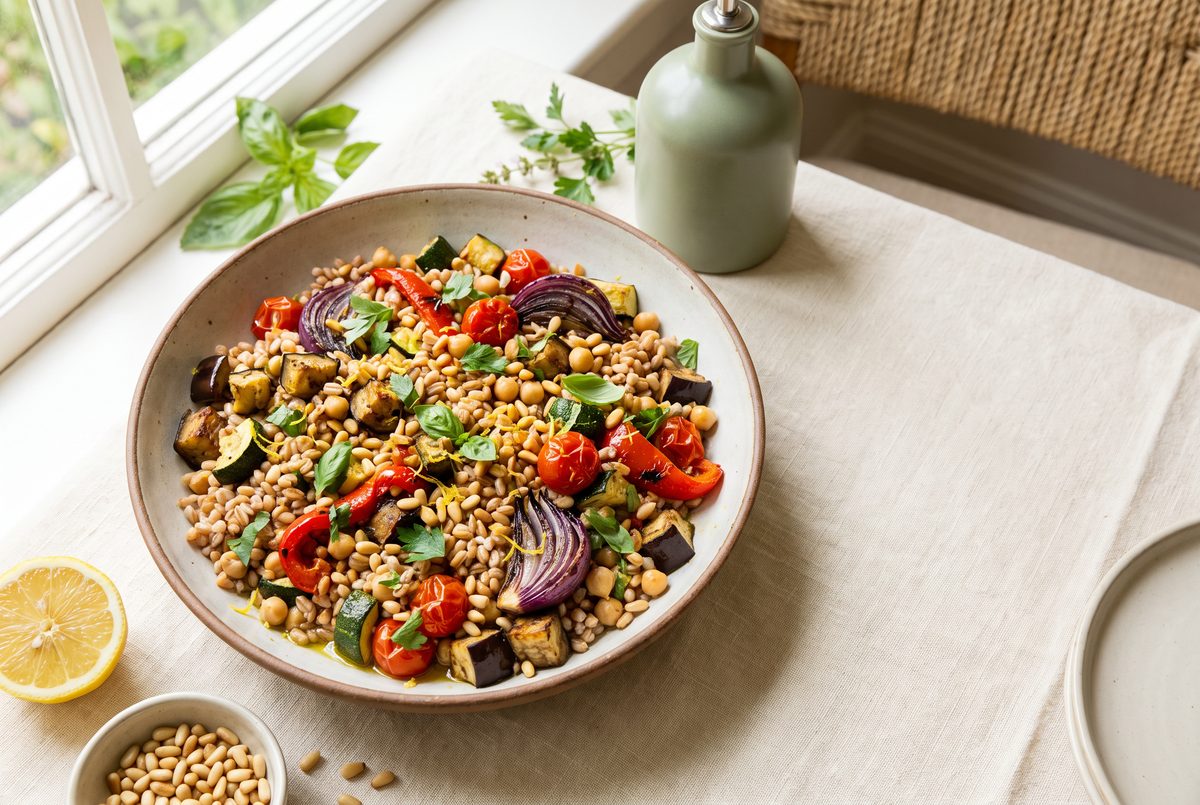
Farro Salad with Roasted Vegetables and Lemon
Farro salad with roasted vegetables tosses chewy pearled farro with oven-caramelized zucchini, eggplant, peppers, red…
- 45 min
- 481 kcal
- 14 g protein
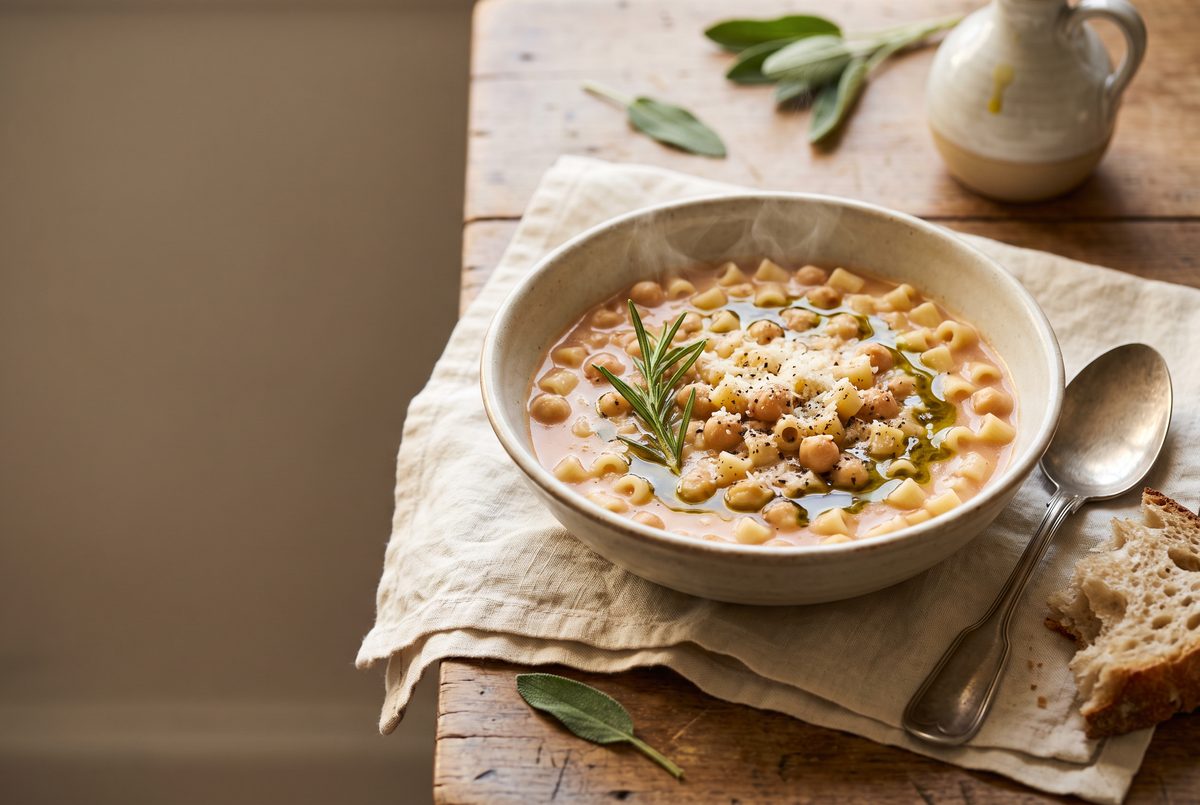
Pasta e Ceci (Roman Pasta with Chickpeas)
Pasta e ceci is a Roman one-pot dish of short pasta simmered with chickpeas, rosemary, garlic and a spoon of tomato…
- 35 min
- 611 kcal
- 23 g protein
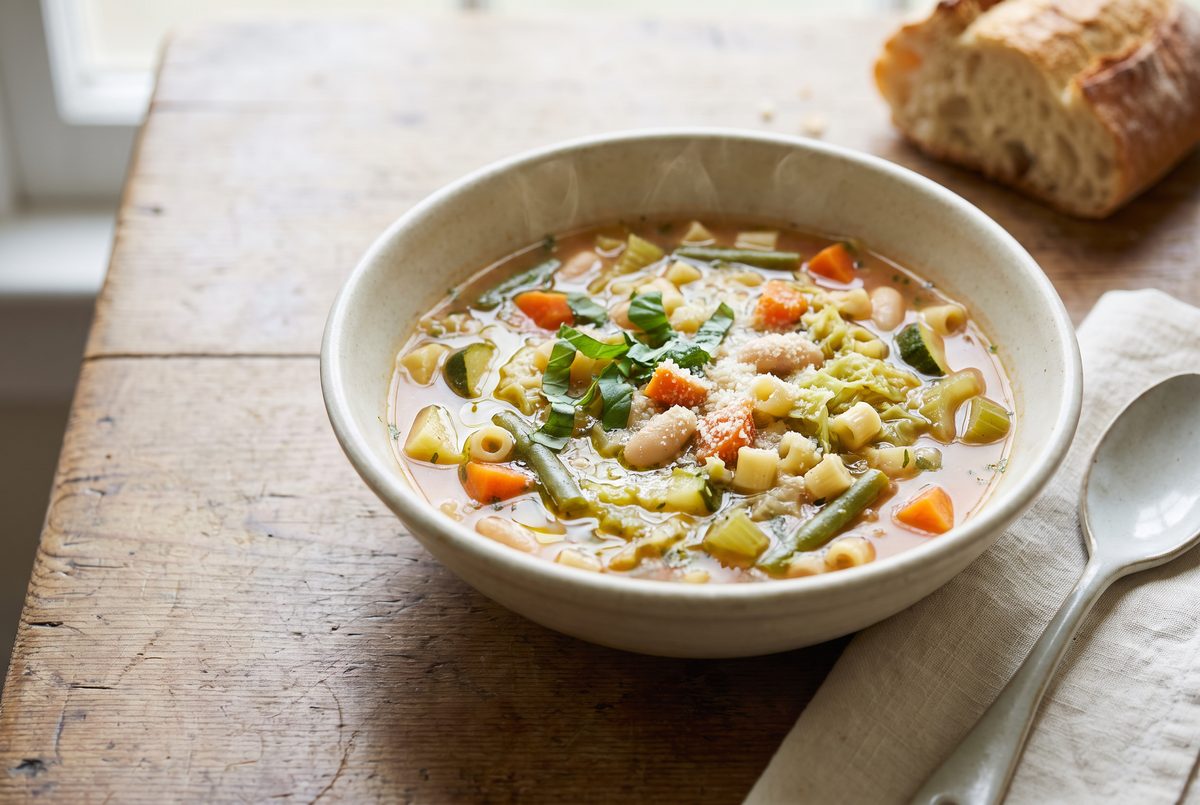
Classic Italian Minestrone Soup
Classic Italian minestrone is a thick vegetable soup with cannellini beans, seasonal vegetables and a handful of small…
- 1 hr 5 min
- 247 kcal
- 11 g protein