Creamy Mushroom Polenta (Polenta ai Funghi)
The standard autumn supper across northern Italy: a pound and a half of mushrooms browned hard in two batches and simmered into a ragù, spooned over soft stone-ground polenta.
Polenta ai funghi is soft stone-ground cornmeal under a ragù of 1½ pounds of mushrooms, browned in two batches with garlic and rosemary and simmered down with white wine — the everyday autumn dinner of northern Italy, and one of the few Italian main courses that is gluten-free without substituting anything for anything. A serving is 453 calories with 60 g of carbohydrate, 6.7 g of fiber and 13 g of protein, and it takes about an hour, most of it unattended.
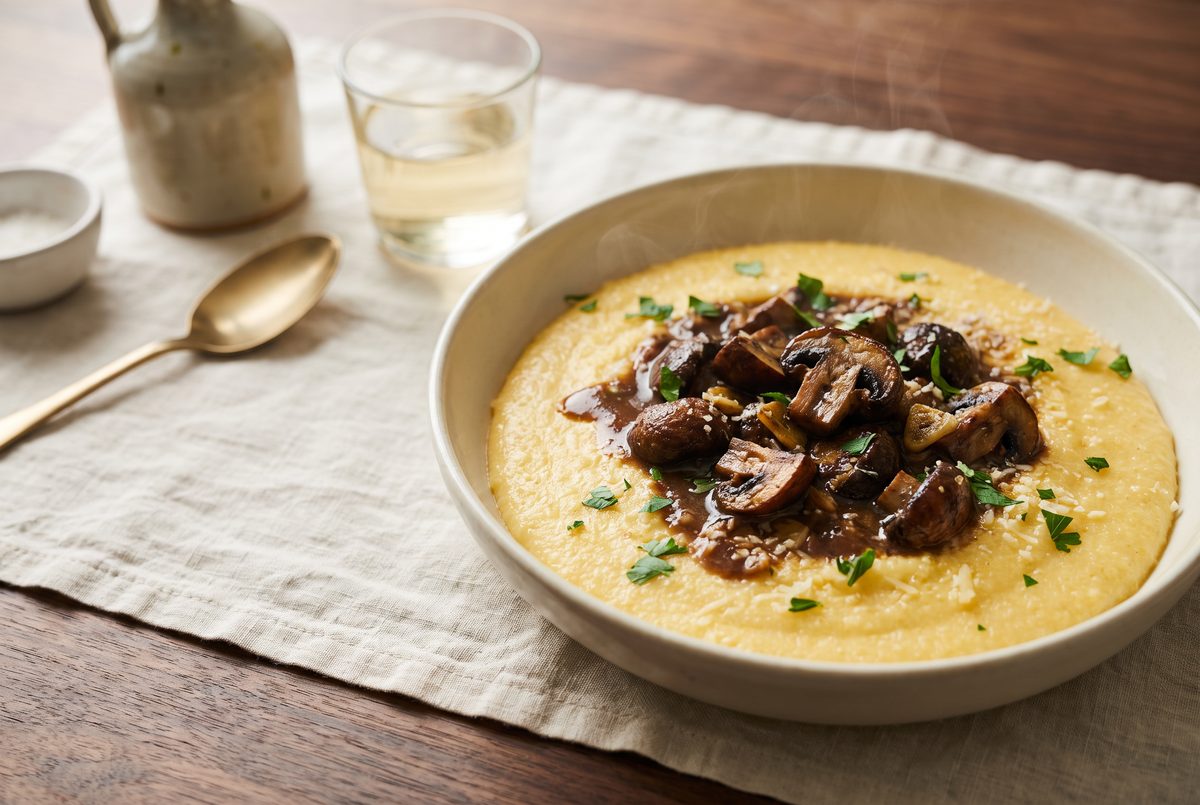
The mushroom shelf is one of the few parts of an American supermarket that still behaves like a season. In October the cremini get bigger and cheaper, oyster mushrooms appear next to them, and every so often someone puts out a tray of maitake at a price that makes you reconsider what you were going to cook. In the Alpine north of Italy this is the moment the entire regional kitchen points at: polenta on the table most nights from October through March, and whatever came out of the woods that week on top of it.
What goes wrong at home is almost never the polenta — it is the pan. A pound and a half of mushrooms holds a lot of water, and tipped into a skillet all at once it comes out faster than the burner can drive it off. The pan temperature falls, the mushrooms poach in their own liquid, and you end up with something grey and squeaky. Two batches in a wide pan, plus four minutes of not touching them at the start, is not a refinement on this recipe; it is the recipe. The polenta, meanwhile, has a reputation it has not earned. You do not stand over it for three quarters of an hour. You whisk hard for the first two minutes, then drag a spoon across the bottom of the pot every five while you get on with the mushrooms, and that is the whole job.
Why this recipe works for healthy & green
This is a carbohydrate dish and it is not apologizing for it. 60 g of carbohydrate a serving, from 2 oz (60 g) of dry stone-ground cornmeal each — a normal Italian portion of a starch, and about what a bowl of pasta gives you. What makes it worth eating rather than a plate of white rice is what comes with it: 6.7 g of fiber, 4.4 g of which is the corn, provided you buy stone-ground rather than degerminated cornmeal. Reynolds and colleagues (2019, The Lancet) found the clearest benefit for adults eating 25–29 g of fiber a day, roughly double the US average; one bowl of this is a quarter of the way there.
Mushrooms are the cheapest way to make a vegetarian dish taste like it has meat in it, and the arithmetic explains why. Each serving carries 169 g — almost 6 oz — of mushrooms for 37 calories: a solid handful of the bulk of the bowl for 8% of its energy. Few ingredients work out that way, and it matters for a practical reason rather than a moral one: Rolls (2009, Physiology & Behavior) summarizes the work showing people eat a fairly constant weight of food and take in fewer calories when that weight is less energy-dense. Browning them hard is not only a flavor decision — it drives off water and concentrates what is left.
18 g of fat a serving, three quarters of it olive oil. Only 3.4 g is saturated, split roughly evenly between the oil and the Parmigiano. The oil is not an incidental here — two of those tablespoons are what makes the mushrooms brown rather than steam, and one more goes into the polenta at the end to make it glossy. Guasch-Ferré and colleagues (2022, Journal of the American College of Cardiology) followed more than 90,000 US adults for 28 years and found higher olive oil intake associated with lower cardiovascular and total mortality, with the clearest signal where olive oil replaced butter or margarine — which is exactly the substitution this recipe makes, since the northern Italian original finishes the polenta with a knob of butter.
The vitamin D claim, stated honestly. Mushrooms are the only common non-animal food that makes vitamin D, but only under ultraviolet light. Cardwell and colleagues (2018, Nutrients) review the evidence, and the short version is that mushrooms grown in the dark — which is very nearly all of them — contain almost none. If your package says "UV-exposed" or carries a vitamin D claim, it is doing something real. If it does not, eat this for the other reasons.
Naturally gluten-free, which almost nothing in Italian cooking is. Polenta is cornmeal and water; nothing here is standing in for wheat, which is the difference between this and gluten-free pasta. The one real caveat is milling: if you are coeliac rather than avoiding wheat by preference, buy cornmeal that is labelled gluten-free, because shared mills are the actual risk and the corn never was.
Protein is 13 g, which is a side-dish number on a main-course plate. That is the honest limit of polenta ai funghi, and the reason the variations below exist — an egg on top, or a can of cannellini stirred into the ragù, is how it is eaten in a house where this is dinner rather than a first course. The dish is vegan if you leave out the Parmigiano, and the variations say what that costs. For the rest of this register of cooking, the healthy & green collection is where it belongs, and our guide to Italian food without animal products covers how the rest of the plate is meant to work.
Ingredients
About 6 cups of soft polenta and 3 cups of mushroom ragù — 4 bowls as a main course
The polenta
The mushroom ragù
Instructions
- Cut the mushrooms bigger than feels right. Wipe the mushrooms with a damp cloth, or rinse them quickly in a colander and dry them well — the folklore about mushrooms soaking up water like sponges is overstated, but surface water will stop them browning. Quarter the cremini if they are large, halve them if they are small, and tear the white or wild mushrooms into pieces about ¾ inch across. They will lose more than half their weight in the pan, so anything sliced thin disappears into the sauce.
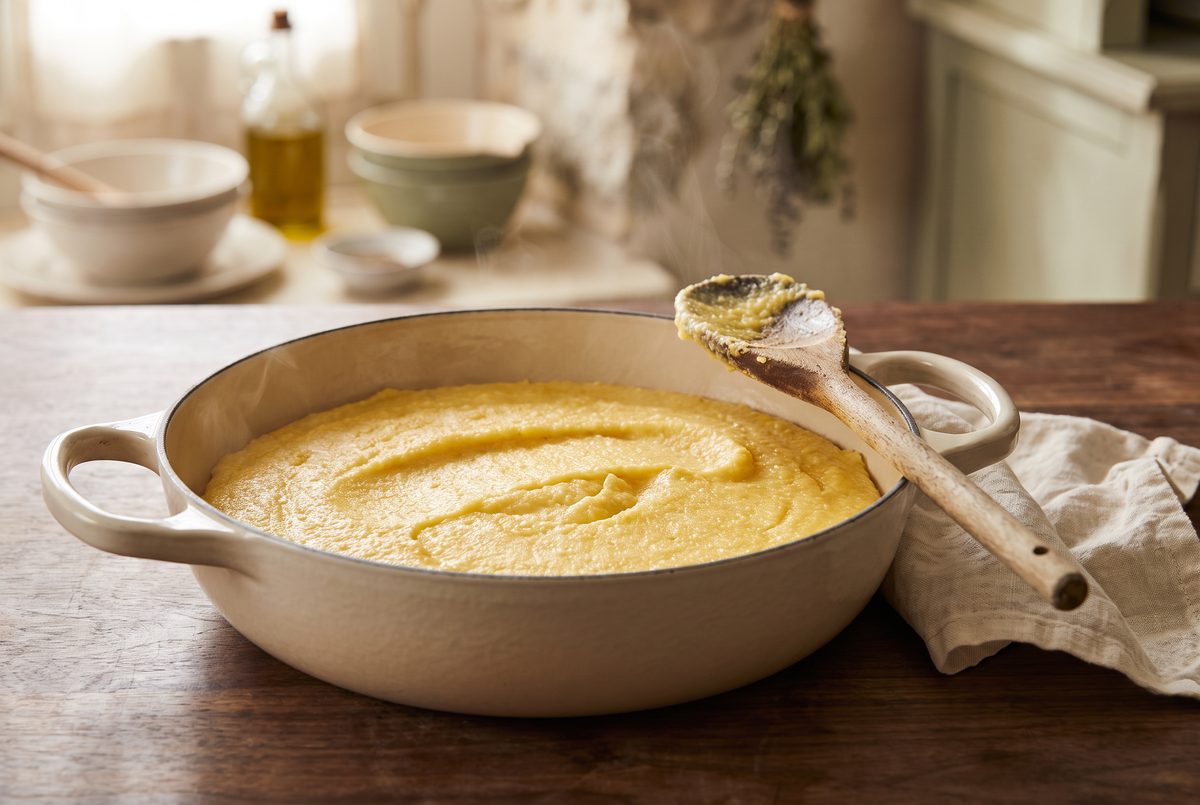
- Start the polenta water. Bring the 5 cups of water and the ½ tsp salt to a rolling boil in a heavy pot — 4-quart or larger, because polenta spits. Lower the heat so the surface is just moving, then pour in the cornmeal in a thin stream with one hand while whisking steadily with the other. This is the only moment lumps can form, and raining it in slowly is the entire prevention.
- Cook the polenta 40 to 45 minutes. Turn the heat to its lowest setting, swap the whisk for a wooden spoon, and leave the lid slightly ajar. Every 5 minutes, scrape across the bottom and into the corners for ten seconds — that is all the attention it needs, and it is also all that stands between you and a scorched layer. It is done when it has lost its raw-corn taste and a spoon dragged through leaves a track that closes slowly. If it stiffens past the point of spooning, whisk in some of the reserved boiling water; soft polenta should pour, not mound.
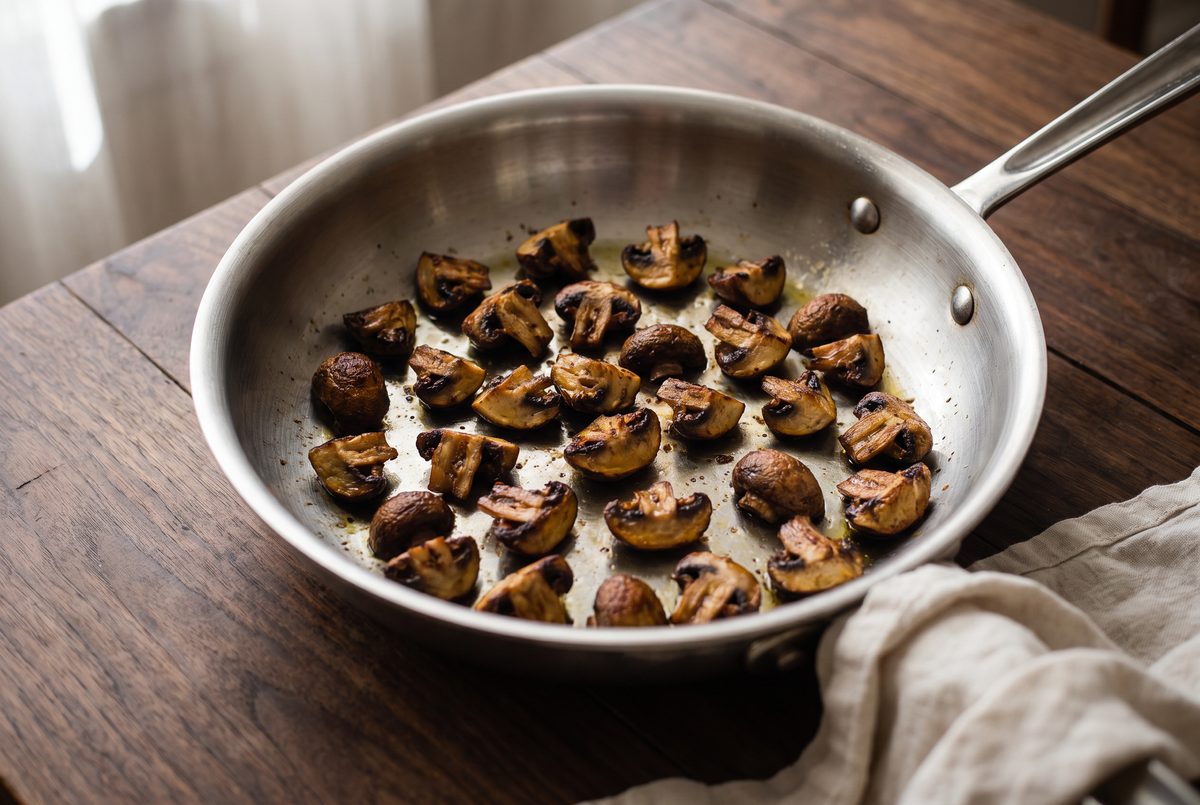
- Brown the mushrooms — half at a time, and do not touch them. While the polenta cooks, heat 2 tbsp of the olive oil in a 12-inch pan over medium-high until it shimmers. Add half the mushrooms in one layer and leave them completely alone for 4 minutes. They will squeak, release water, and then — once that water has gone — begin to brown. Stir, give them another 3 to 4 minutes until they are deeply golden at the edges, and tip them into a bowl. Repeat with the remaining 1 tbsp oil and the second half. Crowding both batches into the pan together is the single most common way this dish fails.
- Shallot, garlic, rosemary — then the tomato paste. Lower the heat to medium. In the same pan, with whatever oil is left, cook the shallot for 3 minutes until soft, then add the sliced garlic and the rosemary and give it 1 minute more — the garlic should smell sweet, never toasted. Push everything to one side, add the tomato paste to the bare metal and let it cook for 1 minute until it darkens from red to brick. Cooking the paste instead of stirring it straight in is what takes the raw tinned edge off it.
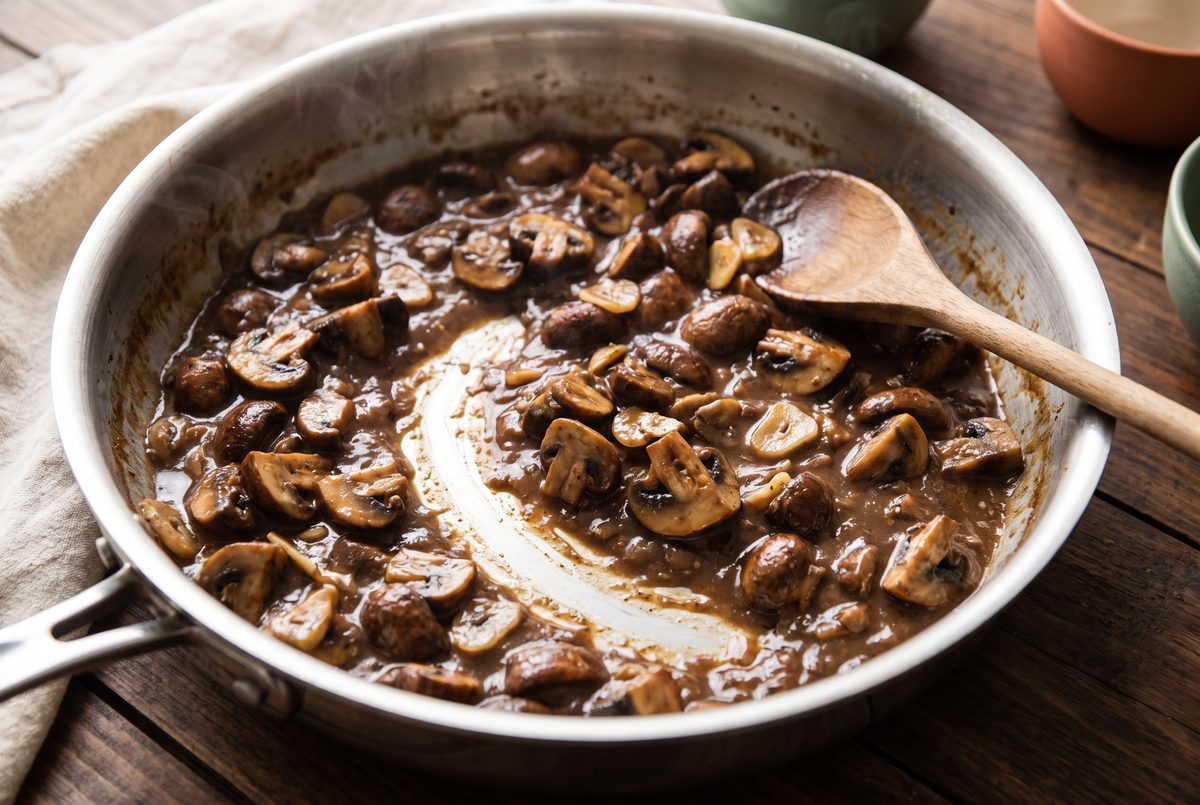
- Wine, broth, and down to a ragù. Pour in the wine and scrape the bottom of the pan hard while it bubbles — 2 minutes, until the smell of alcohol is gone and the liquid has reduced by about half. Return the mushrooms with any juices in the bowl, add the broth, the ¼ tsp salt and the black pepper, and simmer uncovered for 10 to 12 minutes. You want it thickened to the point where a spoon drawn across the bottom leaves a track that stays open for a second or two — loose enough to run into the polenta, not so loose that it floods the bowl.
- Finish the polenta, and serve it straight away. Off the heat, beat the Parmigiano and the 1 tbsp olive oil into the polenta until it is glossy, and taste it — this is where you find out whether it needs more salt, and it usually needs a pinch. Stir the parsley into the mushrooms off the heat. Spoon the polenta into warm shallow bowls, make a hollow in the middle with the back of the spoon, and pile the ragù into it. Polenta waits for nobody: it begins to set within a few minutes of leaving the pot, so get it to the table.
Tips from our kitchen
- Buy coarse stone-ground, and read the bag. "Instant" or "quick-cooking" polenta is pre-cooked and dried; it is ready in 5 minutes and tastes like it, flat and slightly pasty. Fine corn flour is a different product again and will give you a smooth paste rather than polenta. If instant is what you have, use a 1:4 ratio of cornmeal to water instead of this recipe's 1:5 and start the mushrooms first.
- Salt the mushrooms late. Salt pulls water out, which is precisely what you do not want in the first four minutes of browning. Both batches go into the pan unseasoned; the ¼ tsp goes in with the broth, once the browning is already done.
- Dried porcini are the upgrade, if you want one. A small handful soaked in a cup of hot water for 20 minutes, chopped and added with the shallot — and the strained soaking liquid used in place of some of the broth — is how this is made in Italy when the fresh mushrooms are ordinary. We left them out of the ingredient list because they are not in the nutrition calculation and because the dish stands up without them.
- If you get lumps, you can fix them. Thirty seconds with a stick blender, or a hard go with a balloon whisk and a splash of boiling water, will smooth out all but the worst. Prevention is better: the stream of cornmeal should be thin enough that you can see individual grains falling.
- Sodium is 634 mg a serving, and 436 mg of it is the ¾ teaspoon of salt. You can halve the salt in the polenta water and make it up at the table with a little extra Parmigiano, which gets you more flavor per milligram — but do not simply leave it out. Unsalted polenta tastes of wet cardboard and no amount of ragù rescues it.
Variations
- Vegan: leave out the Parmigiano and beat in an extra tablespoon of olive oil instead. That is about 30 calories and 120 mg of sodium less a serving, and 2.7 g less protein; a tablespoon of nutritional yeast gets some of the savoriness back. The rest of the dish is already vegan.
- With an egg on top — polenta, funghi e uovo. A fried egg per bowl, yolk broken into the polenta, is the standard way this becomes a real dinner in the north: about 90 calories and 6 g of protein more a serving, and it brings the plate to 19 g of protein.
- Cannellini in the ragù. Add a drained 15-oz can with the broth. About 73 calories, 5 g of protein and 4 g of fiber more a serving, plus roughly 190 mg of sodium unless you rinse them well. This is the version to make if you are feeding someone who trains.
- With cavolo nero. Stir 8 oz (225 g) of shredded lacinato kale into the ragù for the last 5 minutes of simmering — about 25 calories and 2 g of fiber more a serving, and it turns the dish greener in every sense. Our ribollita uses the same bunch if you only want to buy one.
- Firm polenta, grilled. Pour the finished polenta into an oiled 9×13 pan, chill until solid, cut into fingers and sear them in a dry nonstick pan or under the broiler until crisp. Spoon the reheated ragù over the top. This is not a way of using up leftovers in Italy; it is a separate dish people make on purpose.
Storage & meal prep
The ragù and the polenta keep differently, so store them apart. The mushroom ragù holds 4 days covered in the fridge and is arguably better on the second day, once the rosemary has spread through it; it freezes well for 3 months. Polenta sets into a solid block within a few hours of cooling, and that is not a failure — it is the raw material for the grilled version above. To bring it back to a spoonable state, break it into a saucepan with about ¼ cup of water or milk per cup of polenta, cover, and warm over low heat, whisking every couple of minutes until it loosens; it takes 8 to 10 minutes and the texture is very close to fresh. Do not try to freeze soft polenta — it comes back grainy. Reheated polenta always needs more salt than you think.
Nutrition per serving
| Nutrient | Amount | % DV* |
|---|---|---|
| Calories | 453 kcal | 23% |
| Total fat | 18 g | 23% |
| Saturated fat | 3.4 g | 17% |
| Carbohydrates | 60 g | 22% |
| Fiber | 6.7 g | 24% |
| Sugars | 6.3 g | — |
| Protein | 13 g | 26% |
| Sodium | 634 mg | 28% |
*Percent Daily Values are based on a 2,000-calorie diet. Values are calculated from USDA FoodData Central and manufacturer data for the ingredients as listed; they are estimates, not lab analyses. Nutrition disclaimer.
Frequently asked questions
What is polenta ai funghi?
Soft, slow-cooked cornmeal served under a ragù of mushrooms cooked with garlic, herbs and a little wine. It is the everyday autumn and winter dinner of northern Italy — Veneto, Lombardy, Piedmont, Friuli and the Alpine valleys above them — where polenta occupies the place pasta holds further south. Traditionally it is made with whatever wild mushrooms came out of the woods that week; cremini and a handful of oyster or maitake get you most of the way there in an American supermarket.
Is polenta healthy?
It is a starch, and it behaves like one: a serving of this dish is 453 calories with 60 g of carbohydrate, which is a normal portion of a main-course grain. Stone-ground cornmeal keeps the germ and the bran, so it carries real fiber — 4.4 g of the 6.7 g in this bowl — while degerminated or instant polenta has had most of that removed. What makes the plate worth eating is the ratio: 6 oz of mushrooms a serving for 37 calories. The weak point is protein, at 13 g.
Is polenta gluten-free?
Yes. Polenta is coarsely ground corn, and corn contains no gluten — this is one of the few Italian main courses that is gluten-free without substituting anything. The only real risk is cross-contamination at the mill, so if you are coeliac rather than avoiding wheat by choice, buy cornmeal that carries a gluten-free label. Everything else in this recipe is naturally gluten-free too, including the Parmigiano.
Do you have to stir polenta constantly?
No, and the belief that you do is why most people buy the instant kind. You need to whisk hard for the two minutes while the cornmeal goes into the water, which is when lumps form, and after that a ten-second scrape across the bottom of the pot every five minutes is enough. The job is to stop it catching and burning, not to keep it moving. Total hands-on stirring across 45 minutes of cooking is about four minutes.
Why are my mushrooms watery instead of browned?
Almost always because there were too many in the pan at once. Mushrooms are around 90% water; put 1½ lb into a skillet together and the water comes out faster than the heat can evaporate it, the pan temperature drops below browning range, and they simmer instead. Cook them in two batches in a 12-inch pan, leave the first batch undisturbed for four full minutes, and do not add salt until after they have coloured.
Can I make polenta ahead?
The ragù yes — 4 days in the fridge, and better on day two. Soft polenta is best eaten within minutes of leaving the pot, but it reheats more successfully than its reputation suggests: break the set block into a pan with about ¼ cup of water or milk per cup, cover, and whisk over low heat for 8 to 10 minutes. Add salt when you taste it, because cooled polenta always reads blander.
Sources
- USDA FoodData Central — cornmeal (whole-grain, yellow), mushrooms (crimini, raw), mushrooms (white, raw), shallots, garlic, olive oil, Parmigiano Reggiano, tomato paste, parsley
- Reynolds, A. et al. (2019). Carbohydrate quality and human health: a series of systematic reviews and meta-analyses. The Lancet
- Cardwell, G. et al. (2018). A Review of Mushrooms as a Potential Source of Dietary Vitamin D. Nutrients
- Rolls, B.J. (2009). The relationship between dietary energy density and energy intake. Physiology & Behavior
- Guasch-Ferré, M. et al. (2022). Consumption of Olive Oil and Risk of Total and Cause-Specific Mortality Among U.S. Adults. Journal of the American College of Cardiology
You might also like
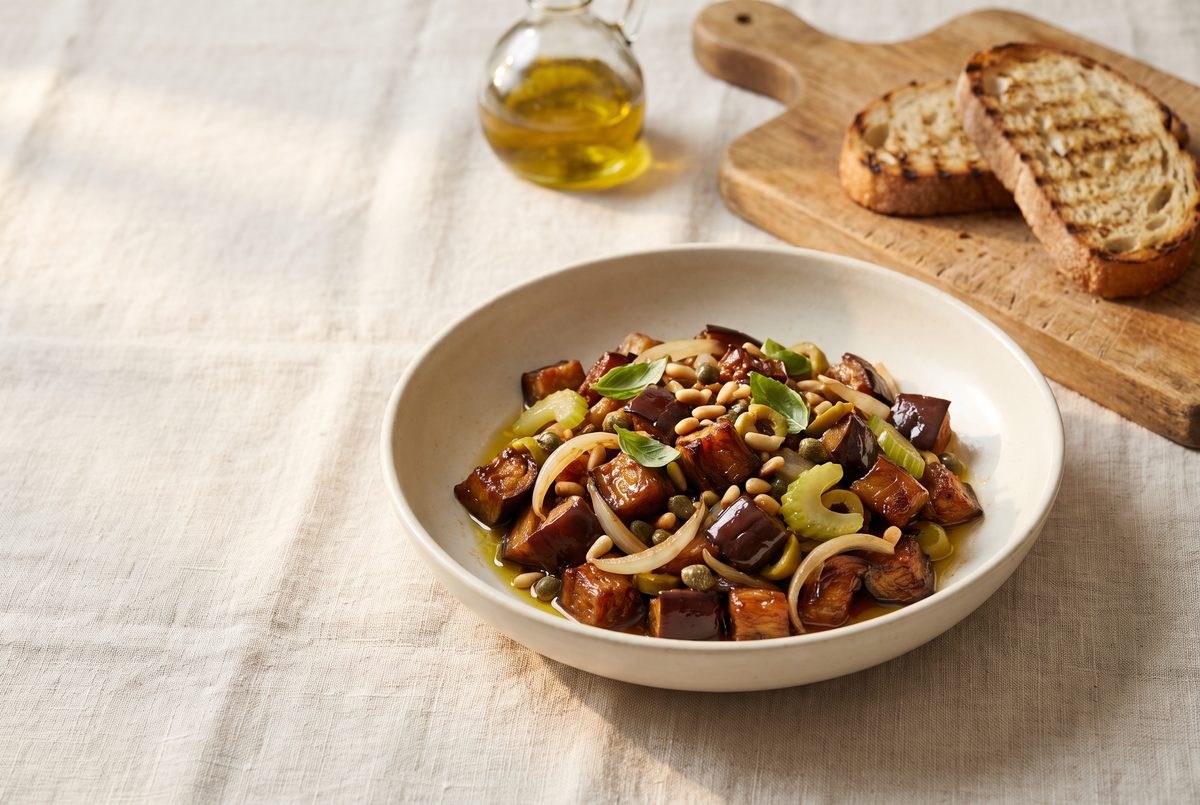
Sicilian Caponata: Sweet-and-Sour Eggplant, Roasted Not Fried
Caponata is the Sicilian dish of eggplant, celery, green olives and capers cooked down in an agrodolce — a…
- 1 hr 10 min
- 249 kcal
- 3 g protein
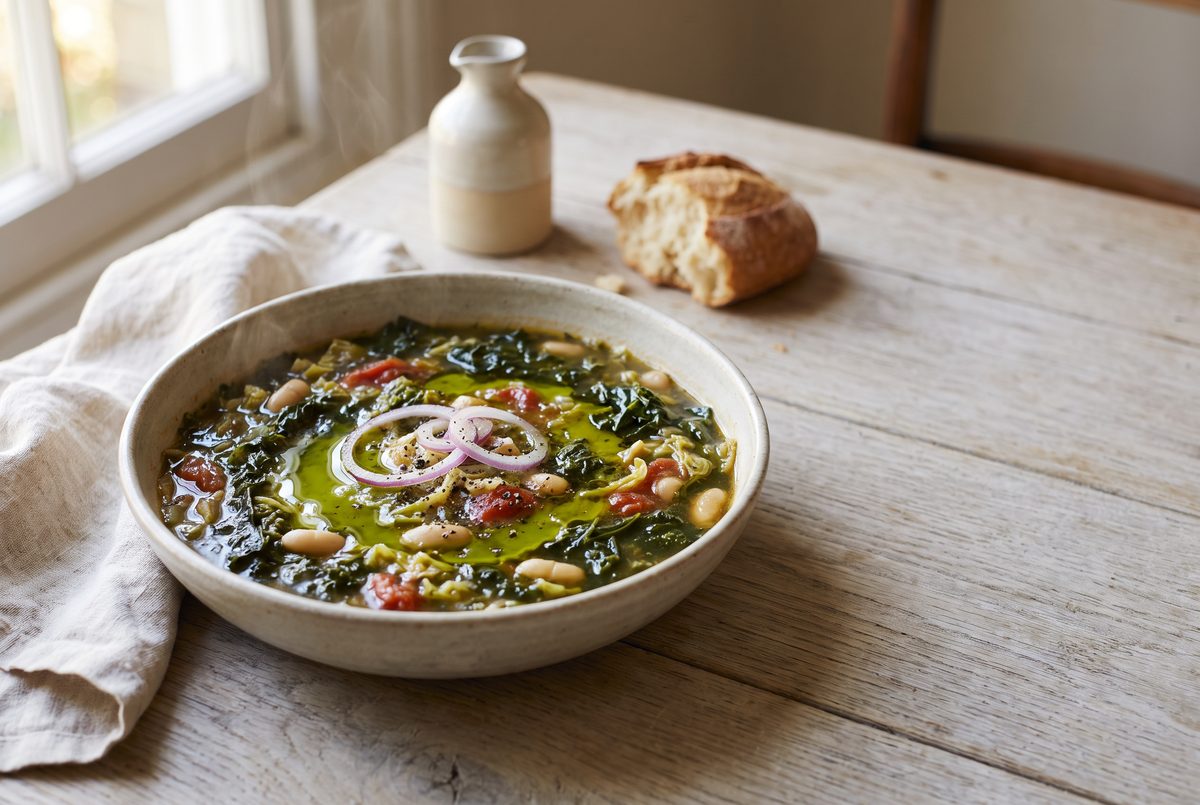
Ribollita: The Tuscan Kale, Bean and Bread Soup
Ribollita is the Tuscan soup that starts as a pot of cannellini beans and black kale and only becomes itself the next…
- 2 hr
- 418 kcal
- 15 g protein
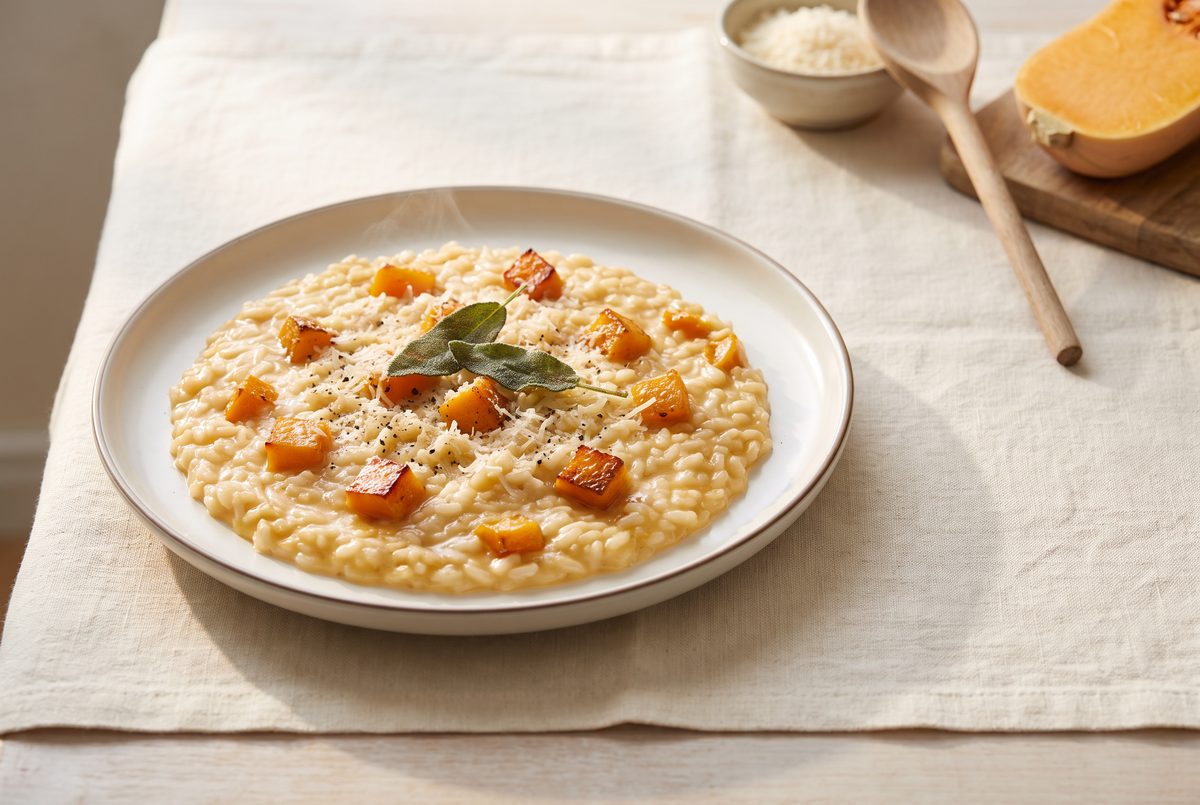
Butternut Squash Risotto (Risotto alla Zucca)
Risotto alla zucca is the autumn risotto of Lombardy and the Veneto: arborio rice cooked slowly in broth with…
- 45 min
- 622 kcal
- 14 g protein