Pasta con le Sarde: Sicilian Bucatini with Sardines and Fennel
Palermo's most famous pasta, built around an ingredient no American store sells. Here is what to do instead of wild fennel, and why the water the fennel boiled in matters more than anything else in the pan.
Pasta con le sarde is the signature pasta of Palermo: bucatini with sardines, fennel, saffron, raisins and pine nuts, finished with toasted breadcrumbs instead of cheese. Made with two tins of sardines and an ordinary fennel bulb, it comes to 499 calories a serving with 23 g of protein and 6.3 g of fiber, in 45 minutes.
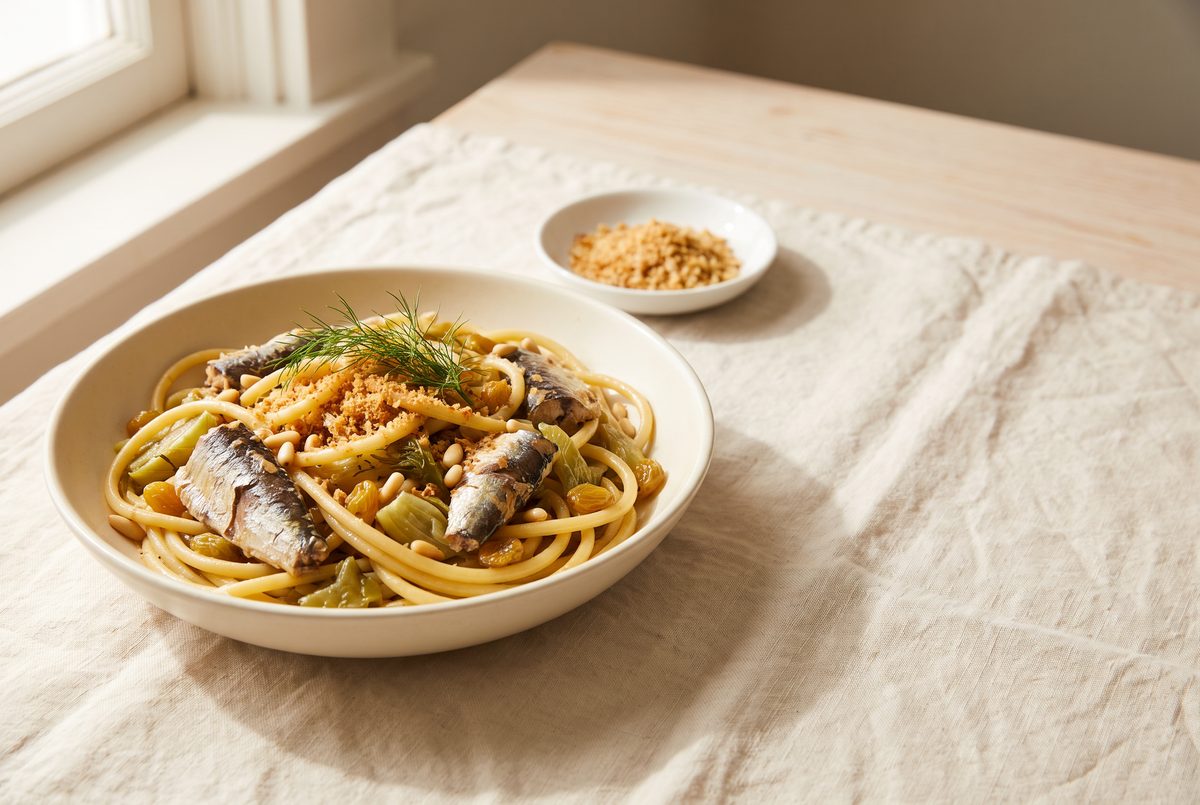
Every recipe for pasta con le sarde opens with an ingredient you cannot buy. Finocchietto selvatico — wild fennel, the feathery top of a weed that grows along every roadside in Sicily from March onward — is not a garnish in this dish, it is the backbone. It tastes like anise and grass and something slightly bitter underneath, and no American supermarket stocks it. The usual advice is to substitute the fronds of a cultivated fennel bulb, which is correct as far as it goes and tastes like about a third of the real thing.
The part that advice leaves out is the water. In Palermo you boil the wild fennel first, chop it, and then cook the pasta in the green water it left behind, so the flavor gets into the bucatini itself rather than sitting on top of it. Do the same thing with a bulb — simmer it whole with its fronds for ten minutes, fish it out, cook the pasta in the pot — and the gap closes a long way. Add a quarter teaspoon of crushed fennel seed to the onions for the bitter edge the bulb does not have, and you are close enough that it is worth making on a Tuesday.
About the sardines, since that is the real objection. This will not convert anyone who hates them. But what most people are picturing is a sardine eaten cold on a cracker, and that is not what happens here: they go in at the end, broken into large pieces, into a sauce of onion stewed soft, saffron, raisins and pine nuts, and they come out savory rather than fishy. The dish is the clearest surviving piece of Arab cooking in Sicily — sweet and salty in the same mouthful, saffron, dried fruit, nuts, a thousand years old and still slightly surprising. There is no cheese on it, and there should not be; the crunch on top comes from breadcrumbs toasted in a dry pan, which is what cucina povera used when nobody could afford Parmigiano.
Why this recipe works for weight loss
499 calories for a full plate of pasta, and the pasta is only 211 of them. Two ounces of dry bucatini per person is the USDA reference serving and roughly two thirds of what you would be given in a restaurant; what fills the plate back up is 350 g of fennel and 190 g of sardines across four servings. That is the structural trick of every pasta dish in our weight-loss collection — keep the pasta at a measured weight and build volume out of something that is not pasta. Our guide to eating Italian and losing weight goes through the arithmetic in more detail.
23 g of protein a serving, which is unusual for a pasta. The 92 g in the pan comes mostly from the fish: 47 g from the sardines, 30 g from the durum, and the balance from the fennel, onion, pine nuts and breadcrumbs. For comparison, our Sicilian tuna pasta gets to 31 g but at 662 calories, because it uses a full 100 g of pasta per person. A plain tomato pasta would be around 13 g.
Oily fish twice a week is one of the few dietary recommendations that has held up. The Dietary Guidelines for Americans 2020–2025 ask for at least 8 oz of seafood a week, and the American Heart Association's science advisory (Rimm et al., 2018, Circulation) recommends one to two servings of seafood per week specifically for the long-chain omega-3s in oily fish — sardines, anchovies, mackerel, salmon. Two tins of sardines split four ways is one of those servings, at a cost of about two dollars. Mozaffarian and Wu (2011, Journal of the American College of Cardiology) is the review to read on what the omega-3s are actually doing and where the evidence is thinner than the headlines.
6.3 g of fiber, nearly half of it from the fennel. A large bulb and its fronds bring 10.9 g of fiber to the pan, the pasta 7.3 g and the whole-wheat breadcrumbs 2.1 g. Reynolds and colleagues (2019, The Lancet) found the clearest health benefit in adults eating 25–29 g of fiber a day, against a US average closer to half that.
The honest caveat is sodium: 705 mg a serving. The largest single line is the tablespoon of salt in the pasta water, counted here in full at 388 mg a serving even though most of it is poured away — a limitation of how the nutrition table is built, and the same one applies to every pasta recipe on this site. What is genuinely on the plate is the sardines at about 146 mg, the two anchovy fillets at 73 mg, the breadcrumbs at 45 mg and the fennel's own 45 mg. If sodium is the number you track, salt the water with a teaspoon instead of a tablespoon and let the anchovy do the seasoning.
Ingredients
4 main-course servings — 2 oz (57 g) of dry bucatini each, with about a cup of sauce
The breadcrumbs
The sauce
The pasta
Instructions
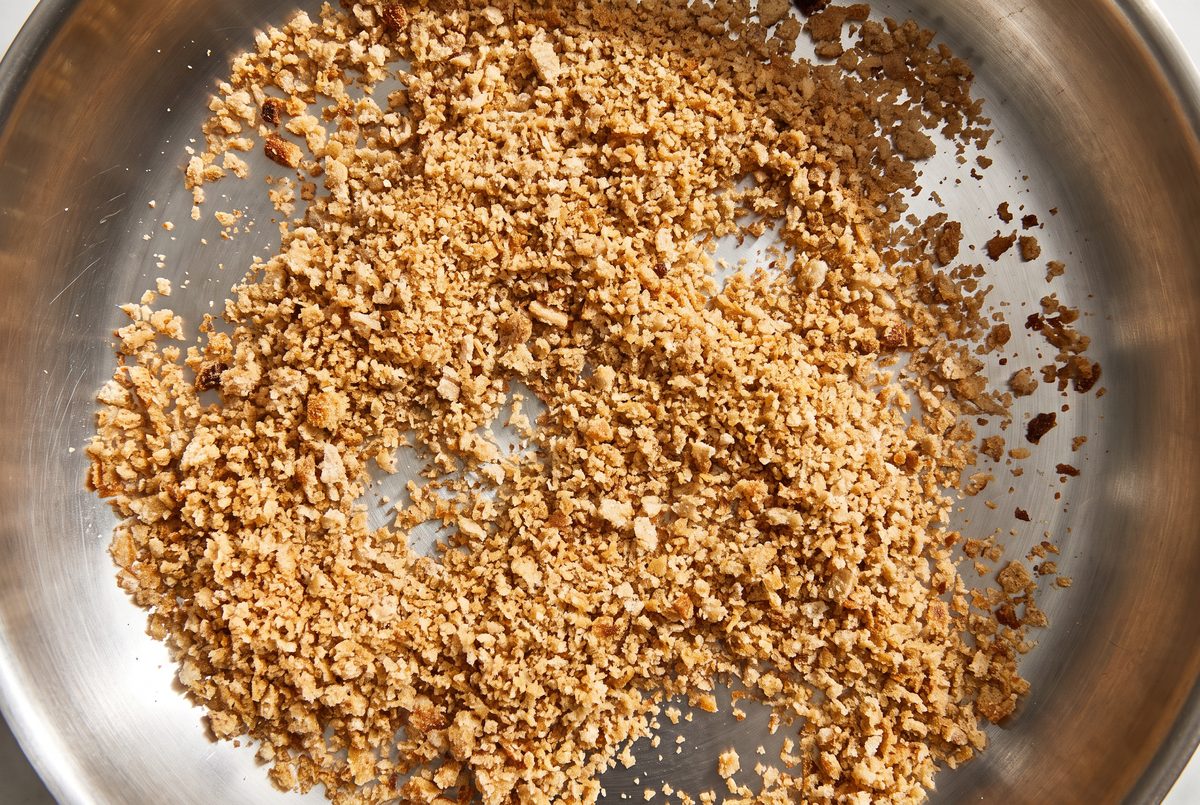
- Toast the breadcrumbs first, in a dry pan. Put the breadcrumbs in a small stainless-steel pan over medium heat with no oil and no fat. Shake the pan every twenty seconds or so for 4 to 5 minutes, until they go from pale tan to the color of wet sand and start to smell like toast. They turn from done to burnt in about fifteen seconds, so take the pan off the heat while you are still slightly unsure, and tip them straight into a bowl — left in a hot pan they keep cooking. Set them aside uncovered; covering them makes them soft again.
- Boil the fennel and keep the water. Cut the fronds and the thin stalks off the fennel bulb and set them aside. Halve the bulb. Bring a large pot of water to the boil with the 1 tbsp of salt, drop in the bulb halves and the fronds, and simmer 10 minutes, until a knife goes into the bulb with no resistance. Lift everything out with a spider or tongs — do not pour the water away, it is now pale green and smells of anise, and the bucatini is going to cook in it. Chop the cooked bulb and the fronds roughly; you should have about 1½ cups.
- Soak the raisins, bloom the saffron. Ladle a little of the fennel water into two small bowls. Put the raisins in one and the saffron threads in the other, and leave them while you cook the onion. The saffron needs the hot liquid to release its color — thrown in dry it mostly stays a thread. Ten minutes is enough for both.
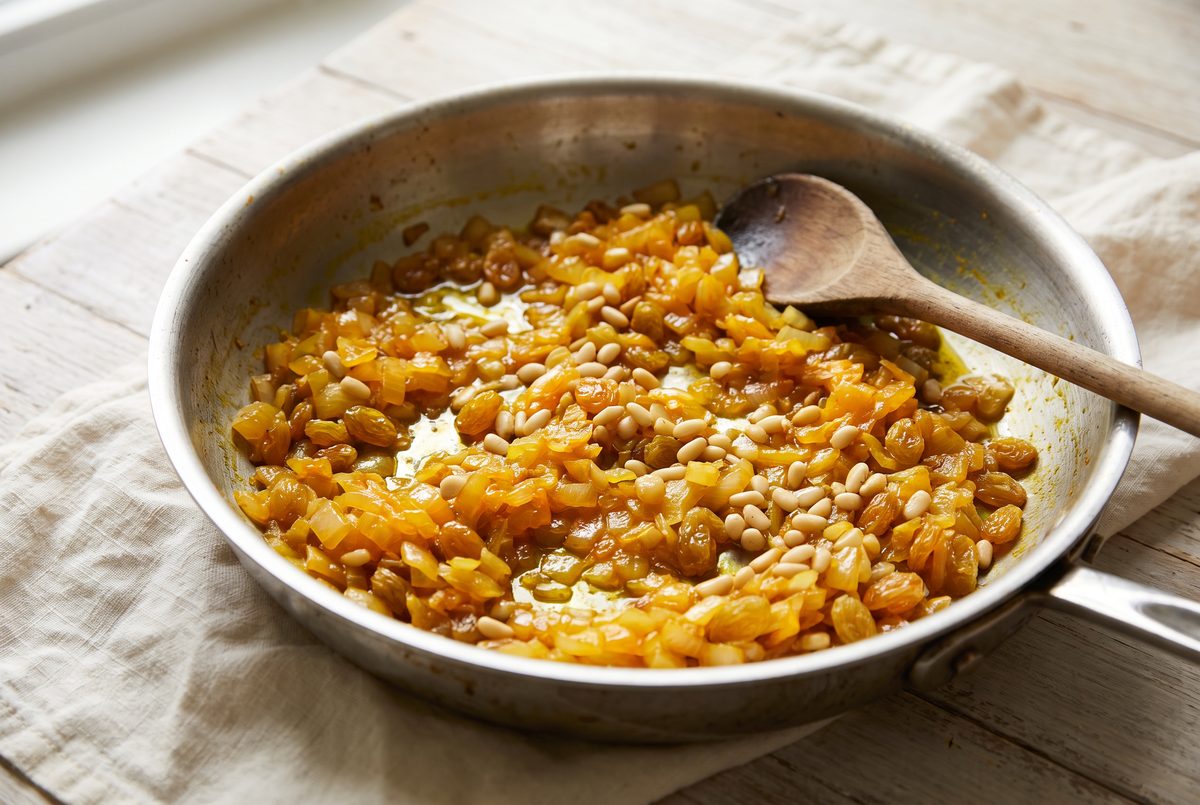
- Stew the onion soft, then build the base. Warm the olive oil in a wide skillet over medium-low heat. Add the onion and cook 10 minutes, stirring now and then, until it is completely soft and translucent but has taken no color — this is a stewed onion, not a browned one. Add the anchovy fillets and the crushed fennel seed and cook 2 minutes, pressing the anchovies with a wooden spoon until they have disappeared into the oil. Stir in the tomato paste and cook 1 minute more, then add the drained raisins, the pine nuts, and the saffron with its water. The pan should turn a deep orange-gold.
- Add the fennel, then start the pasta. Stir the chopped fennel into the skillet with a ladle of the fennel water and let it stew on low for 5 minutes, so the fennel takes on the saffron and the sauce stops being watery. Meanwhile bring the fennel water back to a rolling boil and put the bucatini in. Set a timer for 2 minutes less than the box says.
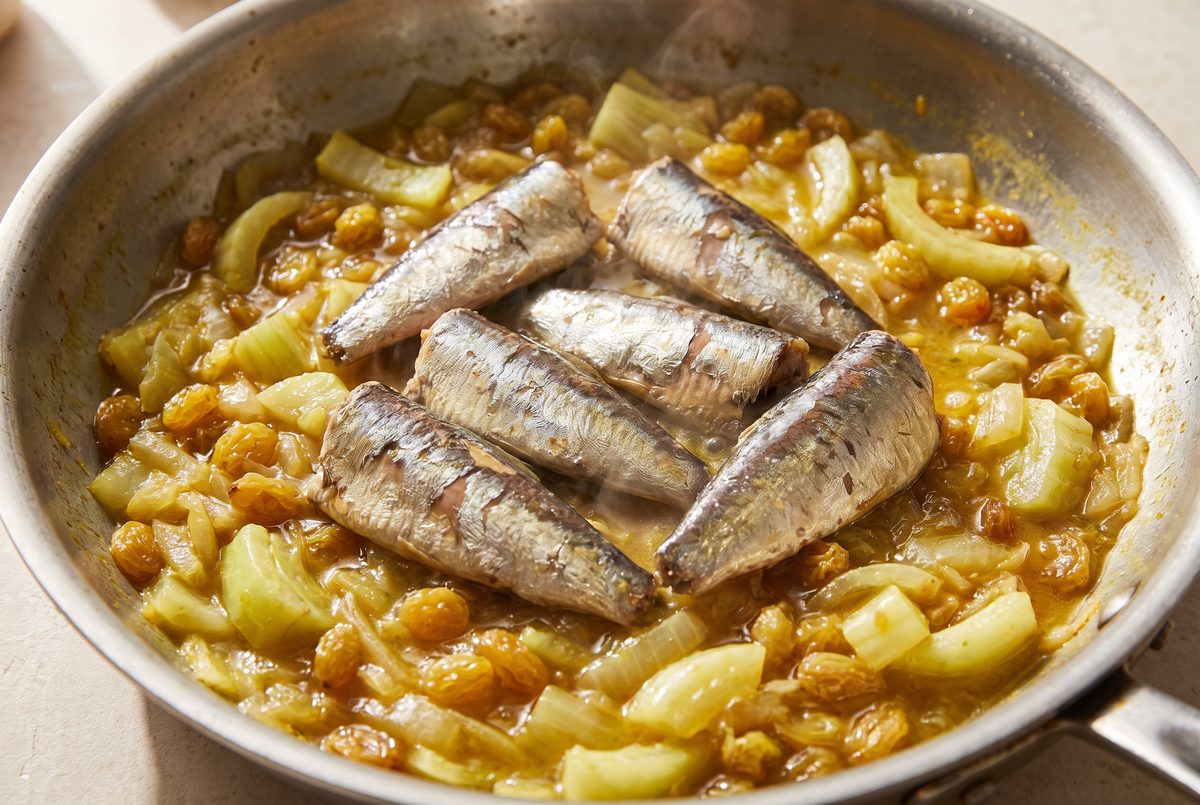
- Break the sardines in at the last minute. Drain the sardines and add them to the skillet in large pieces, along with the black pepper. Turn the heat to low, cover, and leave them 2 minutes without stirring — they are already cooked, and all you want is for them to warm through and start to relax into the sauce. Stirring at this stage turns them into paste. Leaving a few pieces recognizable is the difference between a sardine pasta and a fish-flavored sauce.
- Toss in the pan, rest two minutes, breadcrumbs at the table. Lift the bucatini straight out of the pot into the skillet with tongs, bringing a good half cup of the fennel water with it. Raise the heat to medium and toss for 1 to 2 minutes, until the water and oil come together and coat the strands — bucatini is hollow and thick and it needs that minute to finish. Take the pan off the heat and let it sit 2 minutes before serving: traditionally this dish is eaten warm rather than hot, and the two minutes also let the pasta absorb the last of the liquid. Serve with the toasted breadcrumbs in a bowl on the table for people to spoon over. No cheese.
Tips from our kitchen
- The fennel water is the recipe. If you take one thing from this page, it is that the pasta cooks in the water the fennel boiled in. Boiling the fennel separately and then cooking the pasta in fresh water gives you a dish that tastes like its parts rather than like one thing, and it is the mistake that makes people conclude that cultivated fennel 'doesn't work'.
- Buy sardines with the bones in. Skinless-boneless tins exist and they are the wrong product here: the bones are soft enough to crush against the roof of your mouth, they are where most of the calcium is, and taking them out also takes out the texture. If the idea bothers you, the pieces break up enough in the pan that you will not meet one.
- Toast the breadcrumbs in a pan you can see into. They go from done to burnt faster than any other step, and in a dark pan you cannot tell. A stainless pan shows you the color change against the metal. Make double and keep the extra in a jar — they are good on any pasta with fish, on roasted vegetables, and on the Sicilian caponata.
- Fennel fronds are not optional and they are not a garnish. They carry most of the anise flavor the bulb lacks; the bulb is mostly texture and sweetness. If the fennel at your store has been trimmed down to a bare bulb, buy a second one for the tops, or add another ¼ tsp of crushed fennel seed and accept that the dish is a little flatter.
- Warm, not hot. In Palermo this is eaten at room temperature as often as not, and there is a reason — the saffron and the fennel read more clearly when the plate is not steaming. Leftovers eaten cold from the fridge are genuinely good, which is not true of most pasta.
Variations
- Pasta con le sarde a mare — literally 'with the sardines still at sea', the version poor households made when there was no fish. Leave out the sardines entirely, double the anchovy to 4 fillets and double the breadcrumbs to 60 g. That gives 432 calories, 13 g of protein and 6.8 g of fiber a serving: the protein falls from 23 g to 13 g, which tells you exactly how much work the sardines were doing.
- With fresh sardines, if you have a fish counter that butterflies them: 1 lb (450 g) of fresh sardine fillets, half of them added with the fennel so they dissolve into the sauce and half laid on top in the last 3 minutes. Fresh is better and it is also a different dish — cleaner, less savory, and it needs eating the same day.
- Baked, as pasta 'ncasciata: toss everything together 2 minutes underdone, tip it into a ceramic dish, cover with the toasted breadcrumbs and bake at 400°F (200°C) for 15 minutes until the top is crisp. The calories do not change; what changes is that you can make it in the afternoon and bake it when people arrive.
- The white Catanese version: leave out the tomato paste. It takes the serving to 496 calories, and the dish goes paler and more floral, with the saffron and fennel further forward. Worth trying once you have made the red one, so you can tell what the tablespoon of paste was contributing.
- More pasta, for anyone not counting: at 3.5 oz (100 g) of dry bucatini a head instead of 2 oz, a serving is 660 calories with 29 g of protein. That is the restaurant portion, and it is the right one if you are feeding someone who has been outdoors all day.
Storage & meal prep
Keeps 3 days covered in the fridge and is one of the few pasta dishes that is actually pleasant cold — in Sicily it is normal to eat the leftovers straight from the refrigerator the next day, and the saffron and fennel come through more clearly than they do hot. To reheat, use a skillet over medium-low with 2 tablespoons of water per serving and keep it moving for 3 to 4 minutes; a microwave dries out the bucatini and makes the sardines smell much stronger than they taste. Store the toasted breadcrumbs separately in a jar at room temperature — they keep 2 weeks and go instantly soft in the fridge. Do not freeze it: the sardines turn grainy and the fennel collapses to threads.
Nutrition per serving
| Nutrient | Amount | % DV* |
|---|---|---|
| Calories | 499 kcal | 25% |
| Total fat | 17 g | 22% |
| Saturated fat | 2.2 g | 11% |
| Carbohydrates | 64 g | 23% |
| Fiber | 6.3 g | 23% |
| Sugars | 12 g | — |
| Protein | 23 g | 46% |
| Sodium | 705 mg | 31% |
*Percent Daily Values are based on a 2,000-calorie diet. Values are calculated from USDA FoodData Central and manufacturer data for the ingredients as listed; they are estimates, not lab analyses. Nutrition disclaimer.
Frequently asked questions
What is pasta con le sarde?
The signature pasta of Palermo: bucatini with sardines, wild fennel, saffron, raisins and pine nuts, finished with toasted breadcrumbs instead of cheese. The sweet-and-savory combination is the clearest surviving trace of Arab rule in Sicily, and the dish has DOP-adjacent status on the island — there is a recognized Pasta con le Sarde alla Palermitana specification. Made this way it is 499 calories a serving with 23 g of protein.
Can I use canned sardines for pasta con le sarde?
Yes, and most Sicilian households do on a weeknight. Two 3.75-oz tins packed in olive oil, drained, is 190 g of fish for four people. The difference from fresh is that canned sardines are already cooked and already salty, so they go in at the very end for two minutes rather than being stewed into the sauce, and you need less salt elsewhere. Buy bone-in tins, not skinless-boneless.
What can I use instead of wild fennel?
A whole fennel bulb with its fronds, plus ¼ tsp of crushed fennel seed. Boil the bulb and fronds for 10 minutes first and cook the pasta in that water — the water is how you get the flavor into the pasta instead of onto it. Dill is sometimes suggested as a substitute and it is not one; it is a different herb and the dish ends up tasting Scandinavian. Fennel fronds plus fennel seed gets you most of the way.
Is pasta con le sarde healthy?
It is one of the better pasta dishes on that question. A serving here is 499 calories with 23 g of protein, 6.3 g of fiber and only 2.2 g of saturated fat, and it delivers a portion of oily fish, which the Dietary Guidelines for Americans ask for twice a week. The number to watch is sodium at 705 mg, though 388 mg of that is the salt in the pasta water and most of it is poured away.
Why do you put breadcrumbs on pasta instead of cheese?
Two reasons, one of them a rule. In southern Italy cheese does not go on pasta with fish — this is treated as a genuine error rather than a preference. And toasted breadcrumbs, muddica atturrata, were the poor household's grated cheese: stale bread, a dry pan, no money. They give you the crunch and the toasted savor that Parmigiano would have, for nothing, and on a fish pasta they are better.
How much protein is in pasta con le sarde?
23 g a serving in this version, which is high for a pasta dish — a plain tomato pasta is around 13 g. The sardines contribute 47 g of the 92 g in the pan and the durum 30 g, with the rest from the fennel, onion, pine nuts and breadcrumbs. Leaving the sardines out, as in the traditional a mare version, drops a serving to 13 g.
Sources
- USDA FoodData Central — sardines (canned in oil, drained, with bone), pasta (dry, enriched), fennel bulb (raw), onion, anchovy (canned in oil), raisins, pine nuts, tomato paste, whole-wheat breadcrumbs, olive oil
- U.S. Department of Agriculture & U.S. Department of Health and Human Services. Dietary Guidelines for Americans, 2020–2025 (seafood recommendation: at least 8 oz per week)
- Rimm, E.B. et al. (2018). Seafood Long-Chain n-3 Polyunsaturated Fatty Acids and Cardiovascular Disease: A Science Advisory From the American Heart Association. Circulation
- Mozaffarian, D. & Wu, J.H.Y. (2011). Omega-3 Fatty Acids and Cardiovascular Disease: Effects on Risk Factors, Molecular Pathways, and Clinical Events. Journal of the American College of Cardiology
- Reynolds, A. et al. (2019). Carbohydrate quality and human health: a series of systematic reviews and meta-analyses. The Lancet
You might also like
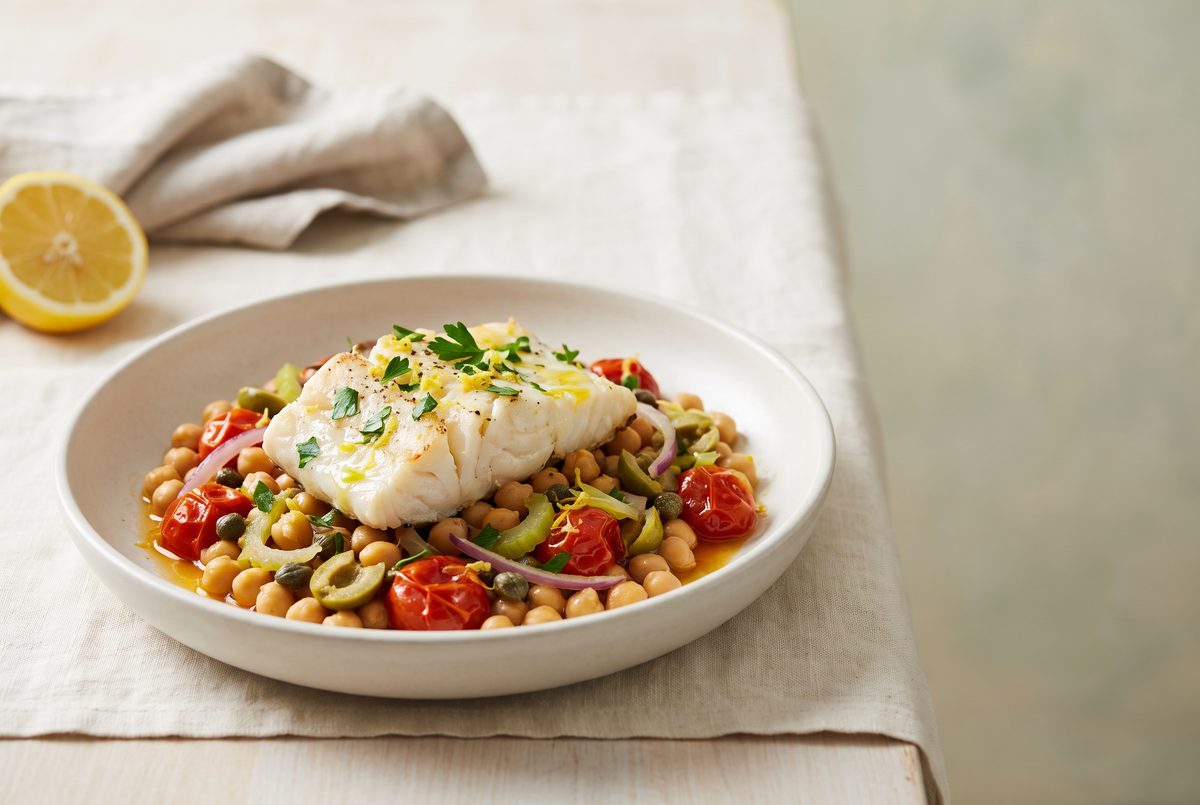
Baked Cod with Chickpeas, Tomatoes and Olives
Baked cod with chickpeas is a one-pan southern Italian dinner: cherry tomatoes, green olives and capers simmered with…
- 40 min
- 443 kcal
- 41 g protein
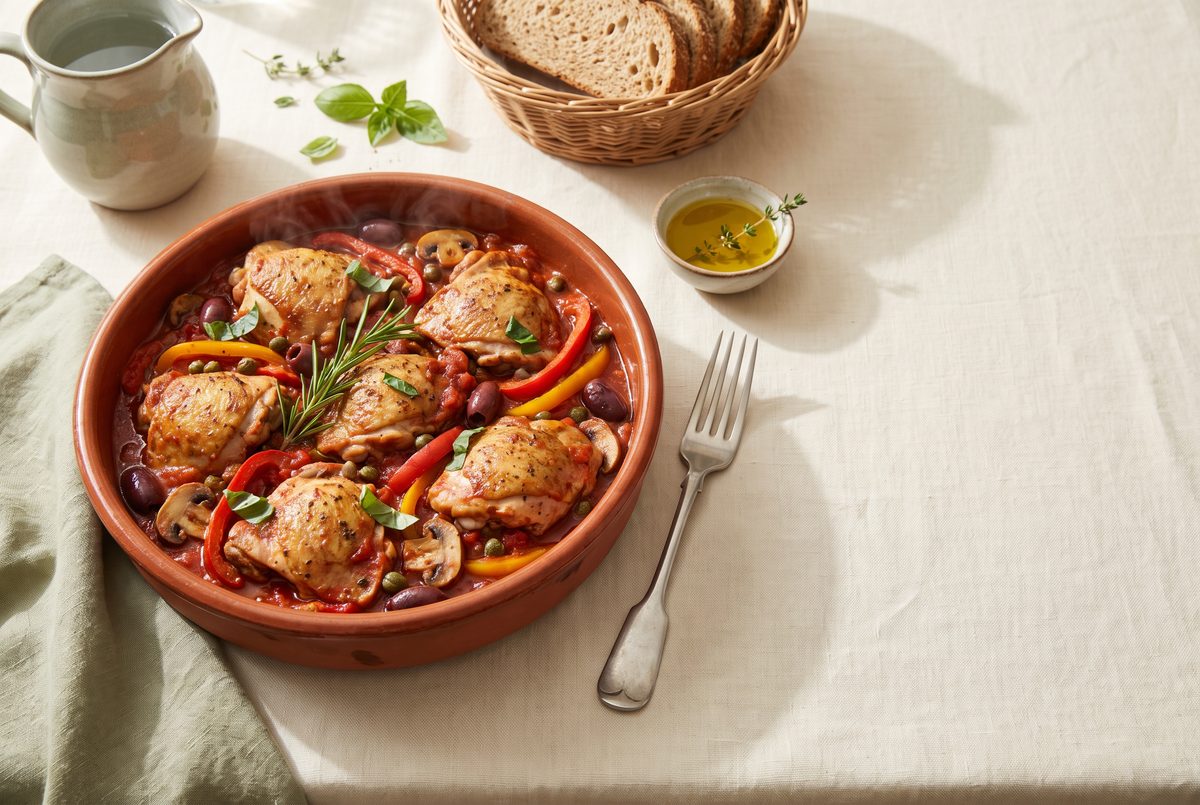
Healthy Chicken Cacciatore
Healthy chicken cacciatore is a one-pan Italian stew of skinless chicken thighs braised with bell peppers, mushrooms…
- 50 min
- 391 kcal
- 40 g protein
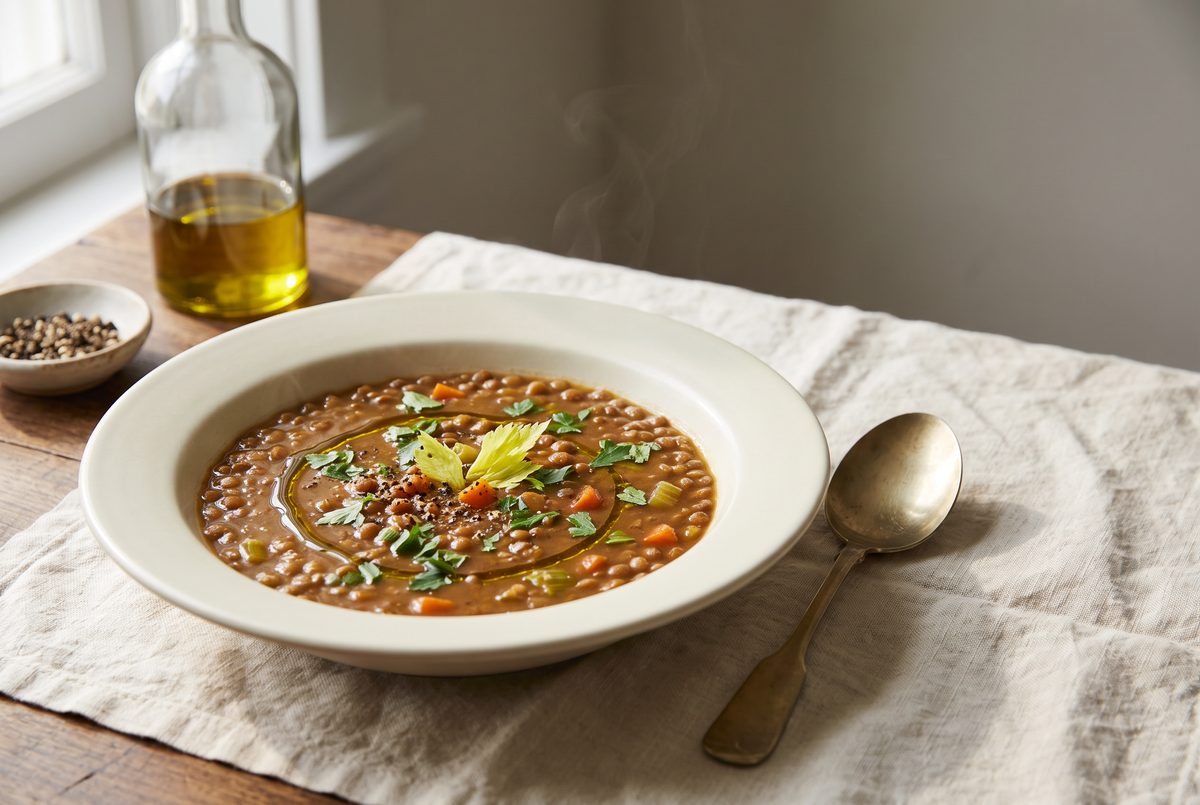
Italian Lentil Soup with Rosemary and Tomato
Italian lentil soup is a one-pot Umbrian supper: brown lentils simmered with a slow soffritto, tomato and rosemary…
- 1 hr 10 min
- 447 kcal
- 22 g protein