Sicilian Tuna Pasta (Pasta al Tonno)
Canned tuna, burst cherry tomatoes, capers and olives, with toasted breadcrumbs instead of cheese.
Sicilian tuna pasta is a 25-minute pantry dinner: spaghetti tossed with olive-oil-packed tuna, burst cherry tomatoes, capers, olives and garlic, finished with toasted breadcrumbs instead of cheese. At about 660 calories, with 91 g of carbohydrate, 31 g of protein and 840 mg of sodium per plate, it refills muscle glycogen and replaces sweat losses after a long run — which is why it lives in our endurance collection.
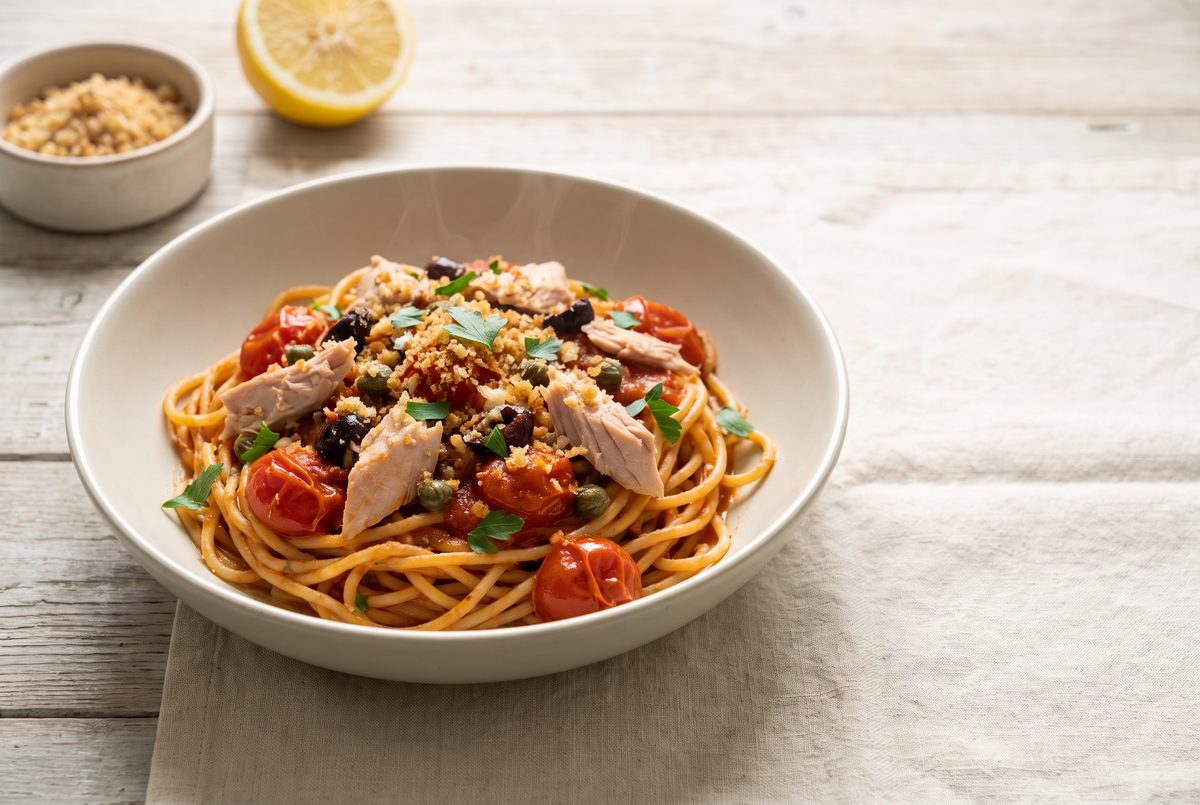
The hardest meal of marathon training isn't the carb-load dinner the night before the race. It's the one at 1 p.m. on a Sunday, after eighteen miles, when you've already eaten the emergency banana in the car and the fridge contains half a lemon and a bag of arugula going slimy at the edges. Ordering something takes forty minutes and arrives greasy. You need to eat now.
This is the dish that solved that afternoon for us, and it isn't a compromise — it's what people actually cook in Sicily and along the whole southern coast when the fishing boats haven't come in. Pasta al tonno is built from a can, a few tomatoes and whatever sharp things are in the door of the fridge. The tuna doesn't sit in the sauce so much as melt into it; the capers and olives do the work that anchovies or cheese would do in another dish.
We've written it for the hour after a long effort, which mostly meant not apologizing for the salt.
Why this recipe works for endurance
Glycogen resynthesis is fastest in the first couple of hours after a long session, and the research consensus is to get carbohydrate in during that window rather than waiting for dinner (Ivy et al., 1988). This plate delivers about 91 g, mostly from pasta — enough to make a real dent for a runner who has just burned through most of their muscle glycogen.
Protein alongside the carbohydrate supports muscle repair, and the dose-response work puts the useful amount per meal at roughly 20–30 g of high-quality protein (Moore et al., 2009). Two cans of tuna across four plates land at 31 g, and canned tuna is about as complete as protein gets.
Sodium is the ingredient most recipes are shy about and endurance athletes need. You lose roughly 500–1500 mg of sodium per liter of sweat, and a two-hour run in September can cost well over a liter. The capers, olives and salted pasta water bring this to about 840 mg per plate, which helps you retain the fluid you drink with it rather than passing it straight through.
Fat stays moderate at around 19 g, most of it olive oil and the omega-3s in the tuna — enough to carry flavor without slowing gastric emptying at the moment you want the carbohydrate moving. If you're eating this well before an event rather than after one, see our endurance recipes for the timing rules.
Ingredients
4 large plates
Pasta
Toasted breadcrumbs
Sauce
To finish
Instructions
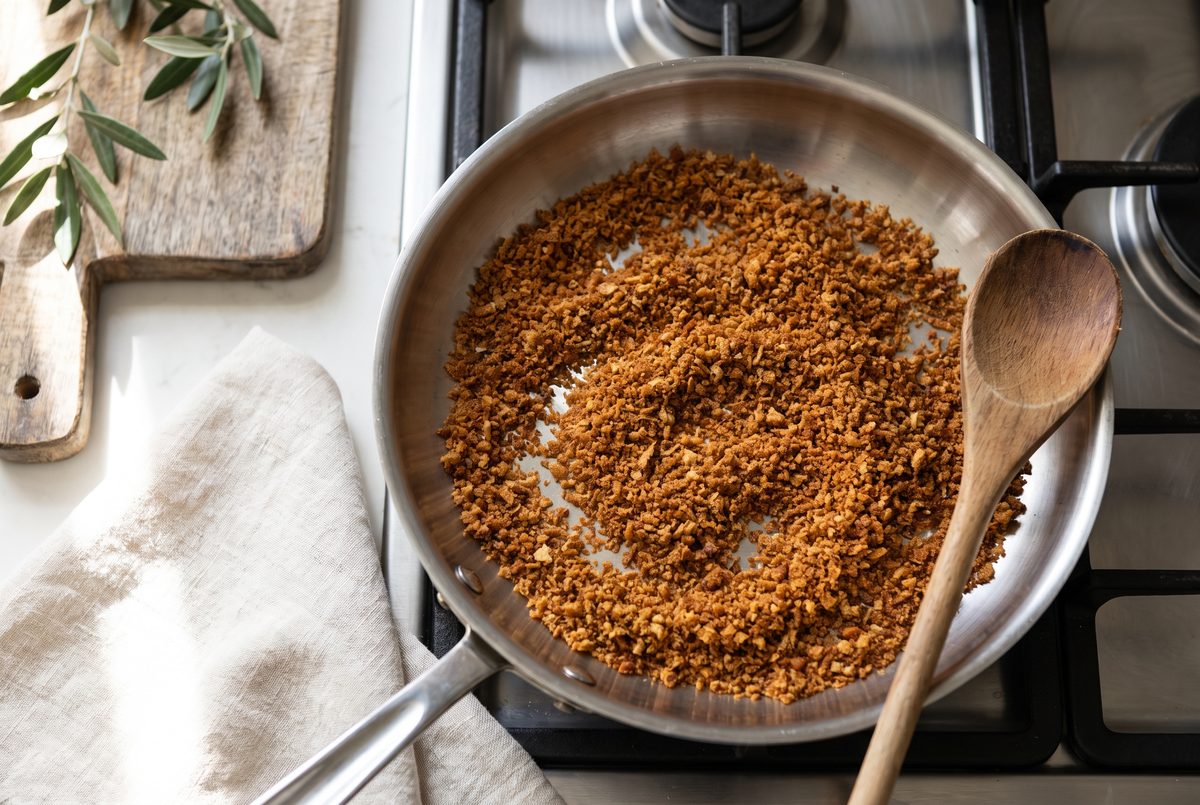
- Toast the breadcrumbs first. Put the breadcrumbs and 1 tsp olive oil in a dry skillet over medium heat and toast, shaking the pan often, for 3–4 minutes, until they smell like toast and are the color of a walnut shell. Tip them onto a plate right away — they go from golden to burnt in about twenty seconds. This is mollica atturrata, and it's the Sicilian answer to grated cheese on a fish pasta.
- Get the pasta going. Bring a large pot of water to a rolling boil, add the 1 tbsp salt, and cook the spaghetti one minute short of the package time for al dente. Before you drain it, scoop out a mug of the starchy water — you will need it.
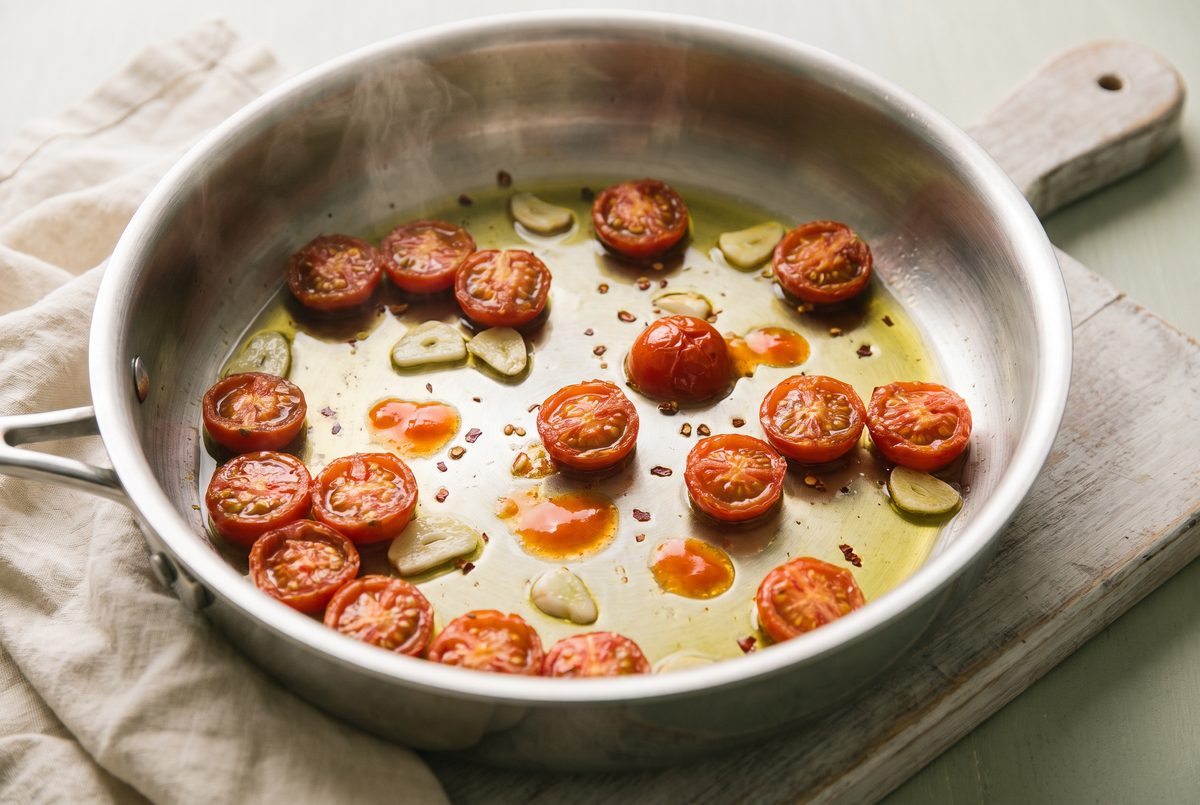
- Start the sauce while the pasta cooks. In a wide sauté pan, warm the 3 tbsp olive oil over medium heat with the garlic and chili flakes. Cook 1–2 minutes, until the garlic is pale gold and fragrant but nowhere near brown; browned garlic turns the whole pan bitter. Add the cherry tomatoes cut-side down and let them sit undisturbed for 3 minutes, then add the passata and a pinch of salt.
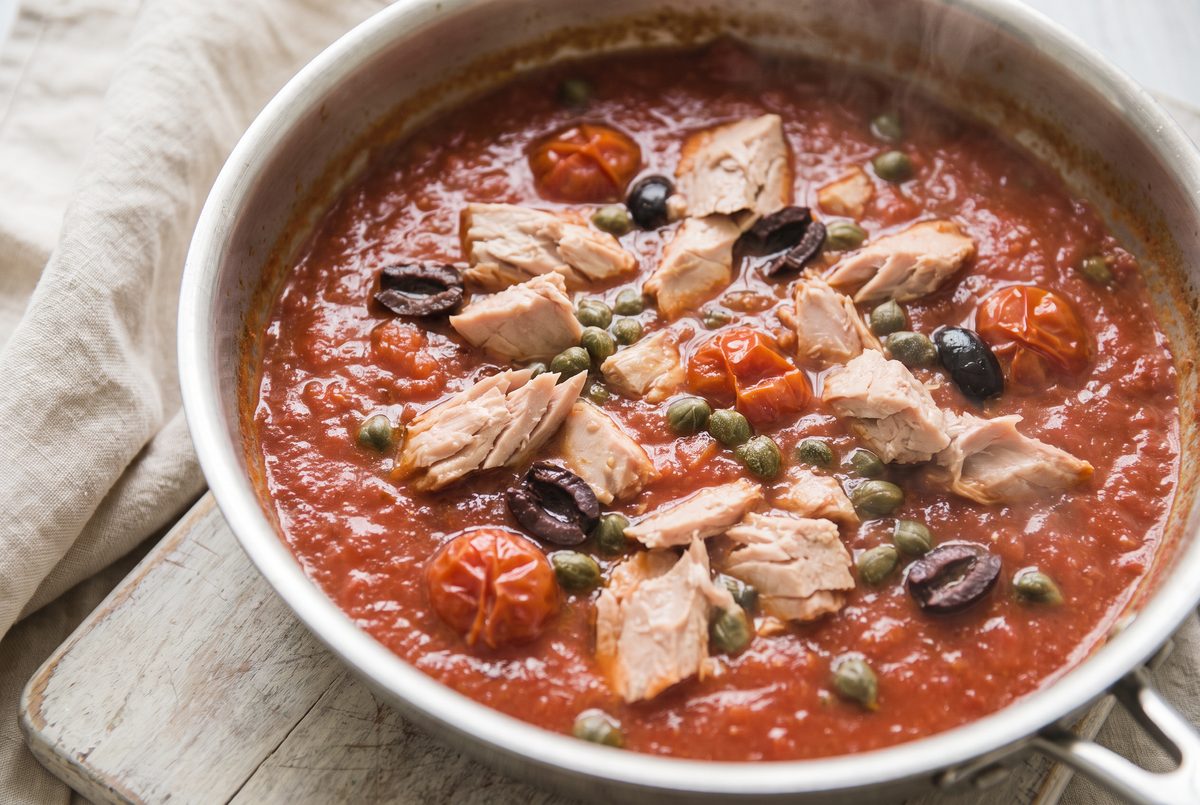
- Add the tuna, capers and olives. Drain the tuna and add it in large flakes, along with the capers, olives and black pepper. Lower the heat and simmer 5 minutes, just until the sauce is glossy and thick enough to coat a spoon. Don't stir it to shreds — the pieces of tuna should stay visible. Taste before you add any salt: between the capers, the olives and the fish, it usually needs none.
- Marry the pasta and the sauce. Drain the pasta and add it straight to the pan with a splash of the reserved water. Toss over medium heat for a minute, adding more water a little at a time, until the sauce clings to every strand and there is no loose liquid in the bottom of the pan. This minute is the difference between pasta with sauce on it and pasta al tonno.
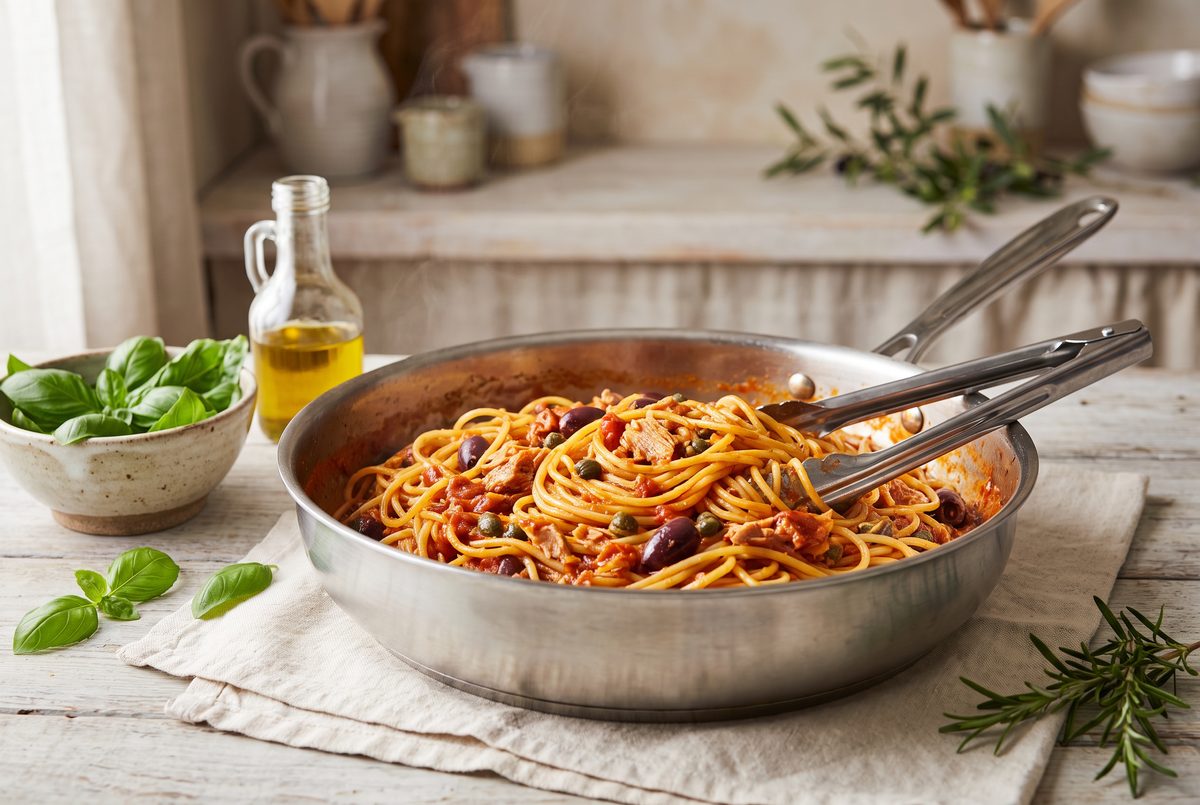
- Finish. Off the heat, fold in the parsley and lemon zest. Plate, then scatter the toasted breadcrumbs over the top at the table so they stay crisp. No cheese.
Tips from our kitchen
- Buy tuna packed in olive oil, not water. It costs more and it's worth it: water-packed tuna is drier and the flavor is flatter. If all you have is water-packed, drain it and add an extra tablespoon of olive oil to the pan (that's about 30 calories per serving).
- Reserve more pasta water than you think you need. A mug is right; you'll probably use half of it. Once it's down the drain the only fix is plain hot water, which doesn't emulsify.
- Rinse the capers, whether salt-packed or brined. Salt-packed ones need a 10-minute soak. This recipe's sodium is deliberate, but unrinsed capers push it somewhere silly.
- Eating this after a hard session? Have it within about two hours of finishing, and drink a large glass of water with it. The sodium only helps you rehydrate if there's fluid to hold on to.
Variations
- More carbohydrate: go to 1 lb (450 g) of pasta for the same sauce — that takes each plate to roughly 100 g of carbs, closer to carb-loading territory.
- Whole-wheat: swap in whole-wheat spaghetti for about 6 g more fiber per plate. Better on a rest day than straight after a long run, when you want digestion easy.
- Bianco (no tomato): leave out the tomatoes and passata, double the pasta water and lemon, and add a handful of toasted pine nuts. This is how it's made in Liguria.
- With sardines instead of tuna, plus a pinch of saffron and a few raisins, and you're most of the way to pasta con le sarde.
- Vegetarian: swap the tuna for a 15-oz can of cannellini beans, rinsed, and mash a quarter of them into the sauce. Protein drops to about 21 g per plate.
Storage & meal prep
Best the day it's made. Leftovers keep 2 days in the fridge; reheat in a skillet with a splash of water rather than the microwave, which makes the tuna rubbery. Add the breadcrumbs fresh — the toasted ones keep a week in a jar at room temperature and are worth making a double batch of. Doesn't freeze.
Nutrition per serving
| Nutrient | Amount | % DV* |
|---|---|---|
| Calories | 662 kcal | 33% |
| Total fat | 19 g | 24% |
| Saturated fat | 2.9 g | 14% |
| Carbohydrates | 91 g | 33% |
| Fiber | 6.4 g | 23% |
| Sugars | 7.1 g | — |
| Protein | 31 g | 62% |
| Sodium | 843 mg | 37% |
*Percent Daily Values are based on a 2,000-calorie diet. Values are calculated from USDA FoodData Central and manufacturer data for the ingredients as listed; they are estimates, not lab analyses. Nutrition disclaimer.
Frequently asked questions
Is tuna pasta healthy?
Made this way, yes. A plate is about 660 calories with 31 g of protein, 19 g of fat that is mostly olive oil, and no cream or cheese. Canned tuna is a lean, complete protein with some omega-3s, and the tomatoes, capers and olives add flavor for very few calories. The sodium is high by design for athletes — if you're not training, use half the capers and olives.
What should I eat after a long run?
Carbohydrate to refill glycogen, 20–30 g of protein for repair, and sodium and fluid to replace sweat losses — ideally within about two hours. This plate covers all four: 91 g of carbs, 31 g of protein and 840 mg of sodium. The classic target is roughly 1 g of carbohydrate per kilogram of body weight in the first hour, which for a 150-lb runner is about 68 g.
Should I use tuna in oil or tuna in water?
Oil, for this dish. Olive-oil-packed tuna stays moist and its flavor carries through the tomato, while water-packed tuna tends to go dry and stringy once it hits the heat. The difference is about 40 calories per serving after draining. Water-packed works if that's what you have — just add another tablespoon of olive oil to the pan.
Why don't Italians put cheese on seafood pasta?
Because aged cheese and fish fight each other: both bring strong savory notes, and Parmesan's sharpness flattens the delicate flavor of the fish. Southern Italian cooks solved the same problem — wanting something crunchy and savory on top — with toasted breadcrumbs centuries ago, back when cheese was expensive and stale bread was free. Try it before you break the rule.
Can I make tuna pasta ahead?
The sauce, yes — make it up to 3 days ahead and keep it in the fridge, then reheat it gently while fresh pasta boils. Don't cook the pasta ahead and reheat the whole dish; spaghetti that has sat in sauce overnight turns soft. The toasted breadcrumbs can be made a week ahead and stored in a sealed jar.
Sources
- USDA FoodData Central — pasta (dry, enriched), tuna (canned in oil, drained), capers, olives
- Ivy, J. L. et al. (1988). Muscle glycogen synthesis after exercise: effect of time of carbohydrate ingestion. Journal of Applied Physiology
- Moore, D. R. et al. (2009). Ingested protein dose response of muscle and albumin protein synthesis after resistance exercise in young men. American Journal of Clinical Nutrition
- Thomas, D. T. et al. (2016). Position of the Academy of Nutrition and Dietetics, Dietitians of Canada, and the ACSM: Nutrition and Athletic Performance.
You might also like
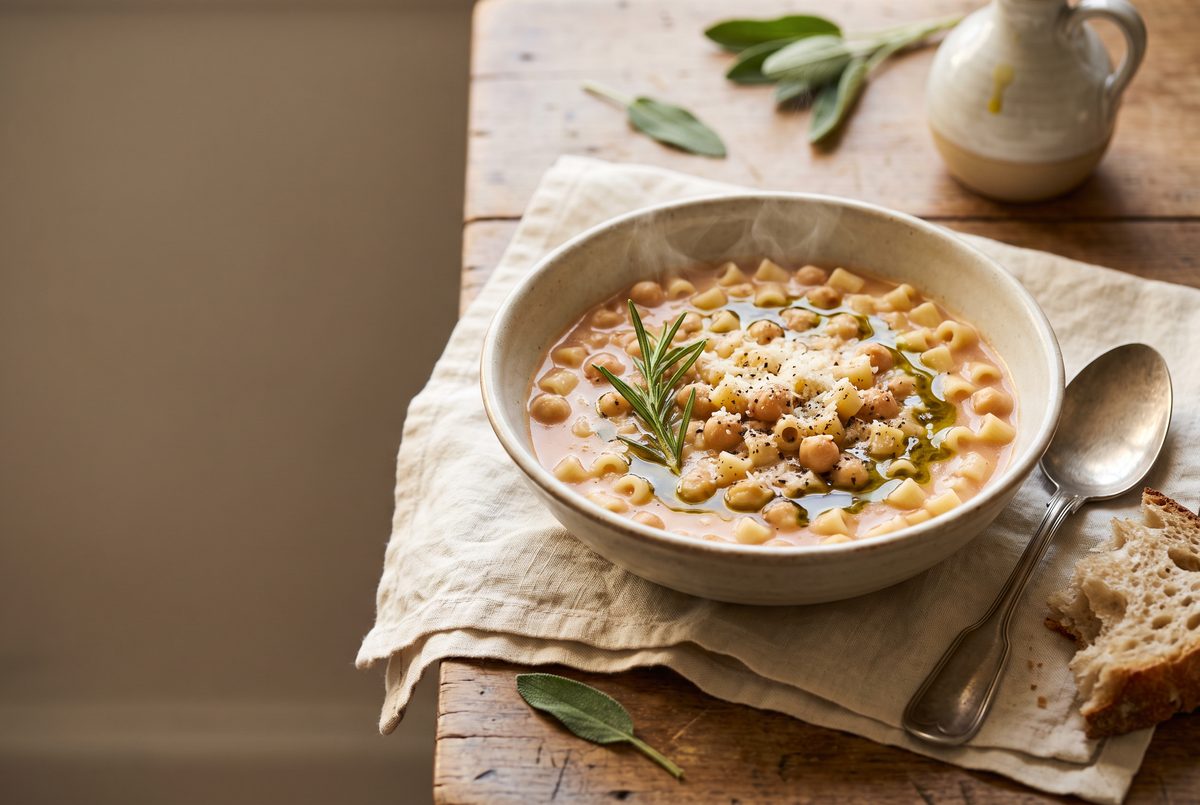
Pasta e Ceci (Roman Pasta with Chickpeas)
Pasta e ceci is a Roman one-pot dish of short pasta simmered with chickpeas, rosemary, garlic and a spoon of tomato…
- 35 min
- 611 kcal
- 23 g protein
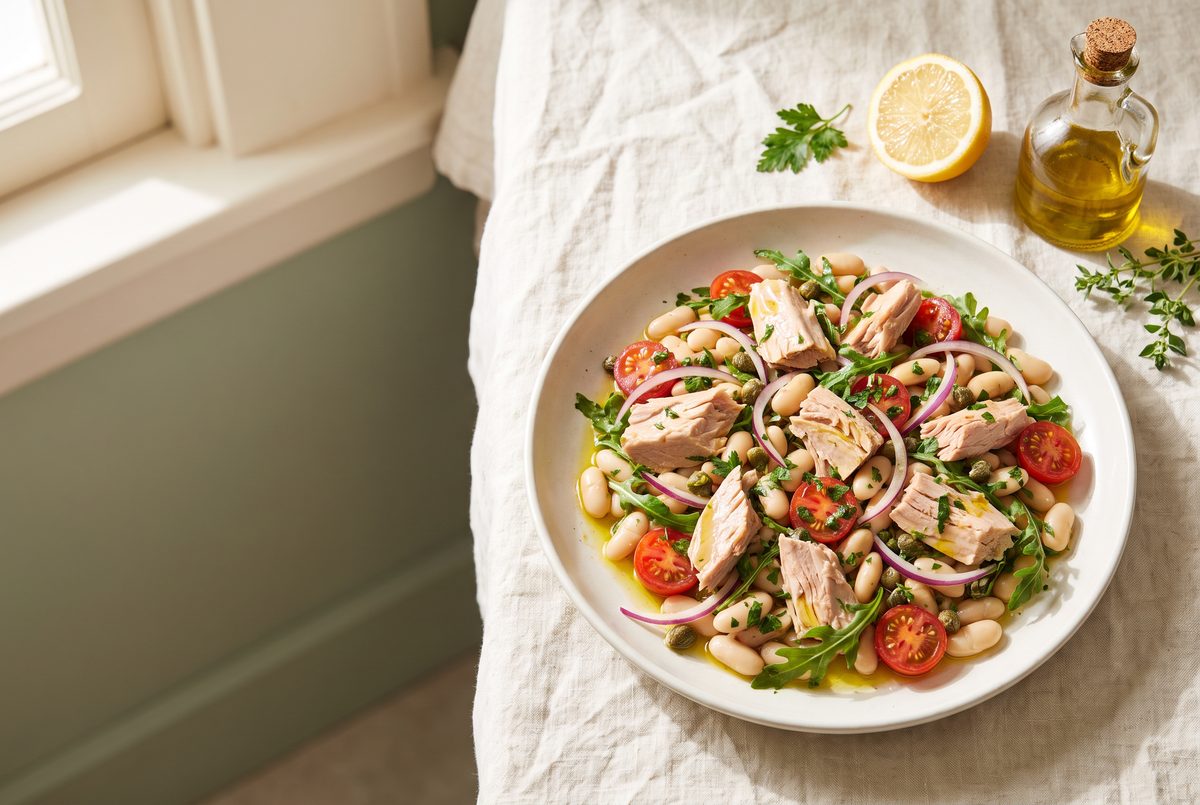
Tuscan Tuna and White Bean Salad
Tuscan tuna and white bean salad (fagioli e tonno) combines canned tuna, cannellini beans, red onion, cherry tomatoes…
- 10 min
- 426 kcal
- 40 g protein
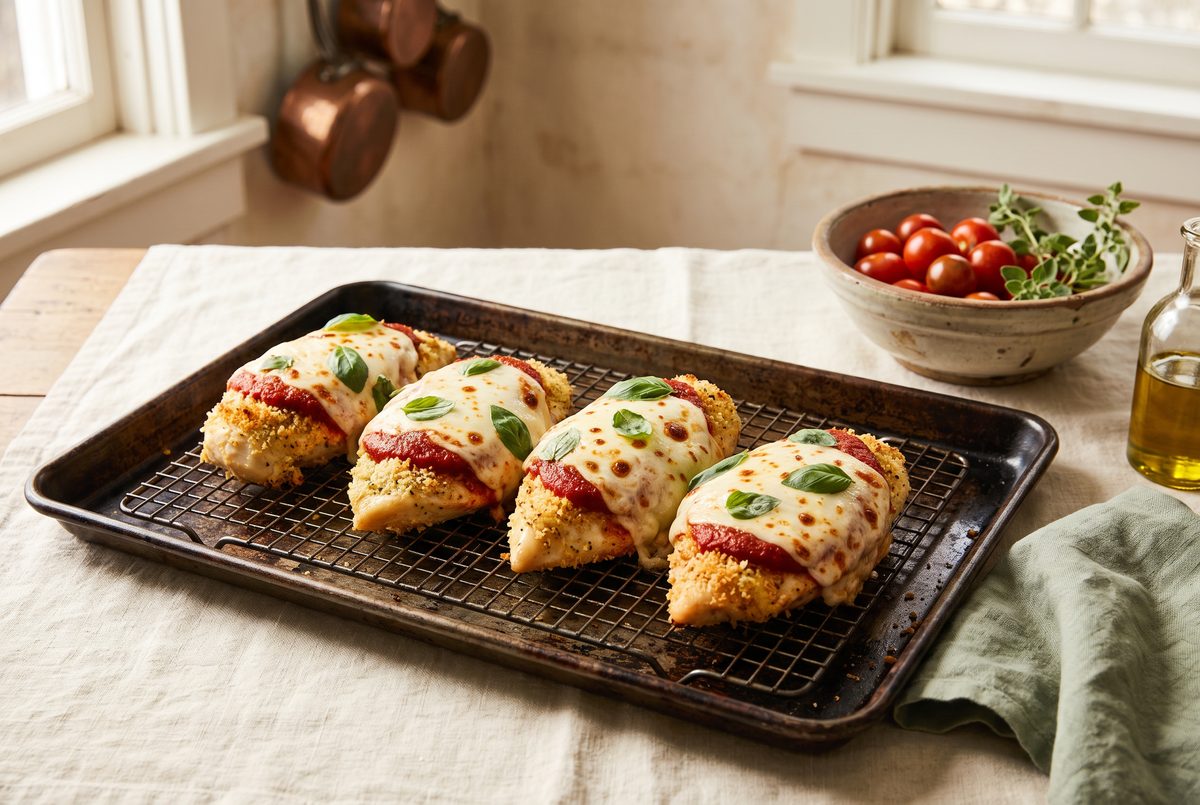
Sheet-Pan Chicken Parmesan, High-Protein
High-protein sheet-pan chicken parmesan bakes breaded chicken breasts on a wire rack so they crisp without frying…
- 40 min
- 478 kcal
- 56 g protein