Cacio e Pepe (Authentic Roman Pasta, No Cream)
Four ingredients, one piece of technique: the pecorino goes into warm pasta water off the heat, never into a hot pan. The plate that loads a runner in a kitchen with nothing in it.
Cacio e pepe is spaghetti dressed with nothing but grated Pecorino Romano, cracked black pepper and the starchy water the pasta cooked in — no cream, no butter, no garlic. A plate comes to 561 calories with 87 g of carbohydrate, 26 g of protein and only 11 g of fat in 25 minutes, which makes it the cheapest honest carb-loading dinner on this site and the one you can cook in a rented kitchen with four things from a corner store.
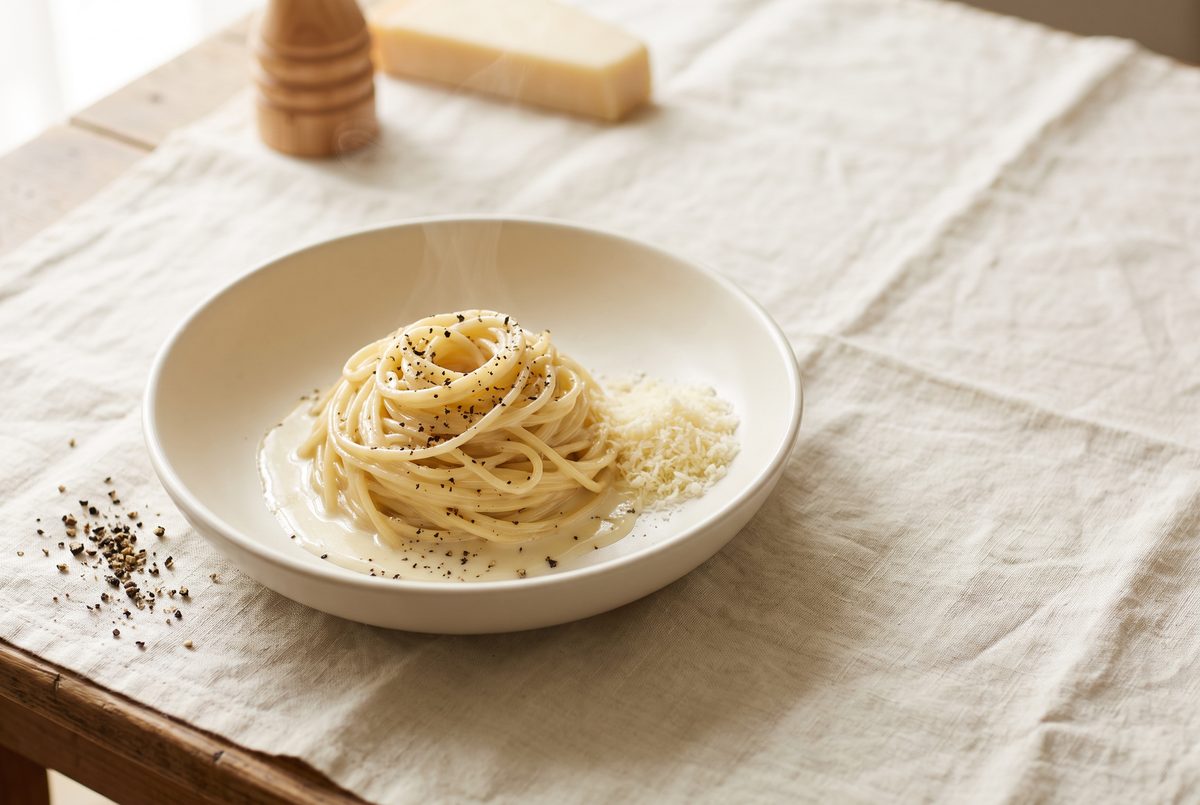
The night before a long race you are often not in your own kitchen. You have flown somewhere, you are in a rented apartment with two pans and a blunt knife, the race expo ate the afternoon, and the only food shopping you are willing to do is on the corner. This is the dinner for that evening, and it is not a compromise: a pound of dry spaghetti, a wedge of pecorino, a handful of peppercorns and some salt. Nothing in it needs a fridge until you get there, and the whole thing is done in the time the water takes to boil plus three minutes.
Cacio e pepe is the oldest and poorest of the four Roman pastas — the family that also holds gricia, amatriciana and carbonara. The usual story is shepherd food, carried on the transhumance routes between the Lazio hills and Abruzzo: sheep's cheese keeps for months, peppercorns weigh nothing and were believed to warm you, dried pasta survives a saddlebag. Three things that do not spoil, which is exactly why they are still the three things you can buy anywhere in the world at nine o'clock at night.
It is also the Roman pasta with the worst reputation at home, and the reason is a single number. Pecorino is a hard sheep's-milk cheese whose proteins tighten and squeeze out their fat somewhere around 150°F (65°C) — well below boiling. Throw grated pecorino into a hot pan of pasta and you do not get sauce, you get a rubbery grey knot of cheese sitting in oily water, and no amount of stirring brings it back. Restaurants look like they do it in the pan because they are moving fast with a pan that is already off the flame and water that has stopped steaming. At home the fix is simpler and far less impressive: make the sauce in a bowl, with warm water, away from the stove, and let the pasta come to it. The rest of this page is four ingredients and that one idea.
Why this recipe works for endurance
87 g of carbohydrate is a genuine loading portion. The 2016 joint position stand from the Academy of Nutrition and Dietetics, Dietitians of Canada and the ACSM (Thomas, Erdman & Burke) puts pre-event carbohydrate at 8–12 g per kilogram of body weight per day for events lasting over 90 minutes — 545 to 820 g in a day for a 150-lb (68 kg) runner. One plate of this is 87 g of that total, and because it comes from semolina it is almost entirely starch: 3.3 g of sugar per serving. How a whole loading day is assembled, meal by meal, is worked out in carb loading the Italian way.
The fat and the fiber are low, and that is the part that decides how race morning goes. Both slow gastric emptying, and the review of gastrointestinal complaints in endurance athletes by de Oliveira, Burini and Jeukendrup (2014) puts a high-fat, high-fiber pre-event meal among the leading causes of the problem. At 11 g of fat and 4.1 g of fiber this plate is about as light as 87 g of carbohydrate gets. The comparison that matters is with the dish's own American impostor: a half cup of heavy cream stirred through the same pound of pasta roughly doubles the fat per plate and adds no carbohydrate at all, which turns a fuel-up dinner into a fat-loading one. Burke and colleagues (2011) make the same point in one line — maximise the carbohydrate, minimise everything that holds it in the stomach.
26 g of protein out of cheese and semolina is more than it looks. Pecorino Romano is 32 g of protein per 100 g, among the densest of any cheese, and 1¼ oz of it carries about 11 g; the pound of dry pasta brings another 15 g per plate. That lands in the 20–25 g range where post-exercise muscle protein synthesis is maximal in young adults (Moore et al., 2009), so the plate also works as a dinner after a long Sunday run, not only before one. It is still a one-dish meal rather than a complete one: if you are eating it twice a week, the protein in the rest of the endurance recipes is better distributed.
The sodium is high and worth naming. 815 mg per plate is about 35% of the 2,300 mg daily limit, which is a lot for a dish with four ingredients and no cured meat in it — though not the most of anything here: the sheet-pan chicken parmesan carries 1,223 mg. Just over half is cheese — Pecorino Romano is a brine-salted DOP cheese at about 1,200 mg of sodium per 100 g, so 1¼ oz brings 420 mg to each plate — and the other 388 mg is the teaspoon of salt in the pasta water, which the table charges in full even though most of it leaves with the water. Before a long hot event that is not a problem but an ingredient: the same position stand notes that sodium eaten with fluid in the day before helps retain it. On an ordinary Tuesday, or if you have high blood pressure, it is a reason to cook something else or to use the lower-salt version in the variations below. We are not making a health claim either way; see the nutrition disclaimer.
Ingredients
4 plates, about 4 oz dry pasta each
The pasta
The sauce
Instructions
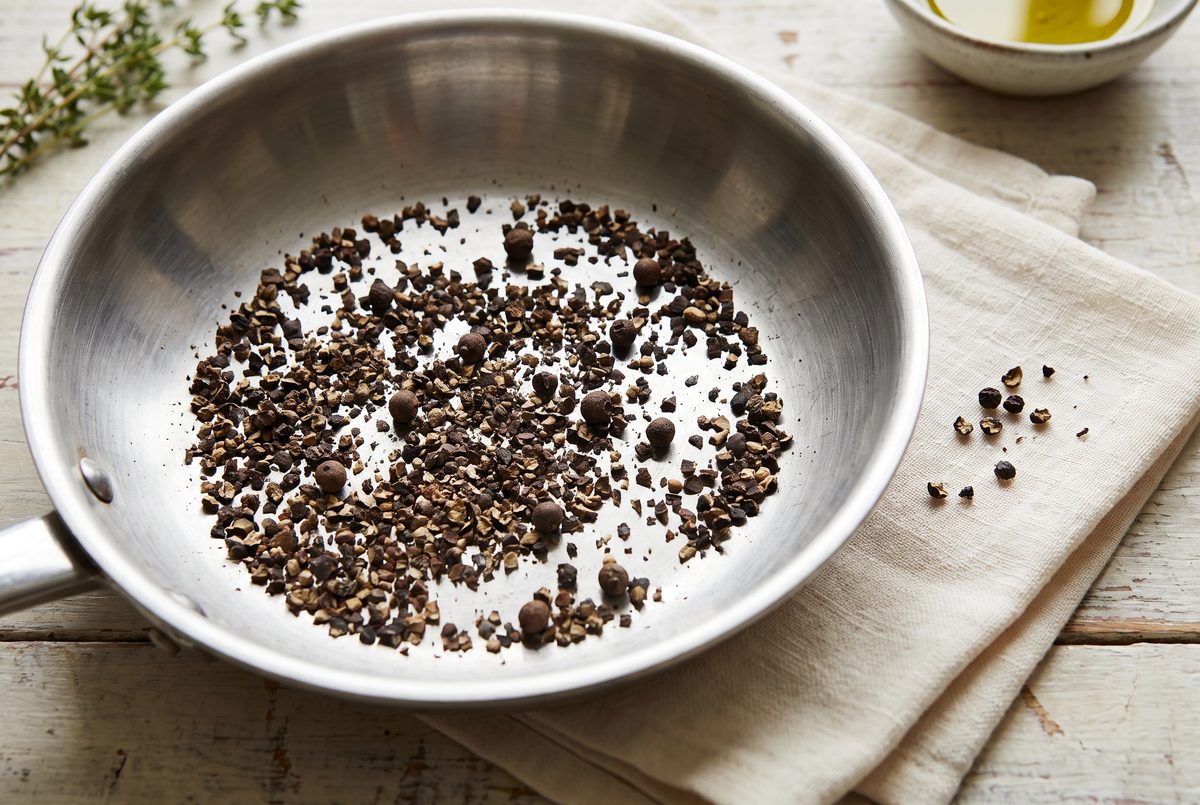
- Crack the peppercorns, then toast them. Put the tablespoon of peppercorns on a cutting board and crush them coarsely under the flat base of a heavy pan — you want gravel, not powder, with a few pieces left nearly whole. A grinder on its loosest setting is second best; pre-ground is not worth doing. Tip them into a dry pan over medium heat for 30 to 60 seconds, until the kitchen smells of them, then slide them onto a plate. Toasting drives the volatile oils out of the husk, and it is the difference between pepper you taste and pepper you only feel at the back of the throat.
- Grate the pecorino to a powder. Grate the whole 1¼ oz (140 g) on the finest rasp you own, so it comes out fluffy rather than in shreds. This is not fussiness: a fine powder has enough surface area to dissolve in water at 140°F, while box-grater shreds need more heat than the sauce can survive. Buy the wedge and grate it yourself — bagged grated cheese is dusted with cellulose or starch to stop it caking, which is precisely the behaviour you are relying on here. Set it in a wide, cool bowl, not a warm one.
- Boil the pasta in less water than usual. Bring 2½ quarts of water to a boil with the 1 teaspoon of salt — half the usual volume and a quarter of the usual salt. Less water means a higher concentration of released starch, and that starch is the only emulsifier in the dish; the salt is low because 1¼ oz of pecorino is already carrying 1,680 mg of sodium into four plates. Add the spaghetti and stir for the first minute so it does not weld together in the tighter pot.
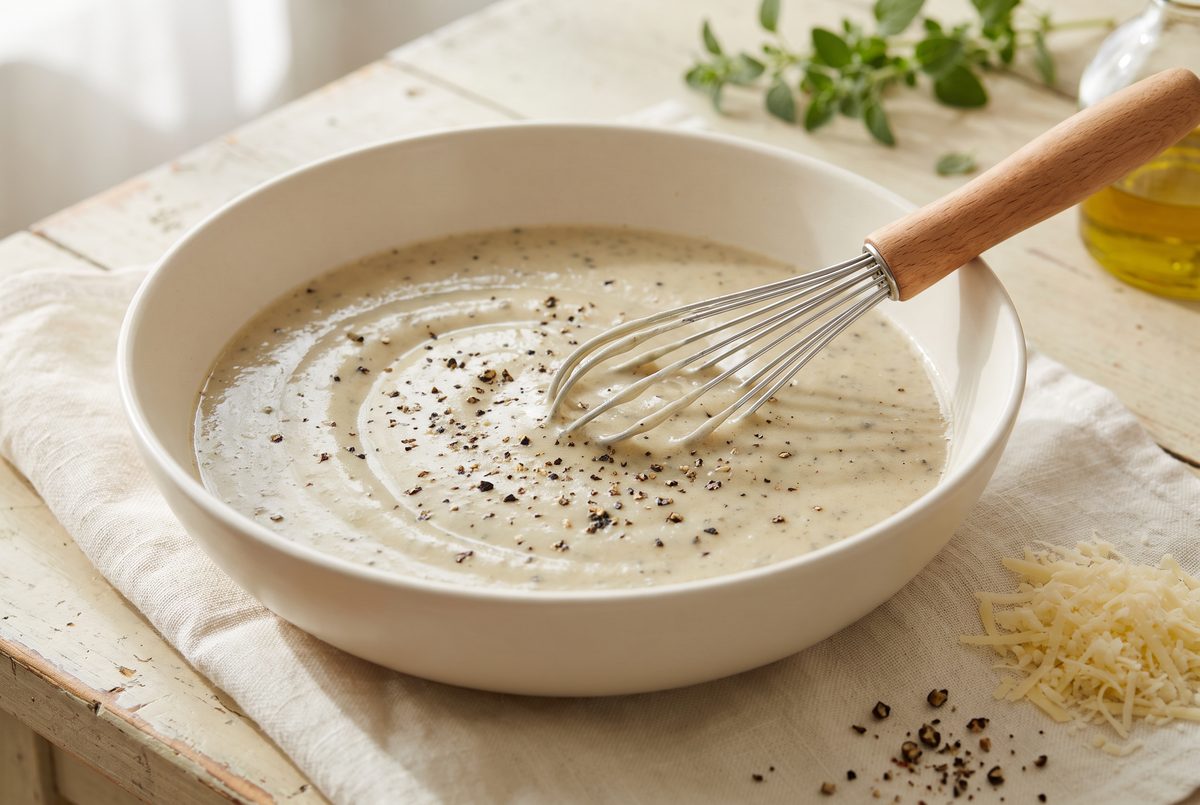
- Make the crema in the bowl, off the stove. When the pasta has about 4 minutes left, ladle out ⅓ cup of the cooking water and let it stand for a minute until it stops steaming — you are aiming for hot-tap-water warm, around 140°F (60°C), not boiling. Add it to the pecorino a spoonful at a time, whisking hard after each one. It will look like wet sand, then like thick paint, then like loose icing: a smooth, pourable, pale grey-gold cream with no lumps. Whisk in half the toasted pepper. If it goes stringy and tight at this point the water was too hot, and it is easier to start the sauce again with fresh cheese than to rescue it.
- Infuse the rest of the pepper in a shallow pan. Put the remaining pepper in a wide pan with a ladle of the pasta water and simmer it over medium-high for about a minute, until the pool is syrupy and reduced by half. This is where the pepper stops being a garnish: the water pulls the piperine and the aromatics out of the cracked husks, so the heat ends up in the sauce rather than on top of it.
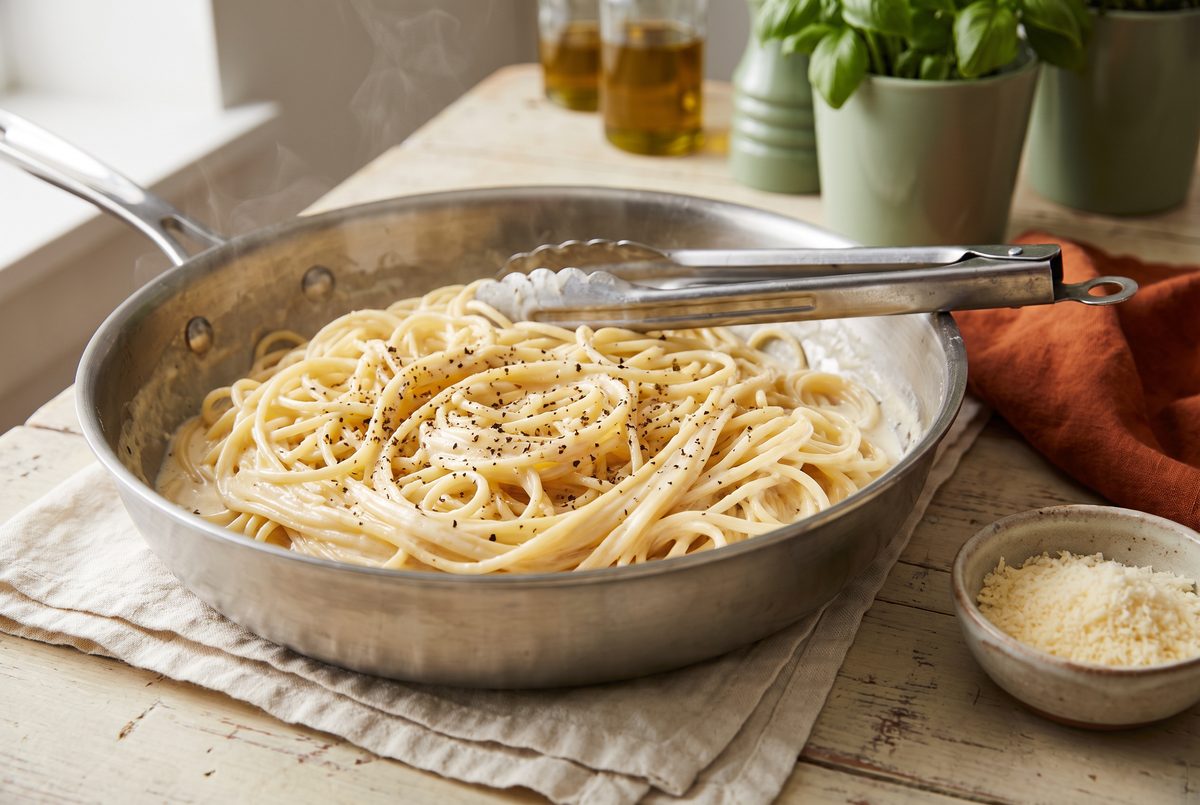
- Marry them off the heat. This is the whole dish. Drain the spaghetti 1 minute before the box says al dente, keeping a mug of water, and move it straight into the pepper pan with tongs. Toss for 30 seconds over the heat so it finishes cooking in the peppery water, then take the pan off the burner and wait another 30 seconds — if the pan is still hissing, the sauce will break. Now pour the crema over and toss hard and continuously for 30 to 60 seconds, lifting the pasta rather than stirring it. It will look thin, then suddenly cling. If it is too tight, a tablespoon of the reserved water at a time; if it is loose, keep tossing — the emulsion is mechanical and it comes together with movement, not with heat.
- Serve immediately, in warm bowls. Plate it the moment it comes together, in bowls you have warmed with a splash of the pasta water and dried — a cold bowl drops the temperature far enough that the sauce stiffens into a skin while you are carrying it to the table. A final crack of raw pepper on top, and nothing else: no olive oil, no parsley, no extra cheese. It does not wait. Four people sitting down already is part of the recipe.
Tips from our kitchen
- Buy the block, and buy Pecorino Romano DOP. The protected name means sheep's milk, brine salting and at least five months of ageing, and the sharpness is the whole point — a generic 'pecorino' or a Romano made from cow's milk is milder, waxier and emulsifies worse. The wedge keeps for months wrapped in paper in the fridge, so the cost per plate is small even though the cheese looks expensive at the counter.
- It is not strictly vegetarian, and the label on the site does not capture that. Pecorino Romano DOP is made with lamb rennet. If that matters to you, look for a rennet-free sheep's or cow's milk hard cheese; it will be milder and less salty, and the plate will need a pinch more salt in the water to compensate.
- If the sauce breaks, you can sometimes get it back. Take the pan right off the heat, add two tablespoons of cold water, and whisk the clumps against the side of the pan — cooling it below the clumping point occasionally re-disperses the protein. Success rate is maybe one in three. The more reliable rescue is to fish out the worst of the knots, grate 1 oz of fresh cheese into a bowl with warm water, and re-dress the pasta.
- Do not scale this past four servings in one pan. A pound of pasta is already the limit of what one wide pan can toss fast enough; at eight servings the pasta at the bottom cools and sticks while you are still lifting the top. Cook two batches back to back, or accept a worse plate.
- The night before a race, cook it early and keep the portion honest. 12 to 16 hours before the start beats a nine o'clock dinner for a seven o'clock gun, and 4 oz of dry pasta per person is a real portion rather than a heroic one. If you are loading over two days this is the plate for the first evening, with the gentler potato gnocchi with tomato and basil for the second.
Variations
- Pasta alla gricia, the next pasta along in the same Roman family: render 4 oz (115 g) of diced pancetta in the dry pan before the pepper and use its fat instead of the pepper water, keeping the pecorino crema exactly the same. Guanciale, cured pork jowl, is the correct cut and worth seeking out. Weighed out it comes to 676 calories, 30 g of protein, 87 g of carbohydrate and 22 g of fat per plate — twice the fat of the plain version, which makes it a training-day dinner rather than a pre-race one.
- Lower-salt version: drop the pecorino to 3½ oz (100 g) and boil the pasta in unsalted water — the cheese can season the whole plate on its own. 522 calories, 23 g of protein, 87 g of carbohydrate, 8.5 g of fat and 307 mg of sodium against 815 for the full version, which is the biggest change any swap on this page makes. The sauce is thinner and milder and you will miss the sharpness, but this is the version to cook if sodium is something you watch.
- Cacio e pepe con le zucchine, which Roman trattorias serve all summer: 2 medium zucchini (300 g) sliced into thin coins and softened in the pan with the pepper for 6–8 minutes before the pasta goes in. 574 calories, 27 g of protein, 90 g of carbohydrate, 11 g of fat and 4.8 g of fiber. The extra fiber is nothing on a normal day and a reason to skip it the night before a race.
- As a two-person loading plate, halve the other ingredients but keep the pasta at a pound and the pecorino at 1¼ oz: 174 g of carbohydrate and 52 g of protein split two ways, which is most of a day's loading target for a 60 kg runner in one sitting. Worth knowing the number; worth eating it early.
- With fresh tonnarelli, which is what you would be served in Rome, the technique is identical but the pasta cooks in 2–3 minutes and gives up much more starch, so start with half the pasta water in the crema. We have not weighed the nutrition for fresh egg pasta — the table on this page is for dry semolina spaghetti and does not transfer.
Storage & meal prep
This is a dish with no second day, and it is worth being blunt about that. The sauce is an emulsion held together by starch and movement; once it cools it sets into a paste that clings to the pasta, and reheating takes it straight past the clumping point so the cheese separates into grease and grit. If you do have a bowl left over, the least bad option is a wide pan over low heat with a tablespoon of water, moved constantly, taken off before it steams — or eat it cold, which is genuinely better than badly reheated and is how Roman kitchens deal with leftovers anyway. Nothing about it freezes. What does keep is the shopping: a wedge of Pecorino Romano wrapped in parchment and then loosely in foil lasts two to three months in the fridge, and whole peppercorns hold their oils for about a year in a closed jar, so the whole dinner is a pantry decision you can make weeks in advance.
Nutrition per serving
| Nutrient | Amount | % DV* |
|---|---|---|
| Calories | 561 kcal | 28% |
| Total fat | 11 g | 14% |
| Saturated fat | 6.3 g | 32% |
| Carbohydrates | 87 g | 32% |
| Fiber | 4.1 g | 15% |
| Sugars | 3.3 g | — |
| Protein | 26 g | 52% |
| Sodium | 815 mg | 35% |
*Percent Daily Values are based on a 2,000-calorie diet. Values are calculated from USDA FoodData Central and manufacturer data for the ingredients as listed; they are estimates, not lab analyses. Nutrition disclaimer.
Frequently asked questions
What is cacio e pepe?
A Roman pasta dressed with only three things: grated Pecorino Romano (cacio is the old southern word for cheese), cracked black pepper, and the starchy water the pasta was boiled in. There is no cream, no butter, no garlic and no oil in the classic version — the sauce is an emulsion of cheese fat and pasta starch, which is why it is thick without anything thickening it. It belongs to the same Roman family as gricia, amatriciana and carbonara, and it is the oldest and plainest of the four.
Why is my cacio e pepe clumpy?
Because the cheese met water or a pan that was too hot. Pecorino's proteins tighten and squeeze out their fat at around 150°F (65°C), and once they have knotted, nothing re-disperses them reliably. Three fixes, in order of how much they matter: whisk the cheese into pasta water that has stopped steaming (about 140°F / 60°C) in a bowl rather than in the pan; grate it to a fine powder rather than shreds; and take the pan off the burner for a full 30 seconds before the crema goes in. Also skip pre-grated cheese, whose anti-caking starch makes it behave worse, not better.
Is cacio e pepe healthy?
It depends entirely on what you are doing that week. Per plate this recipe is 561 calories with 87 g of carbohydrate, 26 g of protein and 11 g of fat — only 18% of the calories from fat, which is leaner than most pasta dishes and far leaner than the cream version. The number to watch is sodium: 815 mg per plate, roughly 35% of the 2,300 mg daily limit, about half from the cheese and half from the salt in the pasta water — and the table charges the whole teaspoon of pasta-water salt to the plate even though most of it is drained away, so what you eat is lower. As a fuel-up dinner before a long run that profile is close to ideal. As a weeknight default it is a lot of salt and not many vegetables, and the weight-loss recipes are a better everyday starting point.
Can I use Parmesan instead of Pecorino Romano?
You can, and it is no longer cacio e pepe — in Rome the distinction is taken seriously. Parmigiano Reggiano is cow's milk, nuttier and less sharp, and at about 1,600 mg of sodium per 100 g it is actually saltier than pecorino, so the plate does not get milder in the way people expect, only less sheepy. It also emulsifies slightly more forgivingly, which is why a 50/50 blend is the usual compromise for a first attempt. Pure Parmigiano on its own tastes like a good plate of cheese pasta rather than like this dish.
Is cacio e pepe good for carb loading before a race?
Yes, and specifically for the dinner one to two evenings before. It carries 87 g of carbohydrate with only 11 g of fat and 4.1 g of fiber, which is the combination the pre-event research asks for — high starch, low residue, nothing that sits in the stomach (de Oliveira, Burini & Jeukendrup, 2014). Eat it 12 to 16 hours before the start rather than late the night before, drink with it, and do not try the recipe for the first time that evening. The full day's arithmetic is in carb loading the Italian way.
Sources
- USDA FoodData Central — pasta, dry, enriched; cheese, pecorino romano; spices, pepper, black; salt, table
- European Commission — Pecorino Romano, Protected Designation of Origin (Council Regulation (EC) No 1107/96): sheep's milk, lamb rennet, brine salting, minimum five months' ageing
- Thomas, D.T., Erdman, K.A. & Burke, L.M. (2016). Position of the Academy of Nutrition and Dietetics, Dietitians of Canada, and the American College of Sports Medicine: Nutrition and Athletic Performance. Journal of the Academy of Nutrition and Dietetics
- Burke, L.M., Hawley, J.A., Wong, S.H.S. & Jeukendrup, A.E. (2011). Carbohydrates for training and competition. Journal of Sports Sciences
- de Oliveira, E.P., Burini, R.C. & Jeukendrup, A. (2014). Gastrointestinal complaints during exercise: prevalence, etiology, and nutritional recommendations. Sports Medicine
- Moore, D.R. et al. (2009). Ingested protein dose response of muscle and albumin protein synthesis after resistance exercise in young men. American Journal of Clinical Nutrition
You might also like
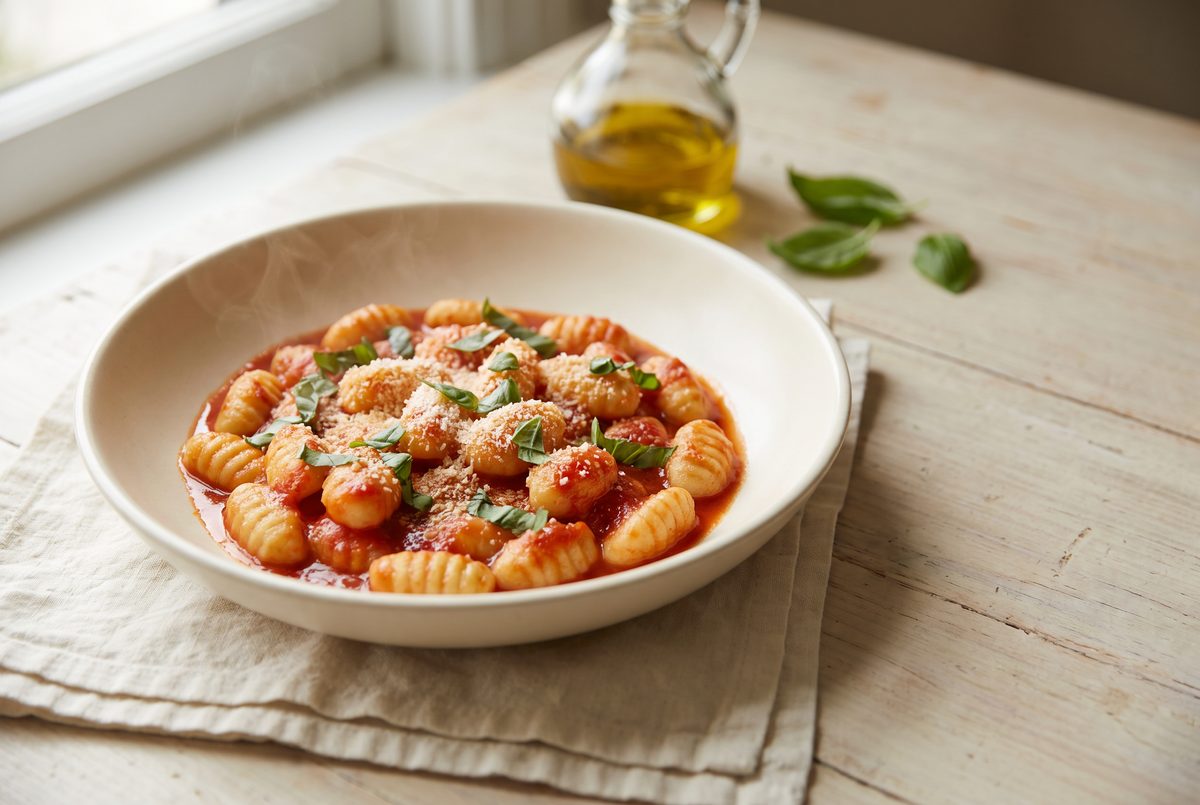
Potato Gnocchi with Tomato and Basil
Potato gnocchi made from baked (not boiled) russets, one egg and just enough flour to hold them together, dressed in a…
- 1 hr 45 min
- 526 kcal
- 17 g protein
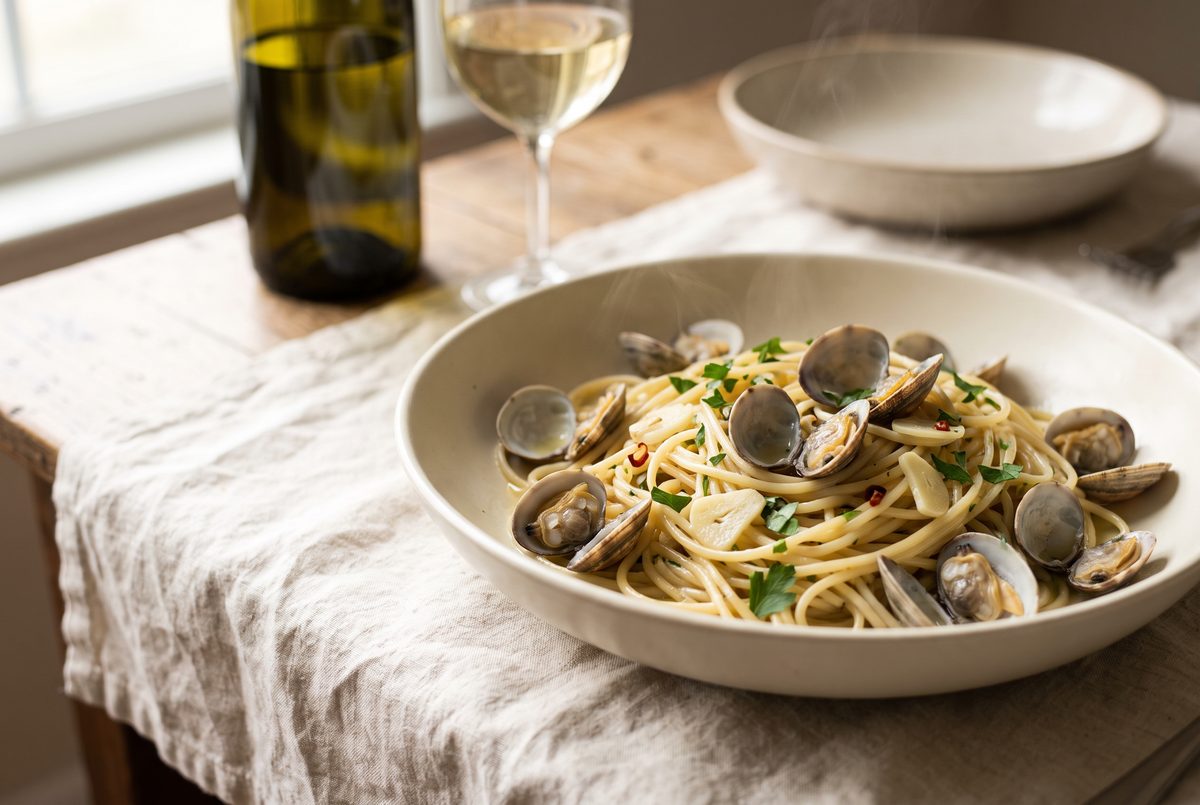
Spaghetti alle Vongole (Clams, Garlic, White Wine)
Spaghetti alle vongole is fresh clams opened in white wine and garlic, their liquor reduced and emulsified with the…
- 35 min
- 602 kcal
- 24 g protein
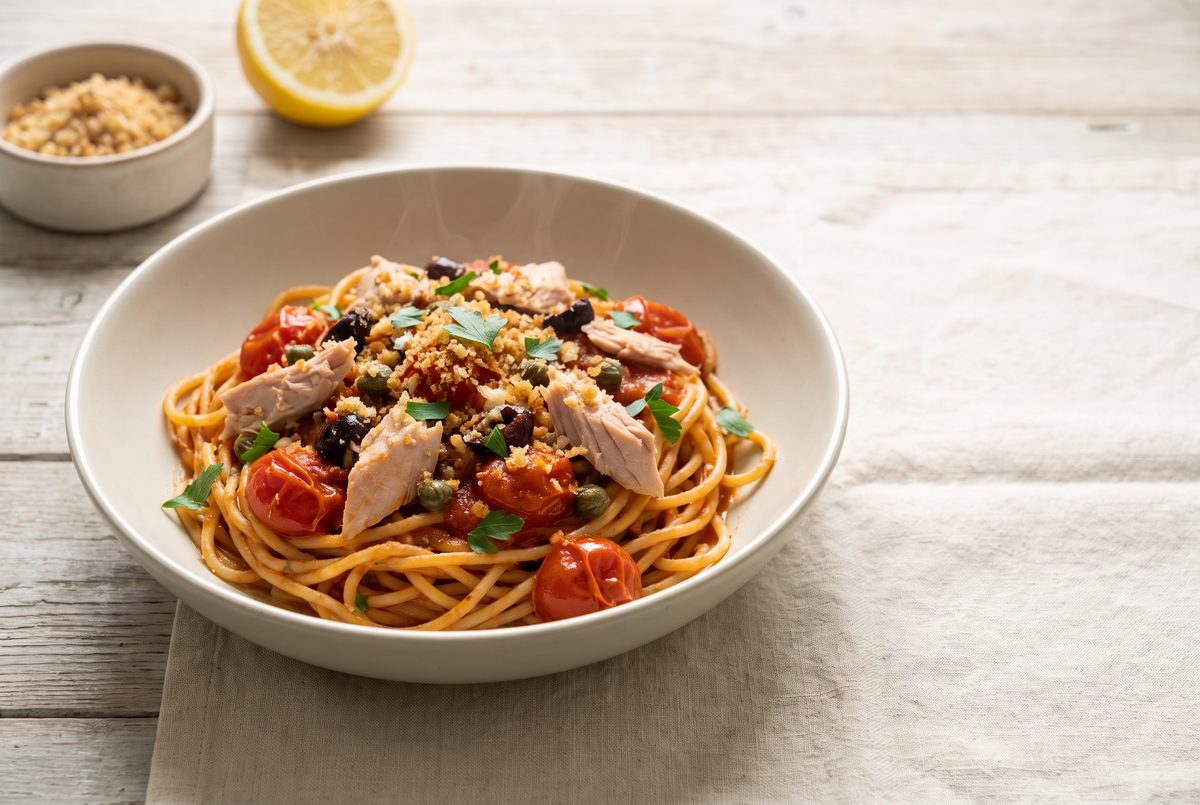
Sicilian Tuna Pasta (Pasta al Tonno)
Sicilian tuna pasta is a 25-minute pantry dinner: spaghetti tossed with olive-oil-packed tuna, burst cherry tomatoes…
- 25 min
- 662 kcal
- 31 g protein