Potato Gnocchi with Tomato and Basil
Baked potatoes, one egg and as little flour as the dough will take: 90 g of carbohydrate a plate, and they freeze raw for race week.
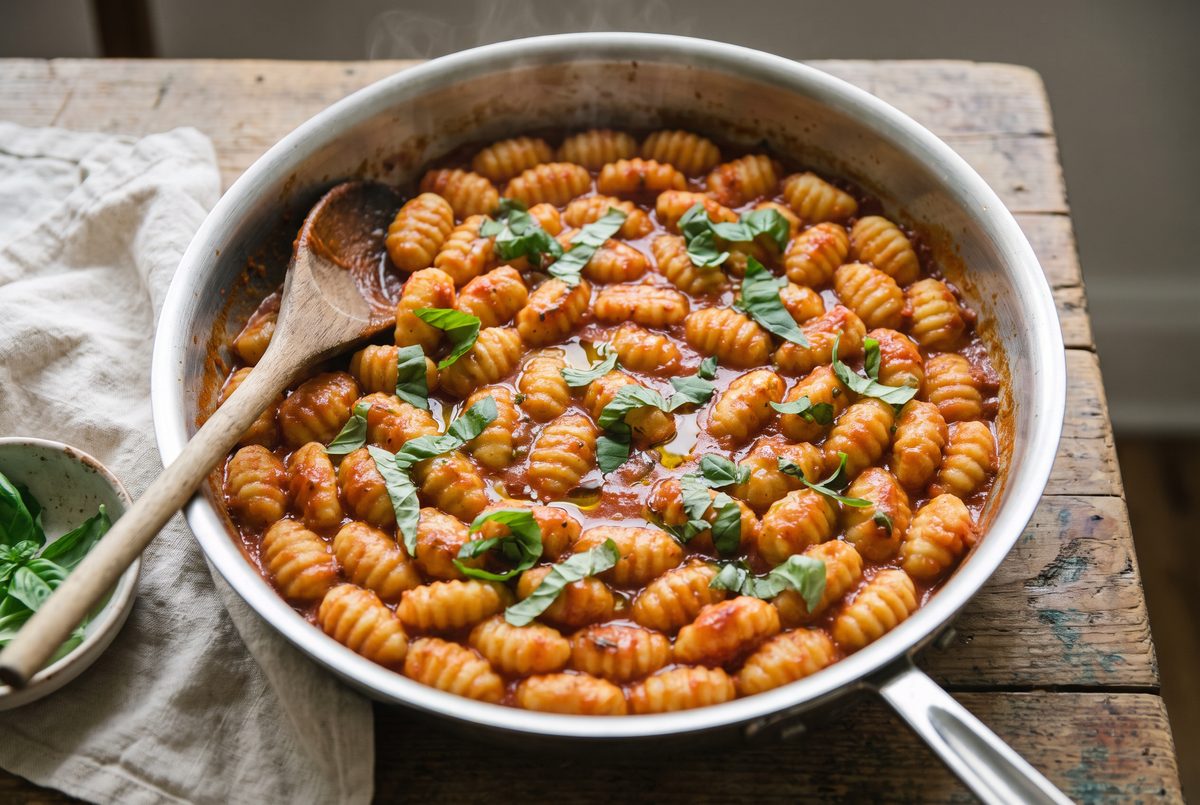
Potato gnocchi made from baked (not boiled) russets, one egg and just enough flour to hold them together, dressed in a simple tomato and basil sauce. Each plate carries about 90 g of carbohydrate and 526 calories with only 11 g of fat, which is the profile you want for the dinner before a long run — and the raw gnocchi freeze on a tray for a month.
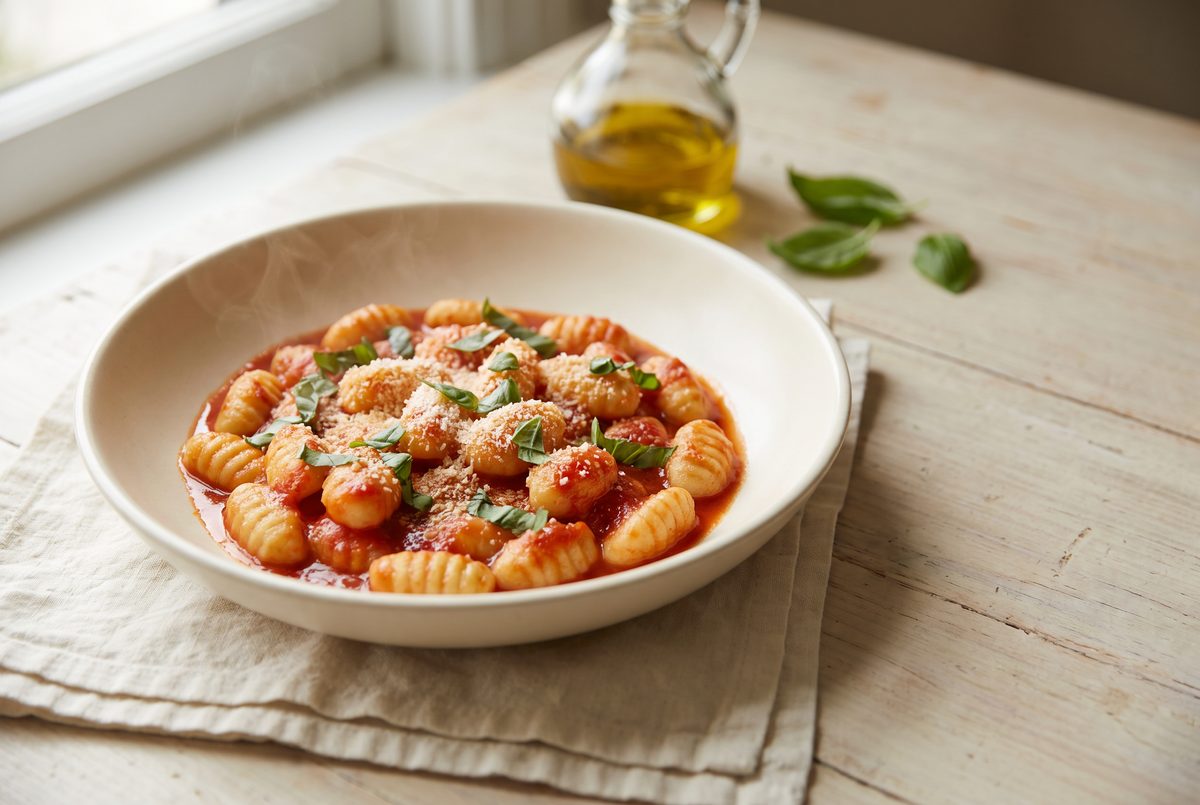
Almost everyone's first batch of gnocchi is a disappointment, and almost always for the same reason: the potatoes were boiled. A potato simmered in water absorbs some of it, the flesh comes out wet, and wet flesh needs flour to become a dough — so you add another handful, and another, and what comes out of the pot is dense and chewy instead of light. Bake the potatoes instead and the flesh is dry and floury; 2 lb of russets will take barely 1¾ cups of flour and the gnocchi almost dissolve against the roof of your mouth.
We make them in late September because this is when the long runs get long. Chicago is in early October, New York in early November, and the training plans that lead there are full of Saturdays that end with someone very hungry and a dinner that has to be mostly carbohydrate and mostly gentle. Gnocchi are exactly that, with one advantage pasta doesn't have: you can shape a double batch on a quiet Sunday, freeze them raw on sheet pans, and three weeks later have the night-before dinner ready in the time it takes the water to boil. If you want the reasoning behind the whole week of eating, it's in our guide to carb-loading the Italian way; the rest of the collection is under endurance recipes.
Why this recipe works for endurance
Carbohydrate is the point. For events lasting more than 90 minutes, sports-nutrition guidelines put carbohydrate intake at 8–12 g per kilogram of body weight per day in the 24–48 hours beforehand (Burke et al., 2011) — 550–800 g a day for a 150-lb athlete, which you only reach if the meals are built around starch. This plate contributes about 90 g. Fat is kept low at 11 g per serving, from olive oil and a modest amount of cheese: fat slows gastric emptying, and the last thing you want the night before is a meal still sitting in your stomach at the start line. Fiber is moderate — about 9 g, most of it from the potato, the flour and the tomato — which is high enough to be a normal dinner and low enough not to cause trouble the next morning. The protein is honest rather than high: 17 g a plate. That is enough for a pre-race dinner, where carbohydrate is the priority and protein only has to be present, but it is not a recovery meal; see the variations for the version that is.
Ingredients
4 plates (about 1½ lb / 700 g of gnocchi)
For the gnocchi
For the sauce
To serve
Instructions
- Bake the potatoes. Heat the oven to 400°F (200°C). Prick the potatoes a few times with a fork, set them straight on the rack, and bake 55–70 minutes, until a knife goes into the center with no resistance at all. Underbaked potatoes are the second reason gnocchi go wrong — give them the full time.
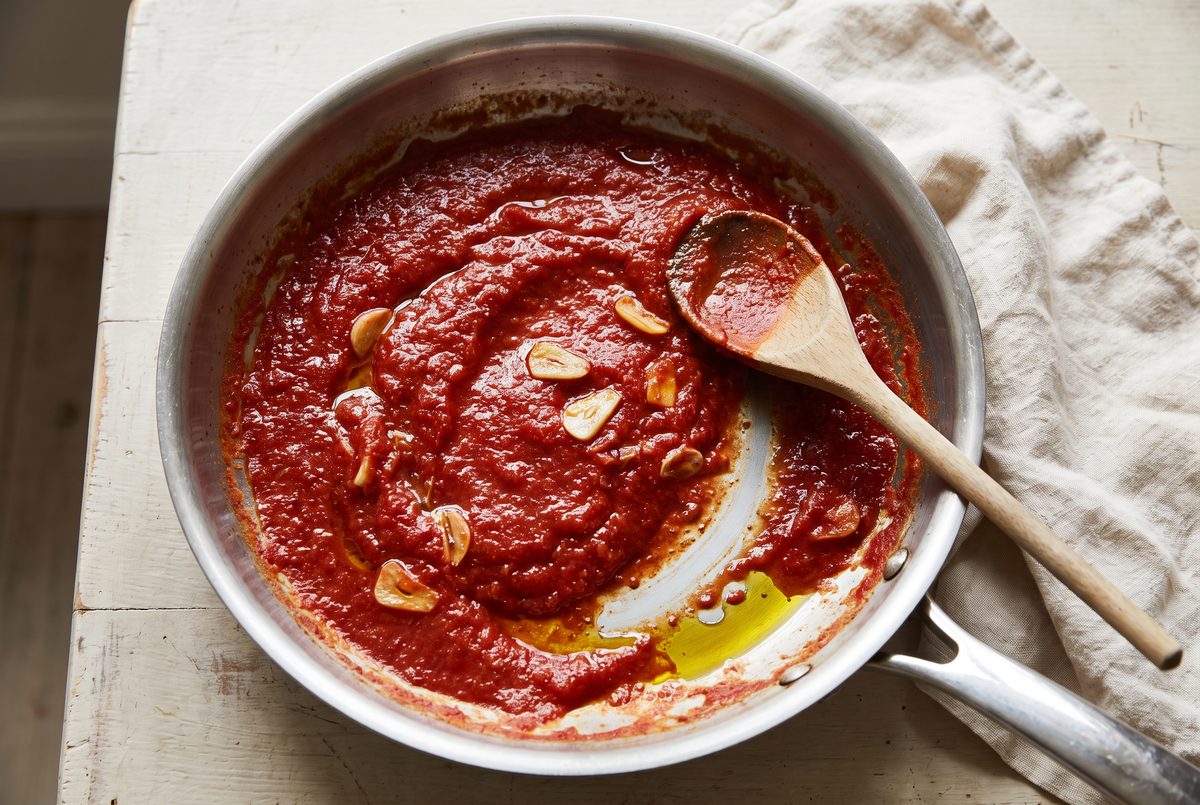
- Make the sauce while they bake. Warm the oil and garlic in a wide, low pan over medium-low heat until the garlic is pale gold and smells sweet, about 2 minutes — it should never brown. Add the passata and the salt, bring to a bare simmer, and cook 20–25 minutes, uncovered, until it has thickened enough that a spoon drawn through it leaves a track for a second. Keep it warm.
- Rice them hot. As soon as you can handle the potatoes, halve them and scoop the flesh into a potato ricer (or push it through the large holes of a box grater) directly onto a clean work surface. Hot potato gives up steam; cold potato turns gluey. Spread the riced flesh out in a loose layer and let it cool for 5 minutes.
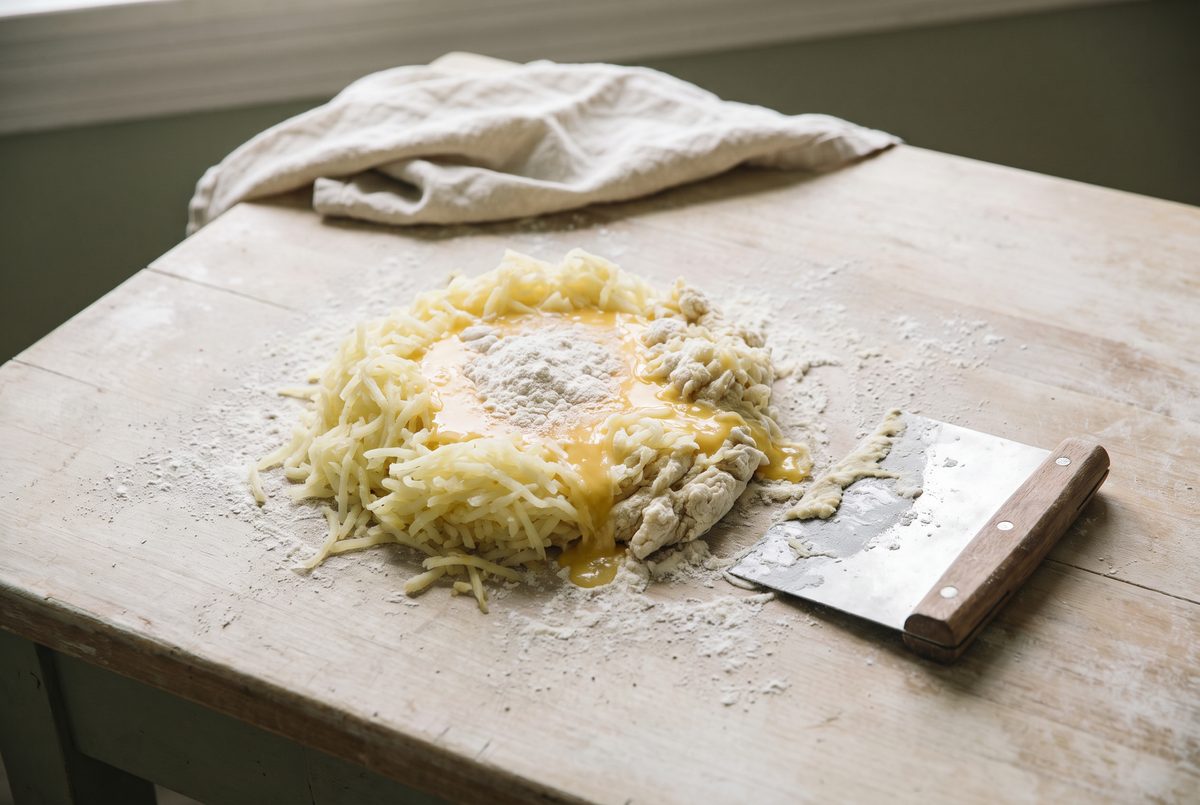
- Bring the dough together. Scatter the salt and nutmeg over the potato, pour the beaten egg across it, and sift about three-quarters of the flour on top. Bring it together with a bench scraper, cutting and pressing rather than kneading, until you have a soft dough that is just barely tacky — add the rest of the flour only if it still sticks to your work surface. It should take less than a minute. Boil one test gnocco now: if it falls apart, work in another tablespoon of flour; if it is firm and bouncy, you have already gone too far next time.
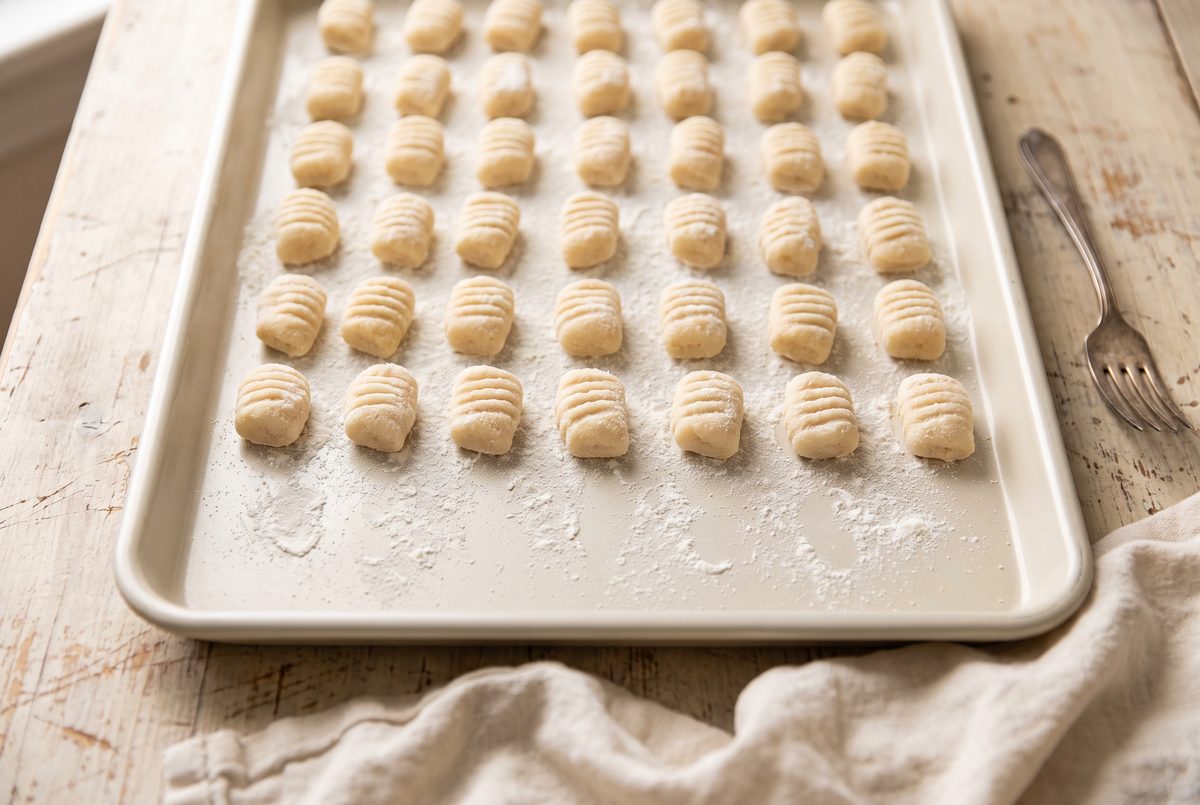
- Roll, cut, and ridge. Cut the dough into 6 pieces. Roll each into a rope about ¾ inch (2 cm) thick on a lightly floured surface, then cut into ¾-inch pillows. Leave them as they are, or roll each one down the back of a fork to make ridges that hold sauce. Lay them out on a floured sheet pan in a single layer, not touching.
- Boil in batches. Bring a wide pot of well-salted water to a gentle boil — a hard rolling boil knocks them apart. Drop in a third of the gnocchi, and 20–30 seconds after they bob to the surface, lift them out with a spider straight into the warm sauce. Repeat with the rest. Total time in the water is about 90 seconds a batch.
- Dress and serve. Add a splash of the cooking water to the pan, turn the gnocchi gently in the sauce over low heat for 30 seconds so every one is coated, then take it off the heat. Tear in the basil, add half the Parmigiano, and serve immediately with the rest of the cheese at the table.
Tips from our kitchen
- The flour quantity is a ceiling, not a target. Potatoes vary in moisture from bag to bag; the dough tells you when it has had enough long before the measuring cup does.
- Don't rinse or cool the potatoes. Every minute the riced flesh sits in a heap it steams itself damp. Spread it out.
- A gentle boil, a wide pot. Gnocchi are fragile for the first few seconds. Rolling water tears them and crowding makes them stick to each other.
- Race-week note: make and freeze them 1–3 weeks out, and keep the sauce plain. The night before an event is not the evening to try chili flakes, sausage or a cream sauce for the first time.
Variations
- Recovery version (about 27 g of protein): stir 1 cup (250 g) of whole-milk ricotta into the hot sauce off the heat until it turns pale and creamy, and double the Parmigiano. Carbohydrate stays where it is; the plate becomes a post-long-run meal instead of a pre-race one.
- Gnocchi al pomodoro e mozzarella: transfer the dressed gnocchi to a ceramic baking dish, scatter 6 oz (170 g) of torn low-moisture mozzarella over the top, and broil 4 minutes until blistered.
- Butter and sage, the northern way: skip the tomato entirely, melt 3 tbsp butter with 10 sage leaves until it smells nutty, and toss. Higher in fat — a training-day dinner rather than a pre-race one.
- With a vegetable side: a spoonful of Sicilian caponata alongside adds 249 calories and turns a single-dish dinner into a fuller plate.
- Gluten-free: this dough does not survive a 1:1 flour swap. Our butternut squash risotto is naturally gluten-free and carries 105 g of carbohydrate.
Storage & meal prep
Raw gnocchi freeze better than they refrigerate. Spread them on a floured sheet pan, freeze until solid (about 2 hours), then bag them for up to 1 month and boil from frozen — they take about 3 minutes and need no thawing. In the fridge they last only a few hours before they soften and stick, so if you are making them the same day, leave them on the floured pan at room temperature and cook within 2 hours. Cooked gnocchi in sauce keep 2 days in the fridge; reheat gently in a pan with a splash of water rather than a microwave, which makes them rubbery. The sauce alone freezes for 3 months.
Nutrition per serving
| Nutrient | Amount | % DV* |
|---|---|---|
| Calories | 526 kcal | 26% |
| Total fat | 11 g | 14% |
| Saturated fat | 2.7 g | 14% |
| Carbohydrates | 90 g | 33% |
| Fiber | 8.7 g | 31% |
| Sugars | 8.9 g | — |
| Protein | 17 g | 34% |
| Sodium | 913 mg | 40% |
*Percent Daily Values are based on a 2,000-calorie diet. Values are calculated from USDA FoodData Central and manufacturer data for the ingredients as listed; they are estimates, not lab analyses. Nutrition disclaimer.
Frequently asked questions
Are potato gnocchi good for carb loading?
Yes. A plate of these carries about 90 g of carbohydrate with only 11 g of fat, which matches what sports-nutrition guidelines ask of a pre-event meal: plenty of carbohydrate, little fat, moderate fiber. Eat them 12–16 hours before a long run or ride. The one caveat is protein — 17 g a plate is modest, so pair them with a glass of milk or a small piece of cheese if that meal is also your main protein of the day.
Why are my gnocchi gummy or tough?
Almost always too much flour, and the flour is usually the symptom rather than the cause. Boiled potatoes and underbaked potatoes both come out wet, and wet potato needs flour to hold together. Bake the potatoes until a knife meets no resistance, rice them while they are hot, and add flour by feel — this batch uses about 1¾ cups (230 g) for 2 lb of potatoes, and some bags need less. The second cause is kneading: press and cut the dough together, never work it like bread.
Can I make gnocchi ahead of time?
Freeze them, don't refrigerate them. Raw gnocchi hold for a month on a floured sheet pan in the freezer and go straight into boiling water frozen, taking about 3 minutes. In the fridge they go soft and sticky within a few hours. This is the main practical reason we put them in the endurance collection: the work happens on a rest day and the race-week dinner takes ten minutes.
Do I need a potato ricer?
It gives the lightest result, but the large holes of a box grater or a food mill work nearly as well. Do not use a food processor or a stand mixer — both overwork the starch and produce a paste that no amount of care will turn back into light gnocchi.
How many calories are in a plate of gnocchi with tomato sauce?
This recipe comes to 526 calories per serving for four generous plates, with 90 g of carbohydrate, 17 g of protein and 11 g of fat. Restaurant gnocchi are usually higher, because most kitchens finish them with butter or cream; the tomato-and-basil dressing here is where the difference sits.
Sources
- USDA FoodData Central — potatoes (russet, flesh and skin, raw), wheat flour (white, all-purpose, enriched), tomato purée
- Burke, L. M. et al. (2011). Carbohydrates for training and competition. Journal of Sports Sciences, 29(sup1) — carbohydrate loading at 8–12 g/kg/day
- Thomas, D. T., Erdman, K. A., Burke, L. M. (2016). Position of the Academy of Nutrition and Dietetics, Dietitians of Canada, and the American College of Sports Medicine: Nutrition and Athletic Performance. Journal of the Academy of Nutrition and Dietetics, 116(3)
You might also like
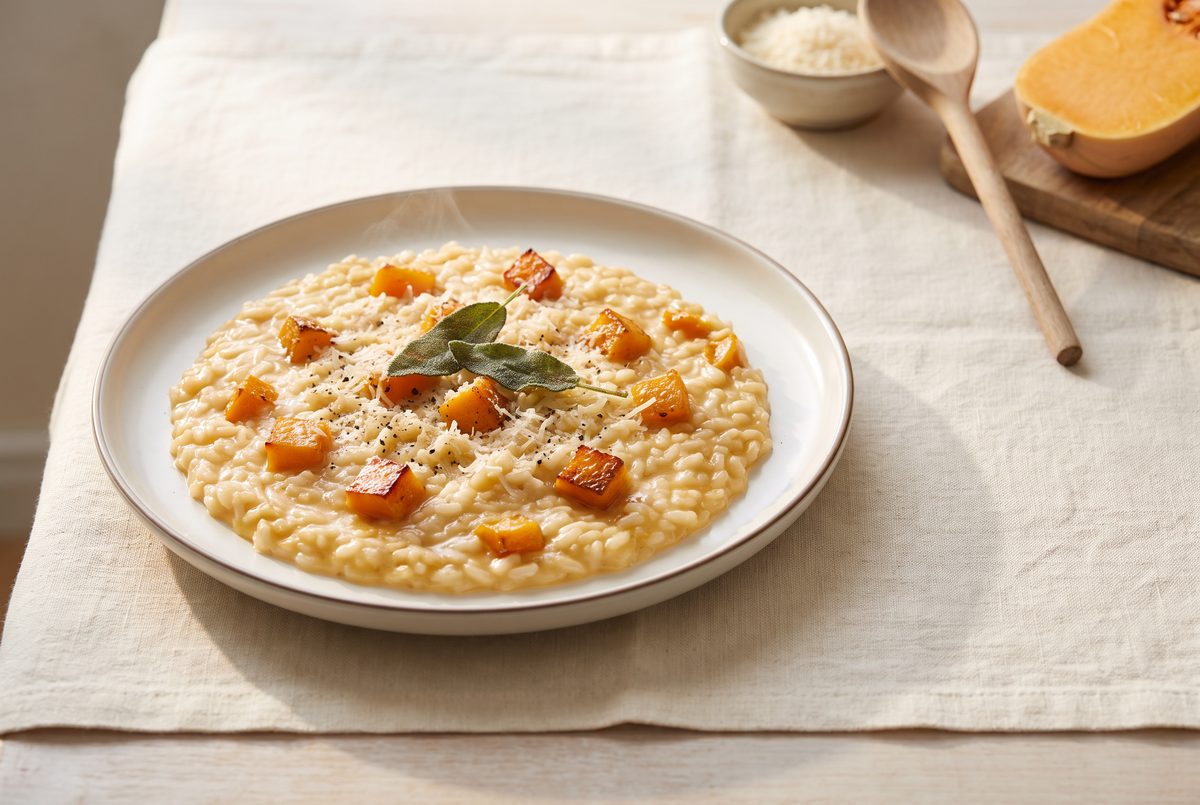
Butternut Squash Risotto (Risotto alla Zucca)
Risotto alla zucca is the autumn risotto of Lombardy and the Veneto: arborio rice cooked slowly in broth with…
- 45 min
- 622 kcal
- 14 g protein
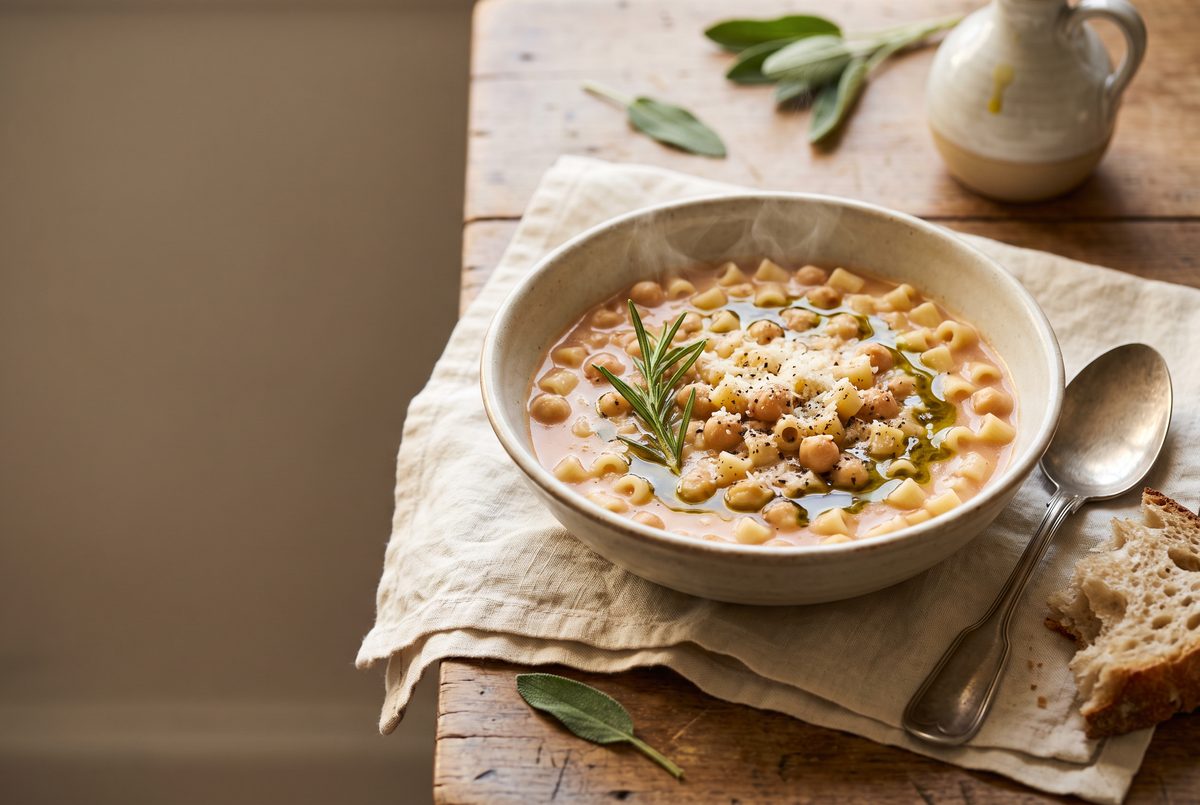
Pasta e Ceci (Roman Pasta with Chickpeas)
Pasta e ceci is a Roman one-pot dish of short pasta simmered with chickpeas, rosemary, garlic and a spoon of tomato…
- 35 min
- 611 kcal
- 23 g protein
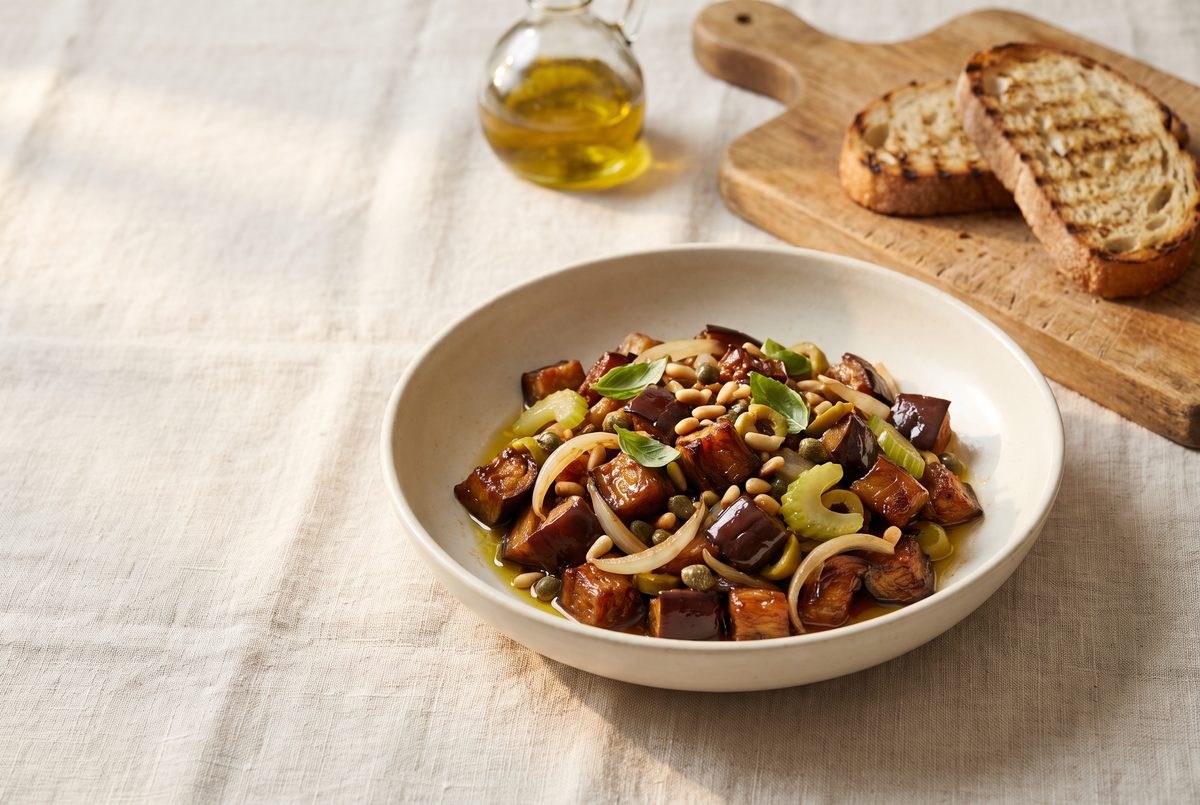
Sicilian Caponata: Sweet-and-Sour Eggplant, Roasted Not Fried
Caponata is the Sicilian dish of eggplant, celery, green olives and capers cooked down in an agrodolce — a…
- 1 hr 10 min
- 249 kcal
- 3 g protein