Pan-Seared Salmon with Salmoriglio
Salmoriglio is the Sicilian sauce for fish off the grill — olive oil, lemon, dried oregano and hot water whisked until it turns pale and thick — and here it goes over salmon seared skin-side down until the skin crackles, on a bowl of shaved fennel and orange that carries most of the fiber on the plate.
Salmoriglio is the Sicilian sauce for grilled fish — olive oil whisked with lemon juice, hot water and dried oregano until it turns opaque — and it is the best thing that can happen to a salmon fillet seared skin-side down in a hot pan. One fillet over a bowl of shaved fennel and orange is 497 calories with 31 g of protein and 7.1 g of fiber, on the table in 30 minutes.
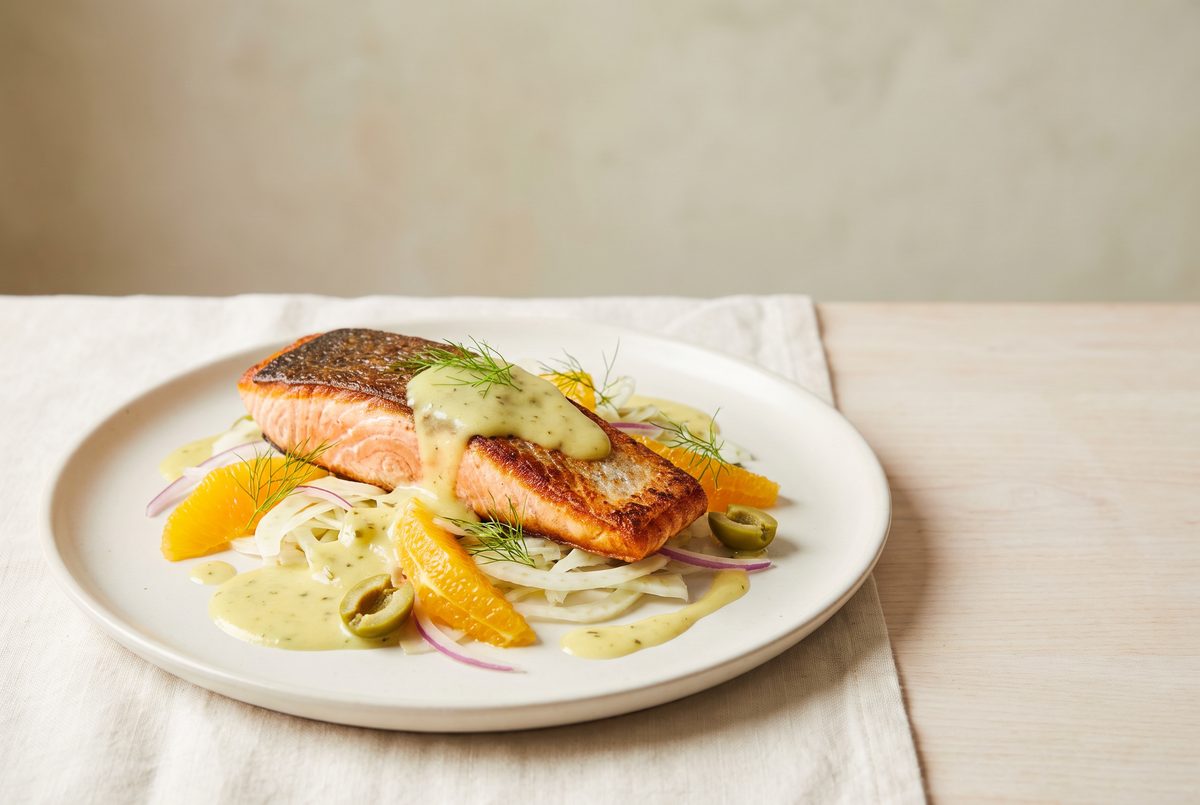
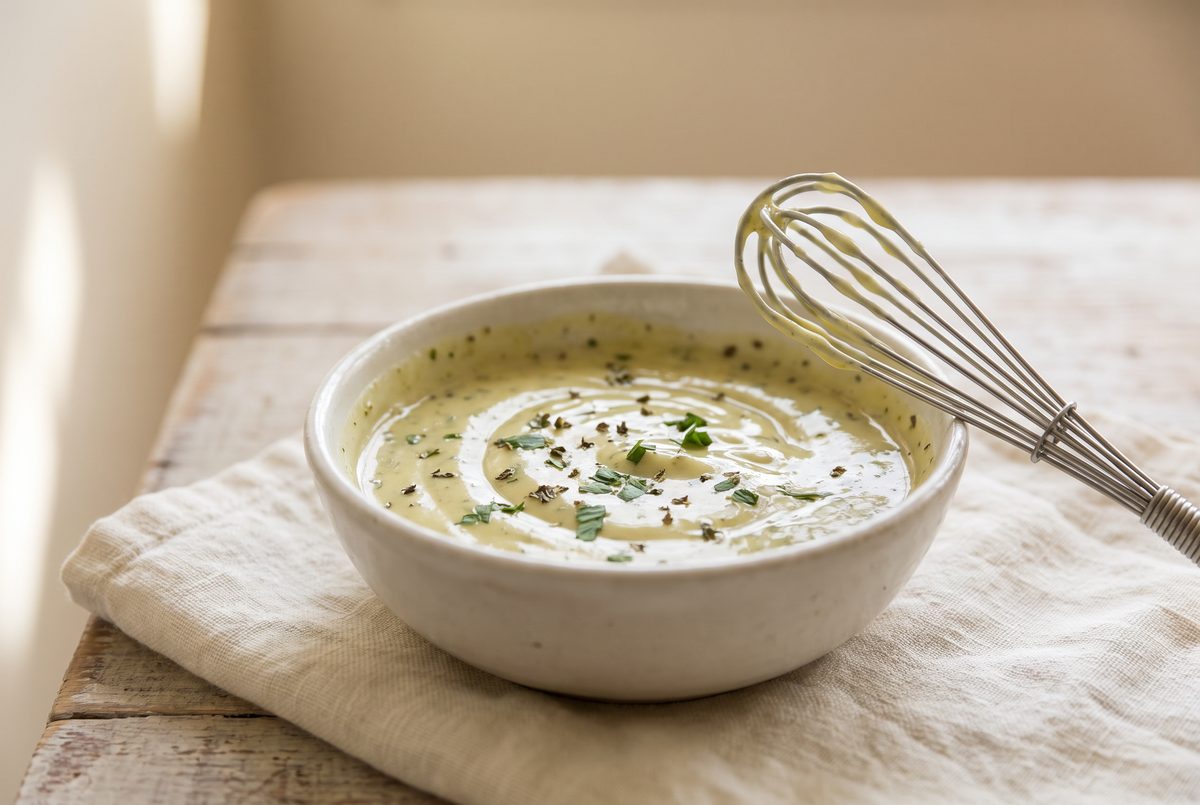
The first time I saw salmoriglio made properly, the bowl was sitting in a wider bowl of hot water and the cook was whisking it with a sprig of oregano instead of a fork. Neither detail was for show. Salmoriglio takes its name from salamoia, brine, and it is an emulsion — olive oil, lemon juice, hot water, dried oregano — which means warmth is structural: cold oil and cold lemon juice will have separated by the time the plates reach the table. Whisked warm, it goes from two transparent liquids to one opaque, pale yellow-green sauce that falls off the whisk in a sheet, tastes aggressively of oregano, and is spooned over fish straight off the coals from Messina down to Reggio Calabria.
The fish under it there is pesce spada — swordfish, cut into steaks the thickness of a finger and grilled hard. Salmon is not Sicilian and no amount of writing makes it so. But salmoriglio was built for an oily fish: the lemon is there to cut through fat, the oregano to stand up to it, and neither has any work to do on a lean white fillet. Salmon is the oily fish an American fish counter actually sells, every week of the year, at a price that is not a special occasion — and the pairing works for exactly the reason the original does. What this recipe borrows from Sicily is the sauce and the logic, not a provenance it doesn't have.
Salmon is also not the lean choice, and pretending otherwise would be the easiest way to get the arithmetic wrong: 208 calories per 100 g raw against 82 for cod. What earns it a place in the weight-loss file is the rest of the plate. Two large fennel bulbs shaved thin and two oranges cut into segments — 600 g of vegetable and 280 g of fruit for four people — go underneath, and they are where 4.7 of the plate's 7.1 g of fiber comes from. The result is 497 calories for a dinner with a crisp-skinned fillet on it, which is the kind of trade our guide on how to eat Italian and lose weight is entirely about.
Why this recipe works for weight loss
The protein is the part that does the work in a deficit. One plate carries 31 g, and 29 of those are the fillet: 140 g of raw salmon at 20.4 g of protein per 100 g. Protein is the macronutrient that holds appetite down and protects lean mass while calories are restricted, which is the conclusion of the review literature on the subject (Leidy et al., 2015) and the reason every main in this collection is built to clear 20 g. Twenty-nine grams from a single fillet means the plate needs nothing behind it, and the fennel is not there to fill a gap in the protein — it is there for volume.
Salmon is the simplest way to hit the seafood number nobody hits. The Dietary Guidelines for Americans 2020–2025 ask adults for at least 8 oz of seafood a week; most Americans eat about half that. One serving of this recipe is 5 oz raw, so two dinners a week covers it. The American Heart Association's seafood advisory recommends one to two seafood meals a week specifically for the long-chain omega-3 fats, which oily fish carries and lean fish largely does not (Rimm et al., 2018), and salmon sits in the "Best Choices" group of the FDA and EPA's Advice About Eating Fish — the lowest-mercury category, safe at two to three servings a week including in pregnancy. This site does not have omega-3 figures in its nutrition table, so you will not find a number for them here: the claim is the food, not a milligram count.
Where the fiber comes from, and why a diet plate needs it. 7.1 g a serving, and the breakdown is the useful part: 4.7 g is fennel, 1.7 g the oranges, and the last fraction the olives, onion and oregano. The Dietary Guidelines set fiber at 14 g per 1,000 calories — 28 g a day on a 2,000-calorie diet — so one plate is a quarter of the day. The practical effect is chewing time and bulk: 150 g of shaved fennel per person takes real minutes to eat, and a plate that takes minutes to eat is a plate you finish feeling fed. The same principle, taken to its extreme, is the classic minestrone at 247 calories.
The honest comparison with cod, in both directions. Per 100 g raw, salmon is 208 calories with 20.4 g of protein; cod is 82 calories with 17.8 g. Expressed as protein per 100 calories that is 9.8 against 21.7, and cod wins by a distance — swap cod into this exact recipe and the plate drops from 497 calories to 321 with 28 g of protein, which is the version to cook if the only number you care about is the calorie one. What the 176 calories buy is fat: the satiety of a fillet that does not need a sauce to be worth eating, the omega-3s a lean fillet cannot give you, and skin that crisps. Both answers are defensible, and our baked cod with chickpeas and tomatoes is the lean one written out in full.
The sodium, broken down, because 644 mg looks like a lot until you see it. 388 mg is the ¾ teaspoon of kosher salt that goes on the fish, 93 mg the green olives, 83 mg the salmon's own, 78 mg the fennel's. Nothing else is seasoned — the salmoriglio contains no salt at all, which surprises people, and does not need any once it is sitting on a fillet that was salted properly and olives that were cured. Against the 2,300 mg daily ceiling in the Dietary Guidelines, one plate is 28% of the day.
Ingredients
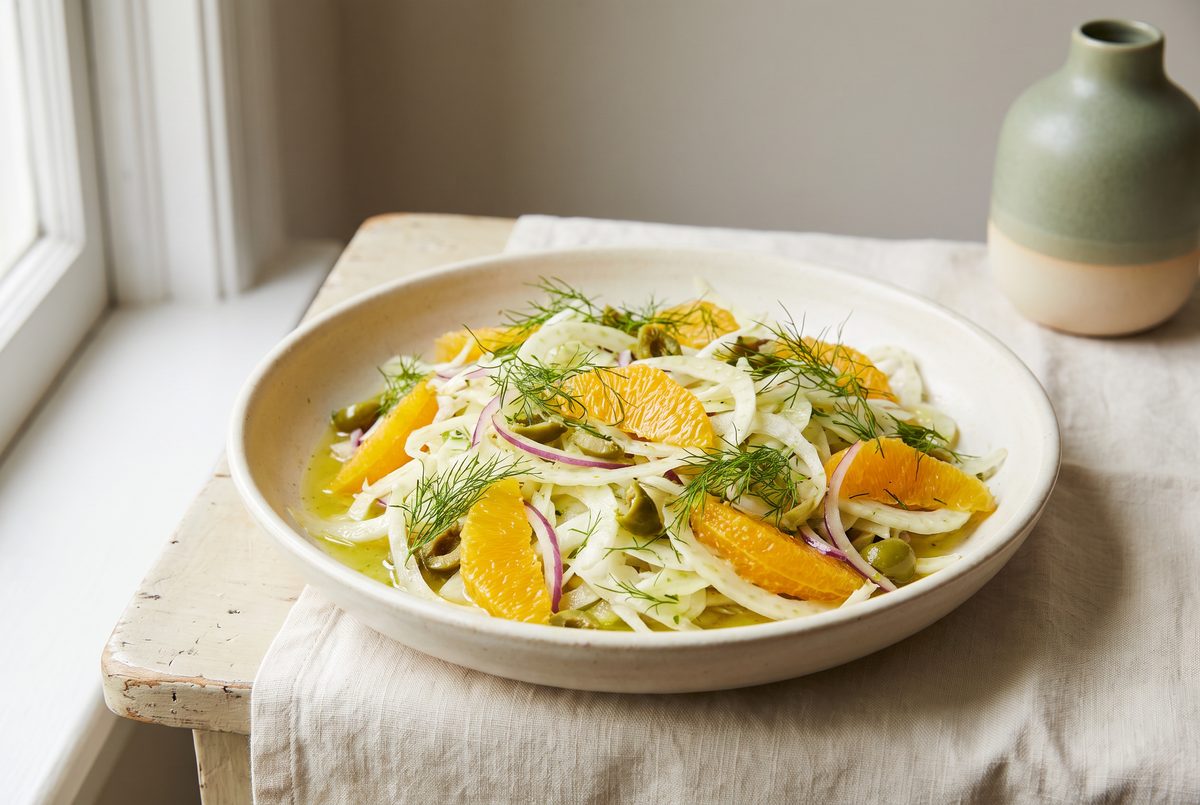
Four seared fillets, a small bowl of salmoriglio and a large bowl of fennel-and-orange salad, 4 plates
The salmon
The salmoriglio
The fennel and orange salad
Instructions
- Build the salad dry, and leave it undressed. Cut the stalks off the fennel and keep a handful of the feathery fronds. Halve each bulb through the root, cut out the solid triangle of core, and shave the halves as thin as you can manage — a mandoline on its finest setting, or your sharpest knife and some patience. You are aiming for pieces you can see light through. Peel the oranges down to the flesh with a knife rather than your thumbs, cutting away the white pith, then slice them into rounds or cut the segments free, doing it over the bowl so the juice lands in the salad. Add the rinsed red onion and the torn olives. Then stop: salt and acid wilt shaved fennel in about ten minutes, and crunch is the whole reason it is on the plate.
- Whisk the salmoriglio — hot water first, oil last. Crumble the 1½ teaspoons of dried oregano between your palms into a small bowl, add the grated garlic and the 2 tablespoons of very hot water, and leave it two minutes: hot water opens dried oregano in a way cold liquid never does. Whisk in the 2 tablespoons of lemon juice, then add the 3 tablespoons of extra-virgin olive oil in a thin trickle, whisking the whole time. It takes about 40 seconds and the change is visible — two clear liquids become one opaque, pale yellow-green sauce that coats the back of a spoon. Stand the bowl in a wider bowl of hot tap water while you whisk and it holds together longer. Stir in the parsley and set it aside. No salt goes in it.
- Dry the fillets, salt them, and let them sit 10 minutes. Blot the salmon on both sides with paper towel and keep going on the skin until the towel comes away dry — wet skin steams, and skin that has steamed will not crisp afterwards no matter how hot the pan gets. Season with the whole ¾ teaspoon of salt, most of it on the flesh and a pinch on the skin, and the black pepper on the flesh side only. Leave them on the board for 10 minutes while you heat the pan. Fillets that go in fridge-cold cook unevenly: the outside is done before the middle has warmed.
- Skin-side down, 5 to 6 minutes, and don't touch them. Heat the 2 teaspoons of oil in a 12-inch stainless-steel or dark enameled pan over medium-high until it shimmers and runs like water. Lay the fillets in skin-side down, working away from you, in two batches if they do not fit with a finger's width between them. Press each one flat with the back of a spatula for about 10 seconds — salmon skin contracts as it hits the heat and lifts the center of the fillet off the pan if you let it. Then leave them alone for 5 to 6 minutes. The clock is on the side of the fillet, not on the timer: the flesh turns from translucent orange to opaque pink from the bottom up, and when that line has climbed about three-quarters of the way, it is time to turn. The skin releases on its own when it is crisp. If it is gripping the pan, it is not ready — forcing it is how you end up serving the skin to the pan and the fillet naked.
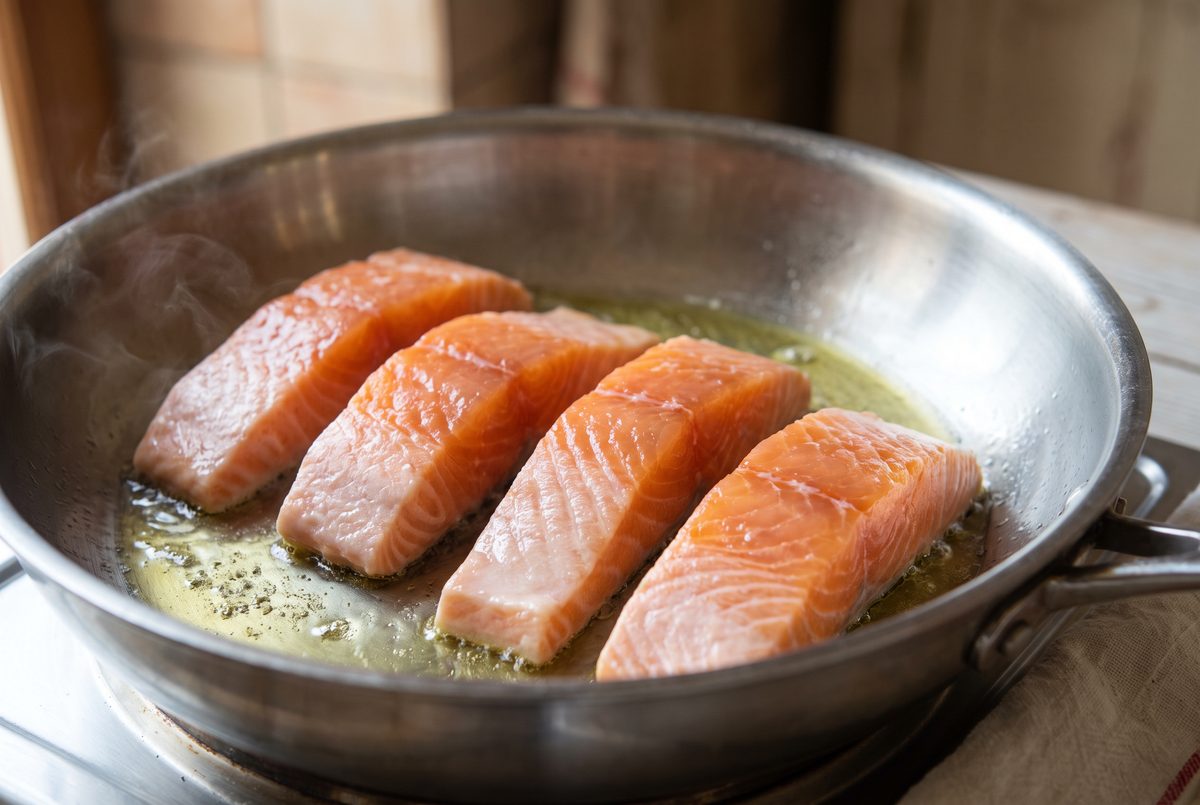
- Turn for 60 to 90 seconds, then off the heat and rest. Turn the fillets and give them 60 to 90 seconds on the flesh side — that is all they need, because four-fifths of the cooking happened on the skin. At the thickest point, 125 to 130 °F is the temperature at which salmon is still faintly translucent in the middle and flakes in big sheets, which is what most people mean by good salmon; the FDA's recommendation for fish is 145 °F, and a fillet pulled at 130 will coast up about 5 degrees off the heat. Without a thermometer: press the top: it should flake apart under gentle pressure, and the moment you see white beads of albumin squeezing out along the flakes you have gone past it. Rest the fillets 3 minutes on a warm plate, skin up so it stays crisp.
- Dress the salad, build the plate, and keep the sauce off the skin. Pour about half the salmoriglio over the fennel and oranges and toss it well — it needs more tossing than a vinaigrette, because the sauce is thick. Divide the salad among four plates, set a fillet on each skin-side up, and spoon the rest of the sauce over the flesh and around the plate but not over the skin, which goes soft the second anything wet touches it. Scatter the fennel fronds on top. Serve straight away: salmoriglio begins separating again on the plate after about ten minutes, which is normal and not a fault — it is an emulsion of oil and lemon, not mayonnaise.
Tips from our kitchen
- Buy center-cut, and buy it frozen if the frozen looks better. You want even thickness, 1 to 1¼ inches, so the four fillets finish at the same minute; a tail-end piece is done two minutes before a shoulder piece and there is no way to cook both correctly in one pan. Skin on and scaled, always — in this recipe the skin is a texture, not packaging. Frozen-at-sea salmon thawed overnight in the fridge is often better than the "fresh" tray, which is the same fish thawed by someone else on a day you don't know about.
- About the skin and the nutrition table. The 5 oz is weighed with the skin on, and the USDA figure the table is built from is for flesh. So the real plate is slightly fattier than the 32 g it says — a gram or two a serving — and the table assumes you eat the whole fillet, skin included. You should: it is the best part, and it is the reason to cook salmon in a pan rather than an oven.
- Dried oregano, not fresh, and not the jar you have had for three years. Salmoriglio is one of the few Italian sauces where dried is correct rather than a compromise — fresh oregano is grassy and disappears under the lemon, dried is resinous and holds. Rub it between your palms on the way into the bowl to break the leaves and wake the oils. If yours smells of hay rather than of anything, it is past it: dried herbs are finished at about a year, and this sauce has nowhere to hide a dead one.
- If the sauce splits, it is a water problem. Whisk in a teaspoon more hot water and keep going; nine times out of ten it comes back together. The two reliable fixes are temperature and order — the bowl standing in hot water, and the oil going in last and slowly. If it splits again on the plate, ignore it. That is what salmoriglio does, and in Sicily nobody re-whisks it.
- The salad can be made ahead, but not dressed ahead. Shave the fennel up to a day early and keep it in a bowl of cold water in the fridge, where it stays rigid; drain it and dry it in a towel before it meets the sauce. Oranges can be cut a few hours ahead. Dressed, the whole thing is good for about an hour and limp after two.
Variations
- On the grill, which is where the sauce comes from. Oil the grates, cook the fillets skin-side down over direct medium-high heat for 5 to 6 minutes without moving them, then 2 minutes on the flesh side. The numbers do not change — the pan oil is the only thing you lose. If you can find swordfish steaks, that is the original: pesce spada cut an inch thick, 3 to 4 minutes a side, salmoriglio spooned over the moment it comes off. We have no nutrition figures for swordfish on this site, so the table above does not apply to that version.
- With cod or halibut: 321 calories and 28 g of protein. Same recipe, same sauce, same salad, lean white fish instead of oily — 176 calories lower a plate, and the leanest version of this dinner. Cod is thinner and more fragile, so cut the first side to 3 to 4 minutes and skip the press. If you want the lean fillet written out properly rather than swapped in, the baked cod with chickpeas and tomatoes is built around it.
- 8 oz fillets instead of 5 oz: 678 calories and 49 g of protein. The same plate portioned for someone training rather than cutting, which puts it in the range the muscle-gain recipes are built to and clears a full feeding on its own — the arithmetic is in our guide on how much protein you need to build muscle. Thicker fillets want 7 minutes on the skin, not 5.
- In summer, zucchini and cherry tomatoes instead of fennel and orange: 452 calories. Shave 1¼ lb (600 g) of zucchini into ribbons, halve a pint of cherry tomatoes, keep the onion and olives, dress with the same sauce. It is lower in calories and genuinely good in August — but be clear about what you are giving up: fiber falls from 7.1 g to 2.8 g a serving, because the fennel was doing that work almost single-handedly.
- With roasted potatoes, as a bigger dinner: 615 calories and 42 g of carbohydrate. A pound (450 g) of potatoes in 1 tablespoon of oil, 425 °F for 30 minutes, started before anything else. That is a good Sunday plate but no longer a weight-loss one, and 42 g of carbohydrate is still not a carb-load — for that, the endurance recipes and the carb-loading guide are the right place.
Storage & meal prep
This is the rare seared fish dish whose leftovers are worth planning for, and the trick is to eat them cold. Cooked salmon keeps 2 days in the fridge and flakes beautifully over the rest of the salad the next day at lunch, dressed with whatever salmoriglio is left — the texture that reheating destroys does not matter when the fish is cold and broken into flakes. If you must have it warm, a 275 °F oven for 8 to 10 minutes is the only method that does not turn it to chalk; the microwave on full power drives the fat out and finishes the skin for good. The salmoriglio keeps 3 days covered in the fridge and will separate solid — take it out 20 minutes ahead, add a teaspoon of hot water and whisk it back. Do not freeze it; the emulsion does not survive and neither does the oregano. The dressed salad does not keep at all beyond a couple of hours, which is why the recipe dresses it at the table rather than ahead: if you are cooking for one or two, dress only what you are eating and leave the rest of the fennel dry in the fridge.
Nutrition per serving
| Nutrient | Amount | % DV* |
|---|---|---|
| Calories | 497 kcal | 25% |
| Total fat | 32 g | 41% |
| Saturated fat | 6.2 g | 31% |
| Carbohydrates | 22 g | 8% |
| Fiber | 7.1 g | 25% |
| Sugars | 13 g | — |
| Protein | 31 g | 62% |
| Sodium | 644 mg | 28% |
*Percent Daily Values are based on a 2,000-calorie diet. Values are calculated from USDA FoodData Central and manufacturer data for the ingredients as listed; they are estimates, not lab analyses. Nutrition disclaimer.
Frequently asked questions
How many calories are in pan-seared salmon with salmoriglio?
497 for the whole plate — fillet, sauce and the fennel-and-orange salad underneath — with 31 g of protein, 7.1 g of fiber and 32 g of fat. The fillet on its own is 291 of those calories, since salmon is 208 calories per 100 g raw and the portion here is 140 g. The olive oil in the sauce and the pan together add 108 calories a serving, which is the single biggest lever in the recipe: pour the sauce with a spoon rather than tipping the bowl and you will eat less of it without noticing.
What is salmoriglio sauce made of?
Olive oil, lemon juice, hot water, dried oregano, garlic and parsley — nothing else, and in this version no salt. The name comes from salamoia, brine, and the method matters as much as the list: the oregano and garlic steep in hot water, the lemon juice goes in next, and the oil is whisked in last and slowly so the whole thing emulsifies into one pale, thick sauce instead of sitting in layers. It is Sicilian and Calabrian, traditionally brushed on or spooned over fish grilled over coals, above all swordfish.
Is salmon good for weight loss?
It is not the leanest fish — 208 calories per 100 g raw against 82 for cod — so it works on a diet only if the plate around it is built for it. Here it is: one fillet with a large salad of shaved fennel and orange is 497 calories with 31 g of protein and 7.1 g of fiber, inside the 550-calorie ceiling we use for mains. The case for choosing the fatty fish anyway is satiety and the omega-3s that lean fish does not carry, and the evidence on protein and appetite in a calorie deficit is strong (Leidy et al., 2015). If calories are the only number you are managing, the cod version of this same recipe is 321.
How do you get crispy salmon skin in a skillet?
Four things, in order of how much they matter: dry the skin until the paper towel comes away clean, salt it, put it into a properly hot pan skin-side down, and then do not move it for 5 to 6 minutes. Press the fillets flat with a spatula for the first 10 seconds, because the skin contracts and lifts the middle of the fillet off the surface. The test for doneness is mechanical, not visual — crisp skin releases from the pan by itself, and skin that is still stuck simply needs another minute. Serve the fillet skin-side up and keep sauce off it.
Is farmed or wild salmon better for this recipe?
Either works, and they cook differently. Farmed Atlantic salmon — what most American fish counters sell, and what the nutrition table here is calculated on — is fattier, more forgiving and harder to overcook. Wild salmon, sockeye above all, is leaner and firmer, so it needs about a minute less on the skin and a lower target temperature, and the plate comes out lower in calories than the figure above. Both are in the "Best Choices" group of the FDA and EPA's advice on eating fish, the lowest-mercury category. For a sauce this sharp, the fattier fillet has the slight edge.
Can I make salmoriglio ahead of time?
Yes, up to 3 days in the fridge, and it is a good thing to have in a jar. It will set and separate; bring it back to room temperature, whisk in a teaspoon of hot water, and it comes together again. What does not work is making it a long way ahead and refusing to re-whisk it, or freezing it. And it is not only for fish — the same sauce is the best thing to put on grilled chicken thighs, roasted potatoes or charred zucchini, at about 88 calories of olive oil per serving wherever it lands.
Sources
- USDA FoodData Central — fish, salmon, Atlantic, farmed, raw; fish, cod, Atlantic, raw (for the comparison); fennel, bulb, raw; oranges, raw, navels; onions, red, raw; olives, green, pickled; spices, oregano, dried; lemon juice, raw; olive oil; garlic, raw; parsley, fresh; potatoes, raw; zucchini, raw
- Dietary Guidelines for Americans 2020–2025 — at least 8 oz of seafood per week for adults; dietary fiber at 14 g per 1,000 calories; sodium under 2,300 mg per day
- FDA and EPA — Advice About Eating Fish (2021): salmon in the "Best Choices" group, the lowest-mercury category, 2 to 3 servings a week
- Rimm, E.B. et al. (2018). Seafood Long-Chain n-3 Polyunsaturated Fatty Acids and Cardiovascular Disease: A Science Advisory From the American Heart Association. Circulation 138(1)
- Leidy, H.J. et al. (2015). The role of protein in weight loss and maintenance. American Journal of Clinical Nutrition 101(6)
- FDA — Food Code / FoodSafety.gov: minimum internal temperature of 145 °F for fish
You might also like
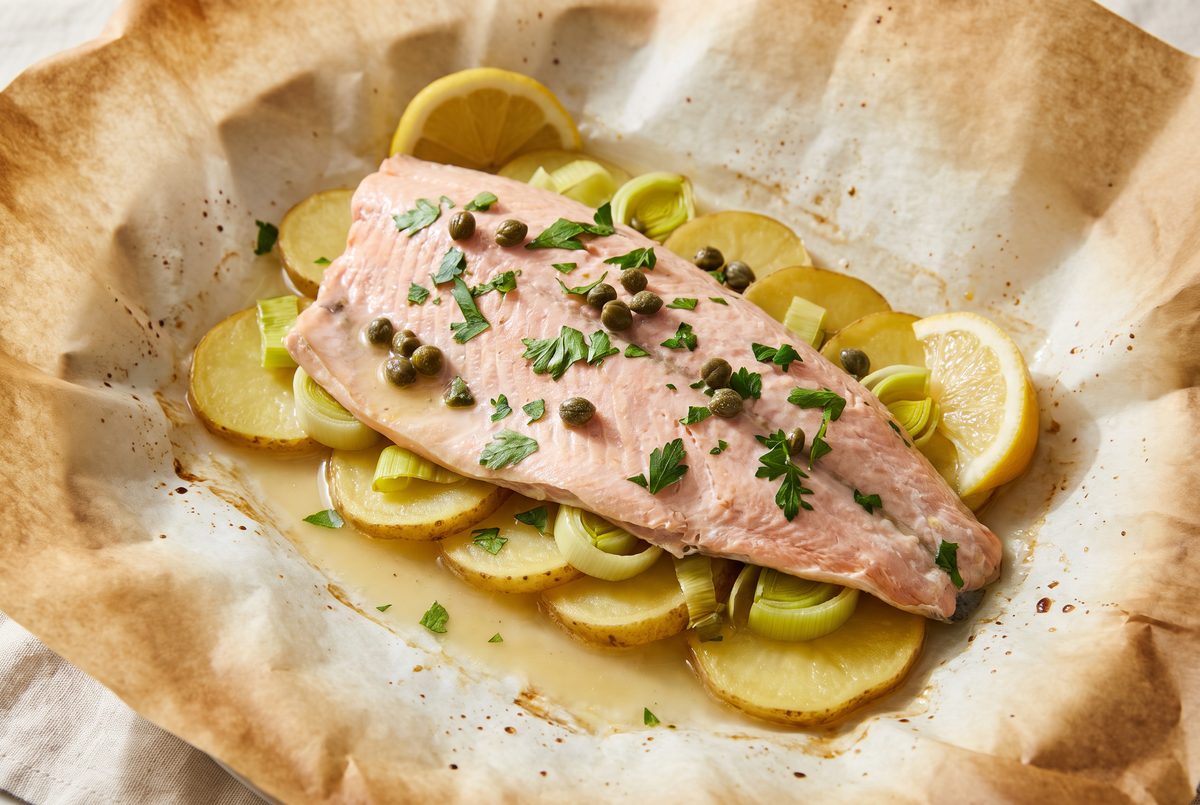
Trout al Cartoccio, Baked in Parchment
Al cartoccio means in paper: a trout fillet goes into a folded parchment packet on a bed of thin potatoes and leeks…
- 45 min
- 450 kcal
- 33 g protein
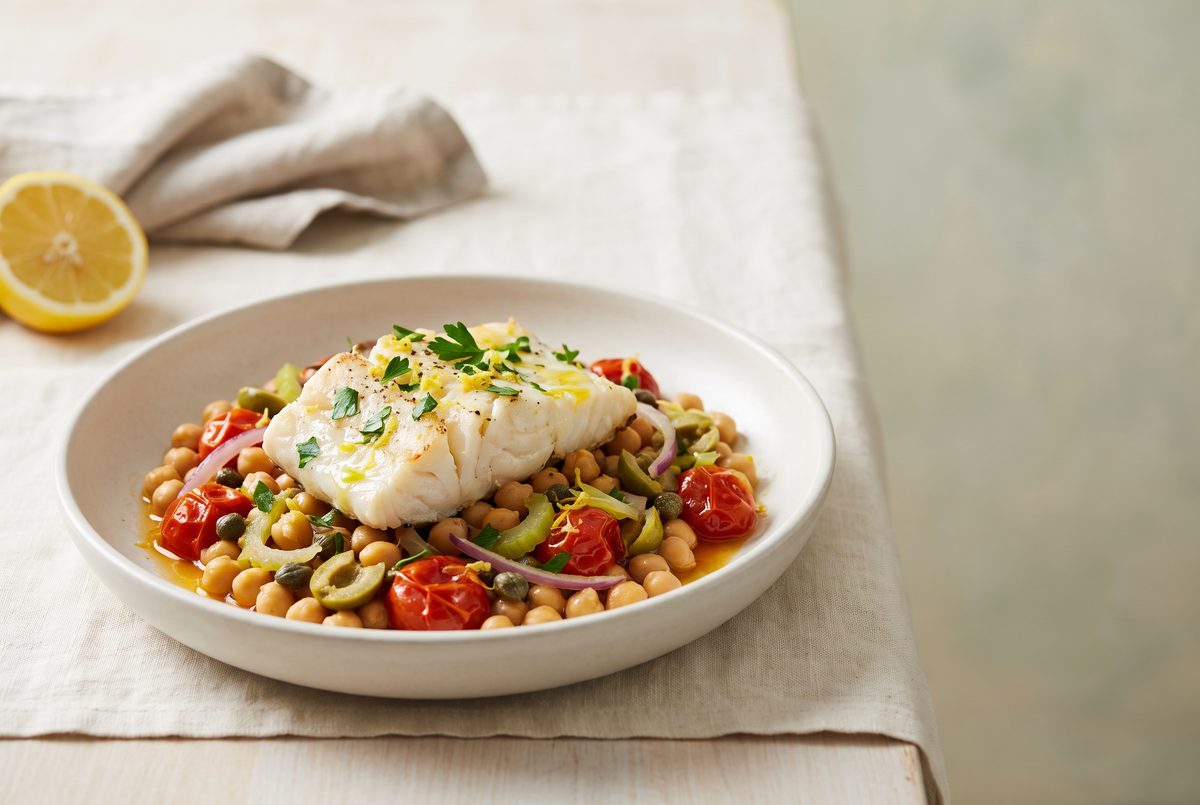
Baked Cod with Chickpeas, Tomatoes and Olives
Baked cod with chickpeas is a one-pan southern Italian dinner: cherry tomatoes, green olives and capers simmered with…
- 40 min
- 443 kcal
- 41 g protein
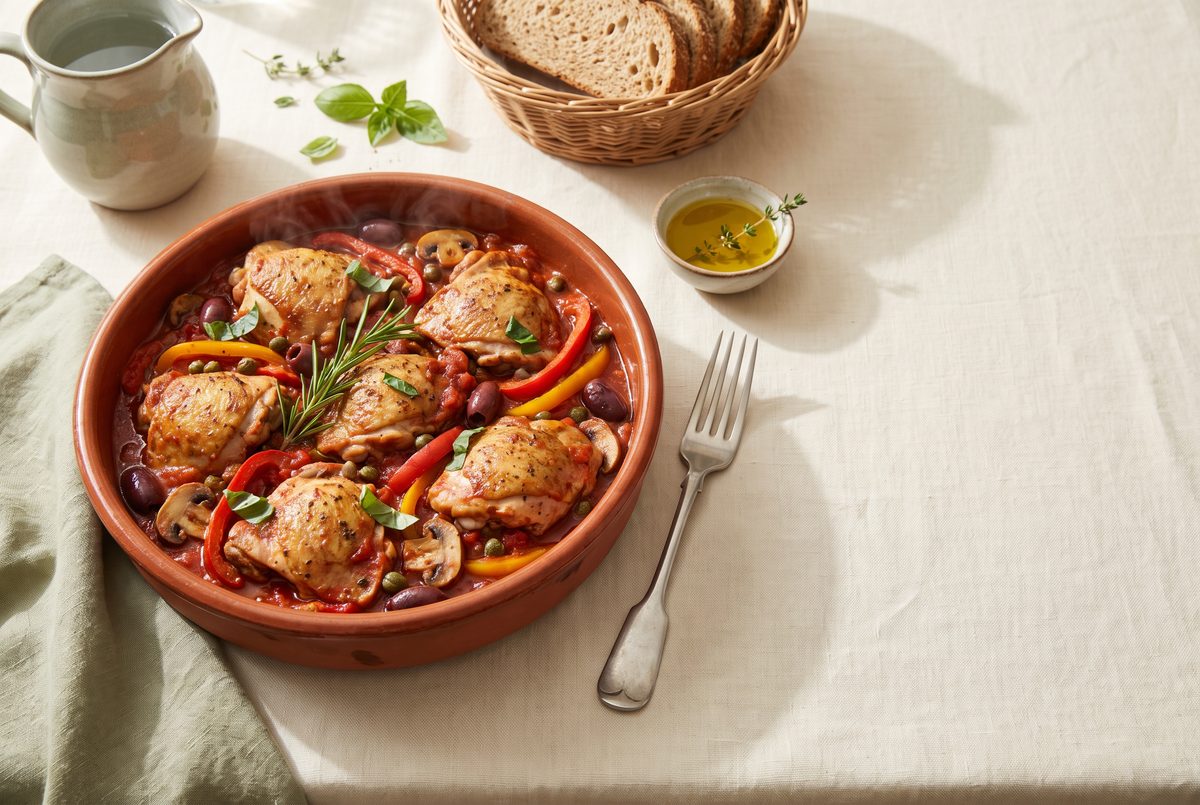
Healthy Chicken Cacciatore
Healthy chicken cacciatore is a one-pan Italian stew of skinless chicken thighs braised with bell peppers, mushrooms…
- 50 min
- 391 kcal
- 40 g protein